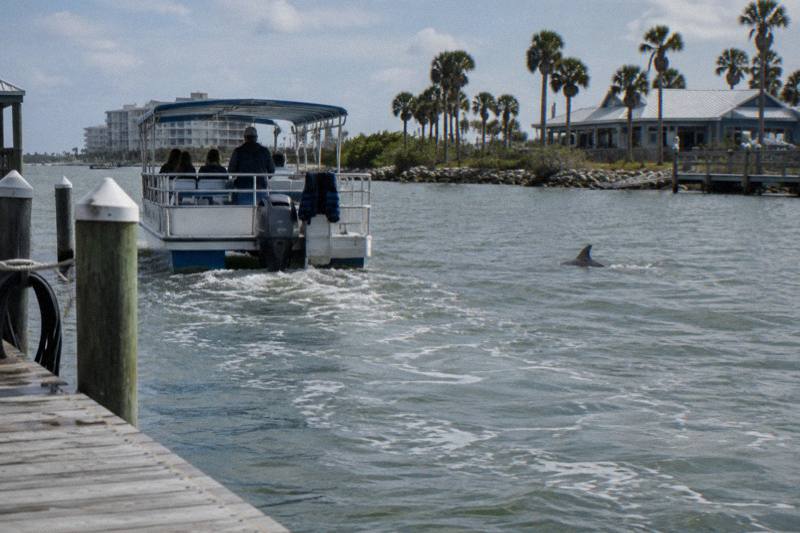
Can You Swim With Dolphins In Cocoa Beach?
Swimming with wild dolphins in Cocoa Beach is illegal under federal law. Here is what the rules say, why they exist, and the legal ways to see dolphins up close.
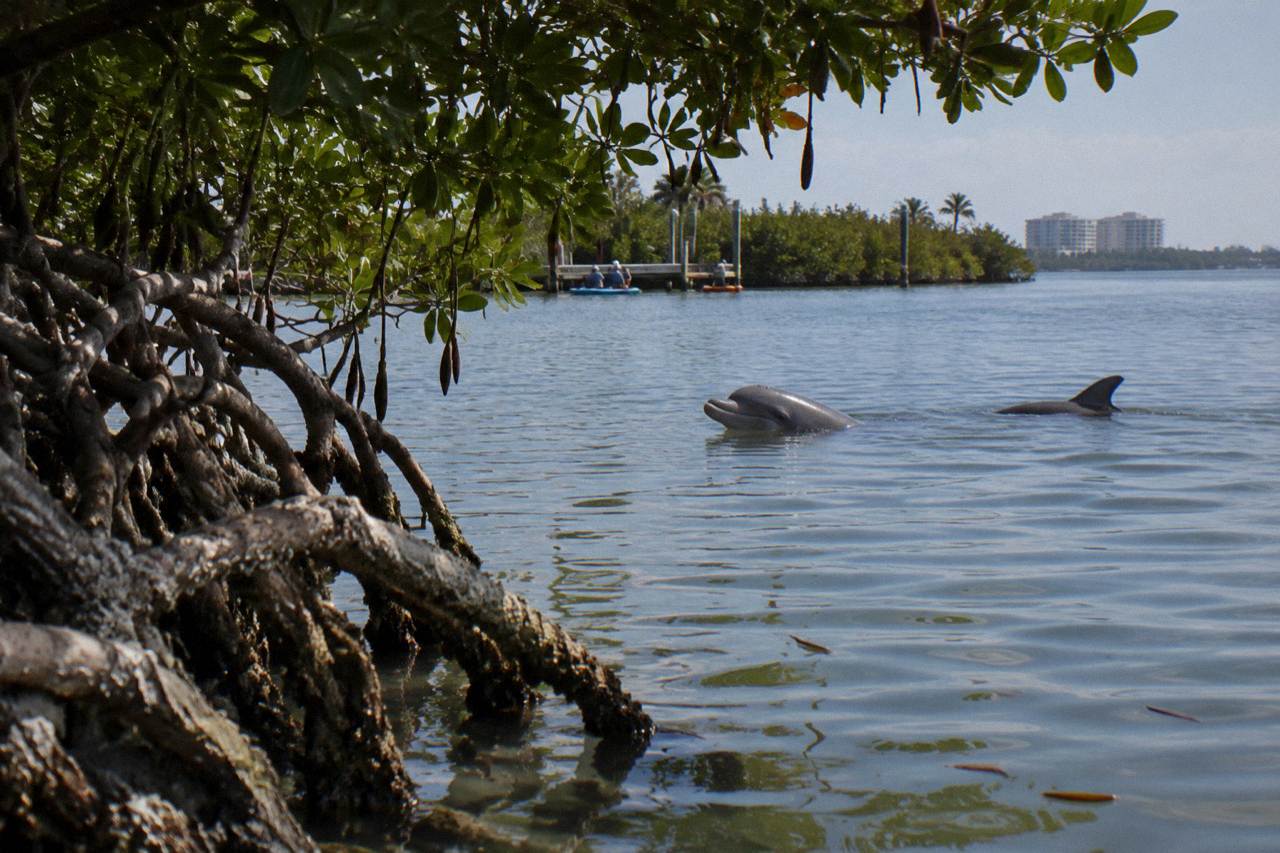
No, you cannot swim with dolphins in Cocoa Beach, and neither can anyone else. Feeding, harassing or attempting to swim with wild dolphins is a federal offense under the Marine Mammal Protection Act, and the National Oceanic and Atmospheric Administration (NOAA) asks all viewers on the water to stay at least 50 yards away, about half a football field. The good news is that the Banana River lagoon right off Cocoa Beach holds a resident population of bottlenose dolphins, and there are several lawful ways to get a genuine close look at them, from guided boat tours to kayak paddles that share their water without intruding on it. This page lays out the law, the reasons behind it, and the legal alternatives worth booking.
Can You Swim With Dolphins In Cocoa Beach?
No, you cannot legally swim with dolphins in Cocoa Beach or anywhere else in United States waters. The Marine Mammal Protection Act of 1972 prohibits hunting, harassing, feeding, or attempting to interact with wild dolphins, and no licensed wild-swim program exists on the Space Coast. You can, however, watch dolphins from a boat or kayak at a respectful distance, and Resident Banana River dolphins make sightings common in Cocoa Beach.
The question comes up constantly, and it is easy to see why. The waters around Cocoa Beach, the Banana River, the Indian River Lagoon and the Thousand Islands mangrove maze, are home to resident bottlenose dolphins that are sighted on local tours all year. A NOAA stock assessment for the Indian River Lagoon Estuarine System, which includes the Banana River and Mosquito Lagoon, estimated the local bottlenose population at 1,032 animals. When dolphins surface beside a kayak or follow a boat's wake, the urge to slip into the water is natural. The law draws a hard line before that urge, and the line exists for the dolphin's sake as much as yours.
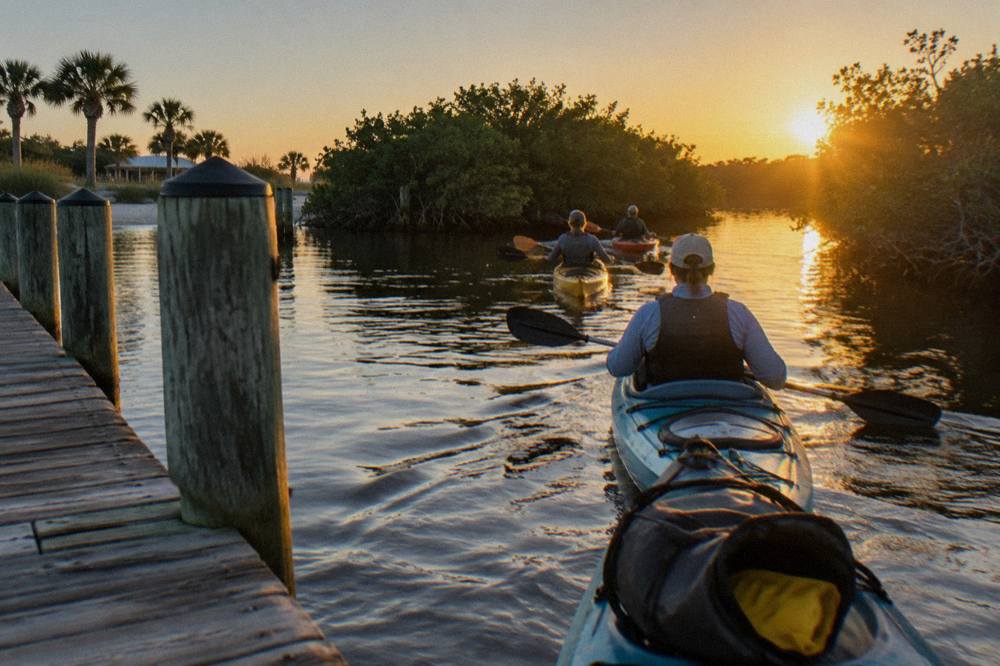
Dolphins that get used to people become dolphins in danger. Fed dolphins change their hunting behavior, approach boats looking for handouts, and end up injured by propellers or fishing gear, or displaced from their social groups. NOAA's marine life viewing guidance is blunt on this point: interaction with people is a documented threat to wild dolphins, which is why the agency asks boaters and paddlers to keep 50 yards of distance and to never attempt to touch, feed or swim with them. A good rule of thumb for any Cocoa Beach dolphin encounter, if a dolphin changes its behavior because of you, you are too close.
That still leaves a rich menu of legal options, and this site exists to compare them. The choice below pairs the most-booked dolphin boat tour in the area with a small-group sail and a kayak alternative, three different ways to be near dolphins without breaking the law.
What The Law Actually Says About Swimming With Wild Dolphins
The Marine Mammal Protection Act of 1972 prohibits hunting, capturing, killing or harassing any marine mammal in United States waters, and "harassment" is defined broadly enough to include swimming toward, touching, feeding or closely pursuing a wild dolphin. Violations can carry civil penalties and, for serious cases, criminal charges. NOAA, the agency that enforces the act, treats attempted swim-with interactions as harassment even when the person's intent is friendly.
The word that matters most in the statute is "harassment", and its legal meaning is wider than everyday usage. Under the act, harassment includes any act of pursuit, torment or annoyance that has the potential to injure a marine mammal or to disrupt its behavioral patterns, including migration, breathing, nursing, breeding, feeding or sheltering. Swimming after a dolphin, even slowly and even with good intentions, checks that box. So does feeding one, which is separately and explicitly illegal. NOAA's frequently asked questions on feeding and harassing wild marine mammals walk through the practical cases: the person who hands a dolphin a fish, the boat that circles a pod, the swimmer who tries to close the gap. All of it falls under the same prohibition.
Federal enforcement is not hypothetical. NOAA has pursued penalties against tour operators and individuals across Florida for feeding wild dolphins and for closely pursuing them in the water, and the agency's guidance notes that dolphins conditioned to human contact are the ones most likely to be struck by vessels or entangled in fishing line. The law is written to break that chain before it starts. It is worth saying plainly: no responsible Cocoa Beach operator will invite you into the water with dolphins, and any outfit that hints at it is inviting you to break federal law.
Manatees, the other charismatic species in these lagoons, carry their own layer of protection. The Florida Manatee Sanctuary Act of 1978 makes it unlawful to annoy, molest, harass or disturb a manatee at any time, and the Florida Fish and Wildlife Conservation Commission's viewing guidelines put it in three words: look, but don't touch. State penalties can reach a $500 fine and up to 60 days in jail, and federal penalties under the Marine Mammal Protection Act and Endangered Species Act run far higher. If a kayak tour in Cocoa Beach passes manatees, and many do, the same no-touching rule applies to them.
How Close Can You Legally Get To Dolphins In Cocoa Beach?
Federal viewing guidelines ask everyone on or in the water to stay at least 50 yards from dolphins, roughly half a football field, and some areas set the minimum at 100 yards. From a tour boat that holds a steady course, dolphins frequently approach on their own, which is legal because the animals choose it. What the rules prohibit is you closing the distance, by boat, by kayak or by swimming.
The 50-yard figure comes straight from NOAA's marine life viewing guidelines, which frame responsible watching around a simple principle: observe, don't interact. The guidelines also ask boaters to put their engine in neutral when dolphins approach, to avoid separating mothers and calves, and to leave the area if the animals start avoiding the boat. Licensed tour captains in the Cocoa Beach area operate inside these rules as a condition of doing business, and the better ones narrate them, which turns a dolphin cruise into a small lesson in marine mammal law.
The distinction that trips people up is who closes the distance. A dolphin that rides your boat's bow wake has made its own choice, and watching it happen from the deck is fully legal. A swimmer who enters the water and swims toward a pod has made the choice for the dolphin, and that is the prohibited act. The same logic governs kayaks and paddleboards: paddling through lagoon waters where dolphins live is fine, and they will sometimes surface within arm's reach of a quiet kayak. Chasing them, cutting off their path or paddling directly at them is not.
| Situation | Legal status | The rule that applies |
|---|---|---|
| Watching dolphins from a tour boat | Legal | Stay 50 yards back; dolphins may approach you |
| Paddling a kayak in dolphin habitat | Legal | Do not pursue, encircle or head animals off |
| A dolphin surfacing beside your kayak | Legal | The animal closed the distance; do not touch it |
| Entering the water to swim toward dolphins | Illegal | Harassment under the Marine Mammal Protection Act |
| Feeding a wild dolphin | Illegal | Explicitly prohibited; alters hunting behavior |
| Touching a manatee from a kayak | Illegal | Florida Manatee Sanctuary Act, state and federal penalties |
One practical note for families asking this question with kids in tow: the 50-yard rule is about the approach, not the sighting. Dolphin tours out of Cocoa Beach regularly report pods alongside the boat for sustained stretches, because resident dolphins in the Banana River are accustomed to vessel traffic and often curious. The encounter you can lawfully have, a dolphin arcing through clear water a few yards off the rail, is genuinely dramatic, and it does not require anyone to get wet. For a broader look at what a trip actually involves, the guide to what to expect on a dolphin and wildlife tour covers timing, meeting points and what the crew provides.
The Legal Ways To See Dolphins Up Close Near Cocoa Beach
Guided dolphin tours by boat, small-group sails and kayak paddles are the lawful close-encounter options around Cocoa Beach, with prices from $38.99 per person for a two-hour dolphin and wildlife boat tour to $64.82 for a guided mangrove kayak paddle that regularly passes dolphins and manatees. Every option keeps you on the water rather than in it, and every one shares the dolphins' habitat without intruding on the animals.
The workhorse option is a motorized dolphin and wildlife cruise on the Banana River. The featured two-hour tour on this site, the Cocoa Beach Dolphin and Wildlife Tour, departs from the dock at Sunset Waterfront Bar and Grill near 420 W Cocoa Beach Causeway, runs from $38.99 per person, and carries a 4.8 rating from 1,211 reviews. With a group cap of 49 and toilets on board, it is the practical family choice: low cost, no paddling skill needed, free cancellation, and a captain who knows where the pods hang out. Its sister sunset departure runs the same route at the same from-price with a 4.9 rating from 341 reviews, which is worth knowing if your Cocoa Beach days are built around golden hour. Both meet the same 50-yard viewing discipline, and both list free cancellation, which matters in a place where an afternoon thunderstorm can reshuffle a vacation.
For a quieter version of the same water, the small-group sail is the standout. The Dolphin Adventure Sail in Cocoa Beach carries a maximum of six guests, sails from Cape Crossing Resort and Marina on Merritt Island, runs two hours from $50.85 per person, and holds a 4.9 rating from 235 reviews. Under sail, the boat is nearly silent, and silent boats change how dolphins behave around them. Soda and bottled water are included, and the group size means everyone gets rail space when a pod surfaces. It is the closest thing on the roster to an intimate dolphin experience that stays inside the law.
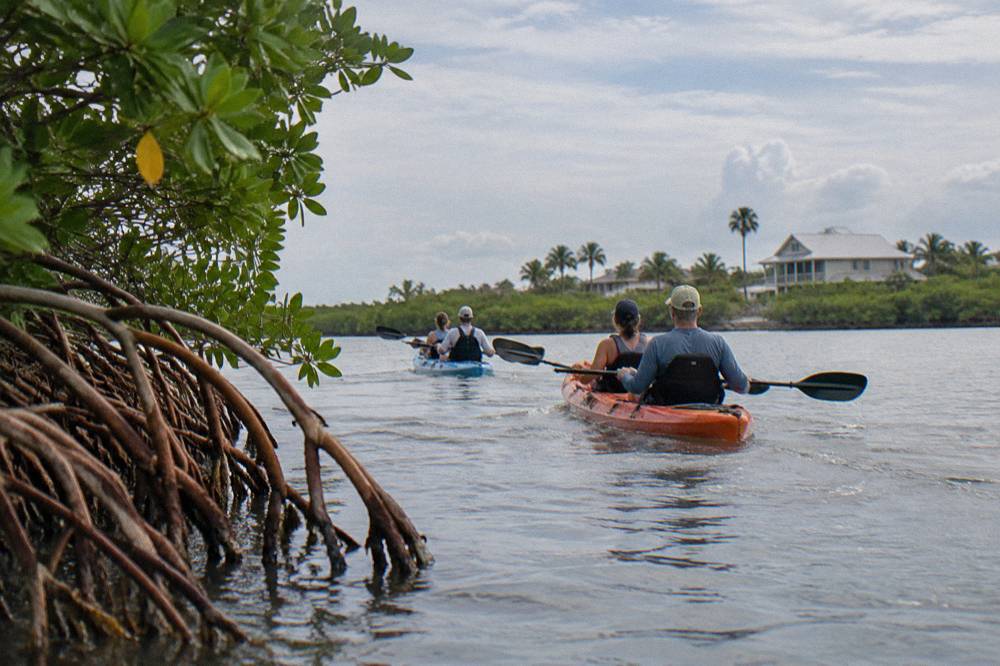
A different register of close altogether is the clear-bottom and tandem kayak segment, where you sit inches above the water the dolphins actually live in. The mangrove tunnels paddle is the best known: a two-hour guided tour from $64.82 per person, rated 5.0 from 898 reviews, capped at 11 paddlers, launching from the Tom Warriner Boulevard lot in Cocoa Beach with free parking included. It threads the mangrove tunnels of the Thousand Islands, where manatees and dolphins are regularly reported, and complimentary photos of the paddle are included with the booking. The guide stays with the group the whole way, which matters in narrow tunnels and matters even more if a manatee surfaces under your hull. High-back seats, paddles and life jackets are all provided.
| Tour | Format | From price | Rating | Group max | Duration |
|---|---|---|---|---|---|
| Dolphin and Wildlife Tour | Motor boat cruise | $38.99 per person | 4.8, 1,211 reviews | 49 | 2 hours |
| Sunset Dolphin Boat Tour | Motor boat at sunset | $38.99 per person | 4.9, 341 reviews | 49 | 2 hours |
| Dolphin Adventure Sail | Small-group sail | $50.85 per person | 4.9, 235 reviews | 6 | 2 hours |
| Mangrove Tunnels Kayak Tour | Guided tandem kayak | $64.82 per person | 5.0, 898 reviews | 11 | 2 hours |
| Clear-Bottom Kayak Tour | Clear kayak or SUP | $75 per person | 4.9, 73 reviews | 12 | 1.5 hours |
The full field, including eco boat variants priced from $42.80 and a private whole-boat charter at $374.50 per group, is compared in the Cocoa Beach boat tours comparison. For a deeper look at the paddle side, the Cocoa Beach kayak tours guide breaks down every launch point and what each one passes.
Kayak And Paddle Tours: The Closest Lawful Encounters
A kayak puts you at water level in actual dolphin habitat, which is the nearest a visitor can lawfully get to Cocoa Beach's wild dolphins, and guided paddles from $50 to $75 per person run daily through the Banana River, the Thousand Islands mangroves and the Merritt Island refuge waters. The discipline is simple: the dolphins come to you or they do not, and either way you keep paddling.
There is a reason kayak reviews read differently from boat tour reviews. Paddlers describe dolphins surfacing a paddle-length away, manatees drifting under the hull, and the peculiar quiet of a lagoon at dusk, none of it engineered, all of it voluntary on the animal's part. The roster's paddle options cover a spread of styles. The ecological manatee and dolphin kayak tour out of Ramp Road Park runs from $50 per person with kayaks, dry bags, sunscreen, bug spray and bottled water included. The kayak-and-SUP adventure at the Cocoa Beach Aquatic Center lets you choose a paddleboard or a one or two person kayak, from $69.22 per person, rated 4.9 from 229 reviews. The clear-bottom kayak tour at Kiwanis Island, from $75 per person for 1.5 hours, adds a window into the water below you.
The refuge side is wilder. A wildlife-refuge paddle out of the Merritt Island National Wildlife Refuge area, from $100 per person and capped at 10 paddlers, moves through water where dolphins, manatees and wading birds share the mangrove-lined channels, with kayak, lifejacket, paddle and dry bags included. Titusville's manatee and dolphin kayak tour covers similar territory from $55 per person. Both are guided, and both are free-cancellation bookings, worth noting when Florida weather does what Florida weather does.
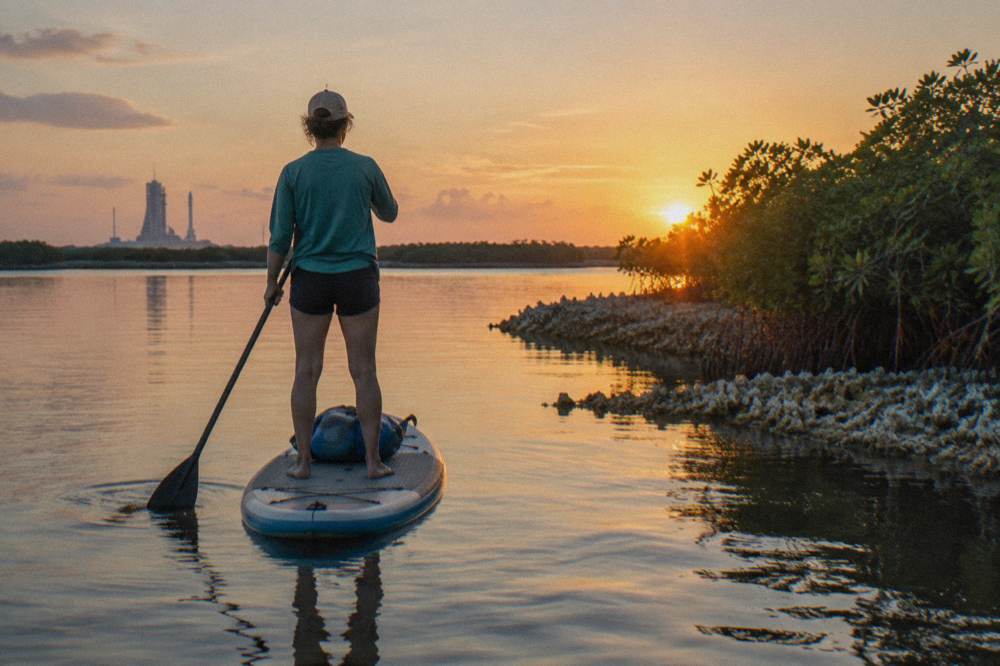
Florida law treats kayaks and paddleboards as vessels, which brings the safety rules into play on night paddles and daytime ones alike. The FWC's paddlecraft regulations require a Coast Guard-approved wearable life jacket for each person on board, worn by children under 6, plus a sound-producing device and, after dark, a light. Tour operators supply all of it, which is one quiet argument for guided paddles over renting: the legal equipment, and the local knowledge of where dolphins actually are, come with the ticket.
The seagrass rebound matters to anyone asking the dolphin question, because the lagoon's food web is the reason these animals are here at all. Healthier seagrass supports more manatees, more fish and, in turn, the resident dolphins that tour boats and kayaks go out to find. It is also a reminder that the animals watching your kayak are wild participants in a recovering ecosystem, not performers.
Is A Dolphin Tour Still Worth It If You Can't Swim With Them?
For almost everyone, yes: the two-hour boat tours from $38.99 and guided kayak paddles from $64.82 consistently draw some of the strongest review pools on the Space Coast, including a 5.0 rating from 898 reviews on the mangrove tunnels kayak tour, because watching wild dolphins behave naturally at close range satisfies the curiosity that makes people want to swim with them in the first place.
The honest framing is this: the swim-with fantasy is mostly about proximity, and proximity is what the legal options already deliver, minus the illegality and the harm. A dolphin rolling beside a six-person sail, or a pod crossing the bow of a slow boat while the captain cuts the engine, puts you within yards of wild animals doing wild things. The reviews suggest this lands. The dolphin and wildlife eco activity holds a perfect 5.0 from 309 reviews; the sunset mangrove kayak tour, 5.0 from 212. These are not people describing a compromise. These are people describing the thing itself.
It is also worth being clear about what does not exist here. There is no captive swim-with-dolphins facility on the Space Coast that this site lists, no wave-runner dolphin chase, no operator that will put you in the water beside a pod. The closest lawful experiences are the tours above, and if the question behind your question is whether dolphins will be there at all, the site's own take on whether Cocoa Beach dolphin tours guarantee sightings gives the unsentimental answer: nothing is guaranteed with wild animals, but resident pods in the Banana River make sightings very likely on any given departure. Timing helps too, and the guide to the best time to see dolphins and manatees covers the seasonal patterns.
Whether a tour is worth the ticket is ultimately a question about expectations. If the goal is a controlled encounter, an animal that comes when called, nothing lawful will provide it and nothing on this site pretends otherwise. If the goal is to be in the presence of wild dolphins in one of Florida's most reliable habitats, on a boat or a kayak with a guide who reads the water, then the tours below are the whole legitimate menu, and any one of them will do the job.
Common Questions About Swimming With Dolphins In Cocoa Beach
Can you swim with dolphins in Cocoa Beach?
No. Swimming with, touching or feeding wild dolphins is illegal under the federal Marine Mammal Protection Act, and NOAA asks everyone on the water to stay at least 50 yards away. The legal alternatives are guided boat tours, small-group sails and kayak paddles, all of which view dolphins from on the water rather than in it.
why can't you swim with dolphins anymore?
Swimming with wild dolphins has been prohibited since the Marine Mammal Protection Act of 1972, because close human interaction counts as harassment under the law and causes real harm: fed dolphins stop hunting, dolphins accustomed to people get struck by boats and tangled in fishing gear, and mothers and calves can be separated. The prohibition protects the animals, and it applies in Cocoa Beach like everywhere else in United States waters.
Is there anywhere in Florida where swimming with dolphins is legal?
Human interaction with wild dolphins is illegal nationwide regardless of state. This site lists no captive swim program and no wild-swim operator anywhere on the Space Coast; the tours on the roster are viewing tours only, by boat, sail or kayak.
How close can a kayak get to dolphins in Cocoa Beach?
Guidelines ask paddlers to stay at least 50 yards from dolphins and never to pursue, encircle or head them off. Dolphins sometimes approach a quiet kayak on their own, which is legal because the animal chose it, but you must never touch one or try to close the distance yourself.
Can you touch a manatee if it swims up to your kayak?
No. The Florida Manatee Sanctuary Act makes it unlawful to touch, feed, chase or disturb a manatee at any time, with penalties up to a $500 fine and 60 days in jail at the state level and far larger federal penalties. If a manatee approaches, stay still and let it pass.
What is the best legal way to see dolphins near Cocoa Beach?
A guided tour. The two-hour dolphin and wildlife boat tour runs from $38.99 per person with a 4.8 rating from 1,211 reviews, the six-person Dolphin Adventure Sail runs from $50.85 with a 4.9 rating from 235 reviews, and the mangrove tunnels kayak paddle runs from $64.82 with a 5.0 rating from 898 reviews, so the choice comes down to boat, sail or paddle. For a fuller comparison, the homepage tour picker on Dolphin Tours Cocoa Beach sorts the whole roster by budget and style.