Is Bioluminescent Kayaking Worth It?
A verdict on bioluminescent kayaking near Cocoa Beach: what the glow really looks like, what the four night tours cost, when to go, and what could disappoint you.
The glow is real, and it is the single most common reason travelers book a night paddle on the Space Coast. Between May and October, the warm water of the Indian River Lagoon near Cocoa Beach fills with dinoflagellates, single-celled organisms that flash blue-green when disturbed, so every paddle stroke, darting fish and dripping hand leaves a trail of light behind it. Four bookable listings put you on that water, priced from $51.36 to $75 per person, and they are consistently among the best reviewed products on this coast. The short version of the verdict: yes, it is worth it, if you book the right month, the right moon and the right group size.
The long version is below. This page compares every night listing on the roster, explains what the glow physically looks like so your expectations match the physics, names the three things that most often disappoint first-time paddlers, and gives the season and moon-phase rules that separate a spectacular paddle from a faint one. Nothing here is guaranteed, wild plankton blooms vary night to night, but the pattern across years of operator reports is consistent enough to plan around.
What The Glow Near Cocoa Beach Actually Looks Like
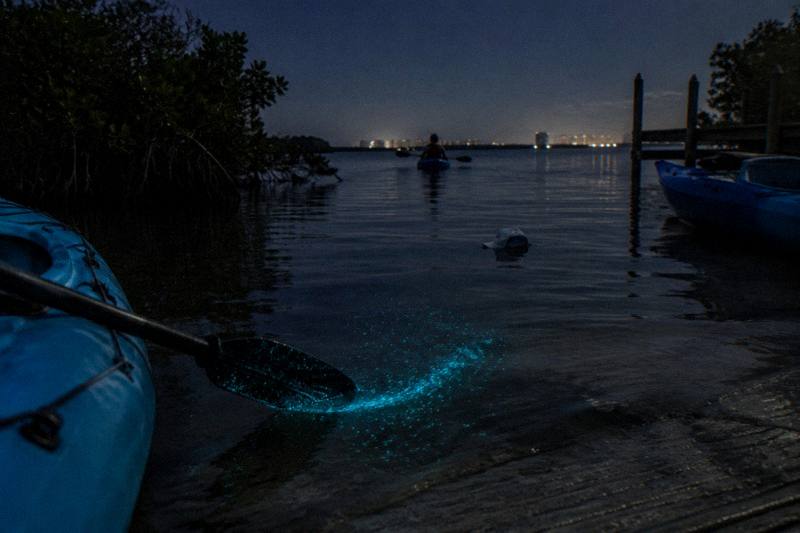
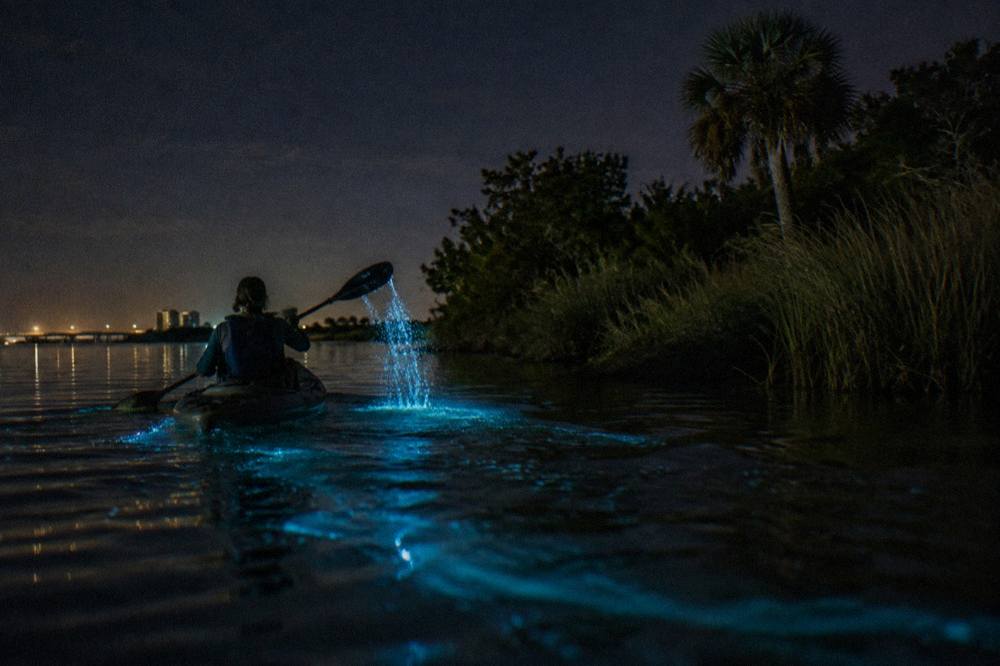
The glow is not a wall of light, it is a reaction to motion: the water around you stays dark until something moves through it, and then that moving thing, your paddle, a fish, your hand, traces a bright blue-green streak that fades in about a second. The organism responsible in summer is Pyrodinium bahamense, a dinoflagellate whose cells fire a chemical flash when agitated. That is why experienced paddlers describe the effect as sparks rather than illumination: drag a paddle and a comet tail follows it, a mullet breaks the surface and leaves a glowing streak, and the wake behind the kayak shimmers before going dark again.
Two things follow from the physics, and both shape whether the trip feels worth the money. First, density matters: a dense bloom in July or August can make every droplet from the paddle blaze, while a thin bloom in a fading October week may only produce a faint shimmer. Operators report the difference honestly, and the same launch site can swing from spectacular to subtle within a fortnight. Second, darkness matters more than most visitors expect. A bright moon competes with the glow and washes it out, which is why every serious operator schedules around the new moon and why week-to-week availability on the listings shifts with the lunar calendar.
There is a second, quieter season worth knowing about. From roughly November into early spring, the dinoflagellates give way to comb jellies, ctenophores that do not sting and produce a softer, slower, lantern-like pulse when disturbed. It is a gentler show than the summer sparkler effect, and some paddlers who return in winter for the smaller crowds actually prefer it. The transition weeks in late October and November are the least predictable of the year, sometimes holding both organisms, sometimes neither in strength. If you want a fuller breakdown of both seasons, the site's bioluminescence season guide covers the month-by-month pattern.
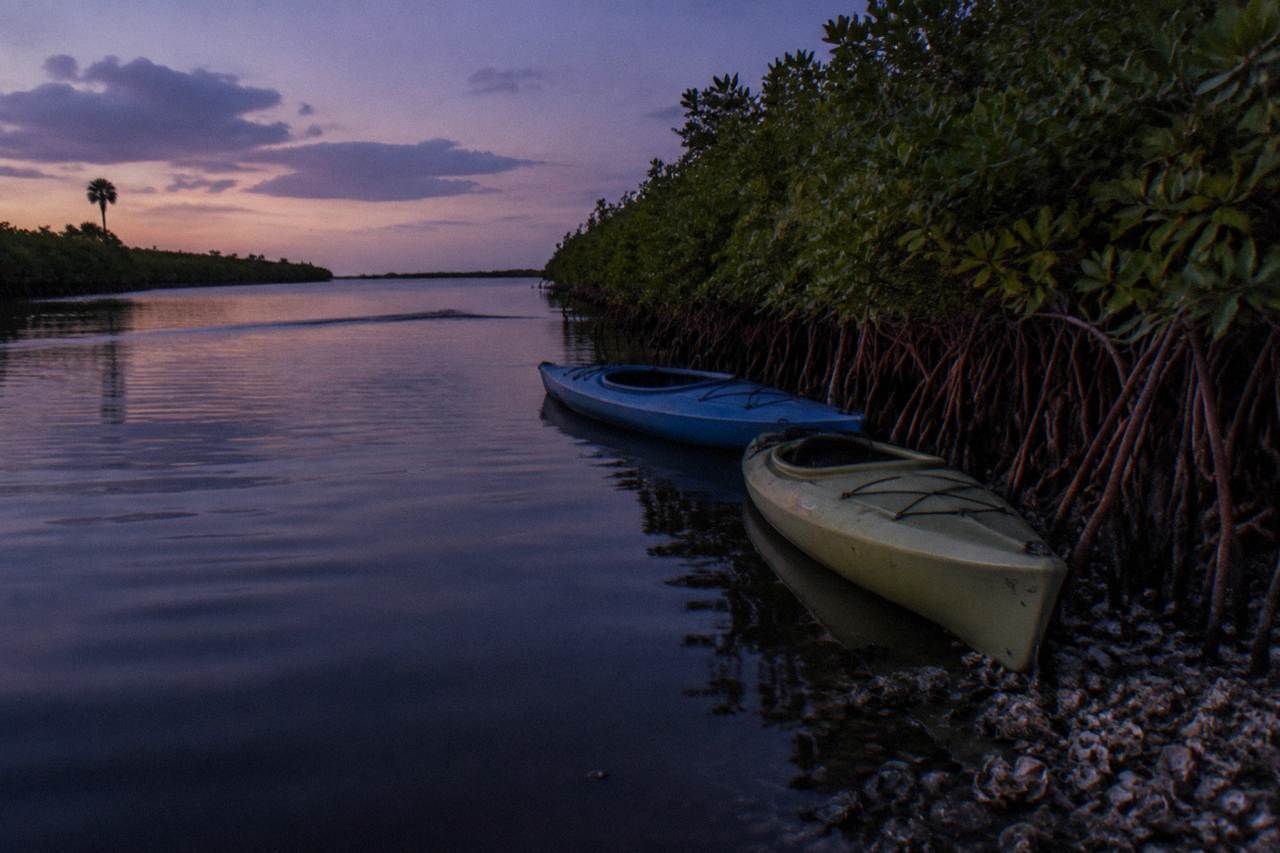
The meeting points cluster on the calm, shallow lagoon water rather than the ocean side, which is deliberate: the launch sites at Kelly Park East, Kiwanis Island Park and Manatee Cove Park sit on sheltered water where blooms concentrate and where a beginner can paddle in the dark without fighting waves. That sheltered water is also why the tour is family-friendly in a way ocean night paddling would not be.
What The Four Night Listings Cost And Deliver
All four bioluminescent listings on this coast run between $51.36 and $75 per person for roughly 1.5 to 2 hours on the water, and the honest differences between them are group size, launch point and what gear is handed to you at the dock, not the quality of the glow itself. The plankton does not know which ticket you bought. What you are choosing between is a 42-guest paddle where you blend into a moving constellation of other kayaks, and a 9-guest paddle where your guide can hold the group still in the darkest cove and let your eyes fully adjust.
Here is the full comparison, every figure taken directly from the live listings.
| Listing | Price from | Duration | Group max | Rating | Launch point |
|---|---|---|---|---|---|
| Bioluminescence Kayak Tour | $75 per person | 2 hours | 42 | 4.8 from 928 reviews | Kelly Park East, Merritt Island |
| Florida Bioluminescent Kayak & Paddle Board Adventure | $65 per person | 1.75 hours | 12 | 4.8 from 216 reviews | Kiwanis Island Park, Merritt Island |
| Bioluminescent Kayak Tour, Indian River Lagoon | $65 per person | 2 hours | 9 | 5.0 from 85 reviews | Manatee Cove Park, Merritt Island |
| Bioluminescent Kayak Tour (Brady Yaks) | $51.36 per person | 1.5 hours | varies by option | 4.5 from 167 reviews | Merritt Island, varies by option |
Read the group column before the price column. The Brady Yaks tour is the cheapest entry point at $51.36, and the listing carries a solid 4.5 from 167 reviews, but the meeting point varies by the option you book, so you need to check which launch you actually get. The Manatee Cove listing is the connoisseur's pick: a 5.0 rating across 85 reviews, a hard cap of 9 paddlers, and the listing includes a kayak, life jacket, whistle and safety light, the last two being exactly what Florida law expects on a human-powered vessel after dark, per the FWC paddling regulations that require a sound-producing device and a white light for night operation.
The most-booked listing, the 2-hour tour from Kelly Park East at $75, is the one this site features, and its 4.8 from 928 reviews is the deepest review pool of any night paddle on the coast. Its 42-person cap cuts both ways: the group is larger, but the operator has run this specific product at scale for years, the price includes a professional guide, kayak, paddle and PFD, and free cancellation applies. Gratuities are the one add-on the listing excludes. If you are weighing it against the full field of day paddles too, the site's Cocoa Beach kayak tours guide compares every daytime listing for context.
The Kiwanis Island listing at $65 splits the difference: a 1.75-hour paddle capped at 12 people, run from a launch the operator can swap if bio levels drop in the home cove, with photos of your excursion included. Note the honest detail on its listing: photos are included, gratuities are not. Every one of these four operators offers free cancellation, which matters more than usual on a bioluminescence booking because your date is hostage to weather and moon, and you may want to shift to a darker night after booking.
Is Bioluminescent Kayaking Worth It?
Yes, for most visitors it is the most memorable single activity on the Space Coast, and the math supports it: for the price of a restaurant dinner you get two hours on water that visibly reacts to your paddle, with a guide who knows which coves hold the densest cells, and the review pools, 4.5 to 5.0 across the four listings, back that up. The honest qualifier is that the value is conditional. Book a dark-moon night in July or August, in a small group, and it is extraordinary. Book a full-moon night in a transition week in a 40-person group, and you may leave wondering what the fuss was about.
The conditions are all controllable at booking time, which is the point of this article. The moon phase is published years in advance, the season is a stable annual pattern rather than luck, and the group size is printed on each listing before you pay. The only variable you cannot control is the bloom density itself, and even there, operators paddle the same coves nightly and know within one evening whether the glow is strong, so a quick check of recent guest reviews on the live listing before booking tells you what the last week of paddlers actually saw.
There is also a value comparison against the other headline activity on this coast. A daytime dolphin boat tour from Cocoa Beach runs from $38.99, costs less than every night paddle, and is a different product entirely: near-certain resident dolphins, sunlight, a toilet on board. The night paddle trades that certainty for rarity. Wild dolphins are seen on most boat tours and glow strength varies nightly, but almost nobody who travels has water that lights up under their own paddle stroke within an hour of Orlando. For visitors choosing one splurge, the rarity usually wins.
What Could Disappoint You
The three disappointments reported across guest reviews are a bright moon washing out the glow, midge and mosquito pressure in the warm months, and the reality that a large group dilutes the darkness, because forty kayaks churning a cove ahead of you both light it up and scatter the calm. None of these are hidden, and all three are avoidable at the moment of booking rather than on the night.
Moonlight is the big one. Around the full moon, the reflected light on the lagoon can reduce the visual contrast so much that a genuinely dense bloom reads as a faint shimmer. Operators work around it by launching in the hours when the moon has not yet risen or has already set, and some weeks their departure times shift by two hours for exactly this reason. When you see a listing departure at 9 p.m. one week and 8 p.m. the next, that is the lunar calendar, not randomness. If you have flexibility, aim your dates at the new moon window and let the operator pick the hour.
Bugs are the second. You are standing still on warm Florida lagoon water at night in summer, and the saltmarsh midges know it. Long sleeves, and bug spray applied before you arrive, are the standard advice, and one listing explicitly asks paddlers to apply sunscreen and bring bug spray by name. The third disappointment is structural: the 42-guest tour is a shared experience, and in a cove holding ten kayaks the water near you is constantly agitated by other paddles, which paradoxically means constant glow but less of the deep-dark moment where the whole cove erupts around your own paddle. Some people love the moving constellation effect. Photographers and quiet-water purists should book the 9-person Manatee Cove listing instead.
Weather is the honest wildcard, and it is announced by the operator, not by the calendar. The Atlantic hurricane season runs June 1 to November 30, and a summer thunderstorm can scrub an evening even when the bloom is perfect; every listing here carries free cancellation, so a weather call costs you nothing but the evening. If a storm system parks over the coast mid-trip, the operator makes the call, and rebooking is routine.
The Best Month, The Best Moon, And The Right Group
For the bright dinoflagellate glow, book late June through early September, ideally within a few days of the new moon; for smaller crowds with still-reliable glow, late September into the first week of October; for the gentler comb-jelly show, December through February; and for the best experience at any time of year, the smallest group you can afford. That is the entire planning formula, and it is worth the extra few dollars it sometimes costs.
Peak season is peak for a reason: July and August combine the warmest water, which the dinoflagellates favor, with the densest reported blooms, and guest reviews from those weeks describe paddle strokes that throw visible sparks and fish that streak like comets. June and September are close behind and slightly cooler. Early October sits at the tail of the season: the glow is fading, the air is kinder, and the tour calendar is quieter, a reasonable trade if your dates are fixed. The transition into November is the one stretch this site would steer a first-timer away from, because both organisms can be weak at once.
Group size interacts with all of it. The Manatee Cove listing caps at 9 paddlers and carries a 5.0 rating from 85 reviews, the highest rating on the night roster; the Kelly Park East flagship caps at 42 and has the deepest pool at 928 reviews. That is not a contradiction, it is two products: the small listing sells intimacy and darkness, the large one sells reliability, scale and a lower per-person friction for a family that just wants to see the glow once. A couple on an anniversary trip and a family with two teenagers should honestly book different tours. For month-by-month depth, see what month is bioluminescence in Florida.
One more planning note that first-timers miss: book the dark-moon nights early. Because the lunar calendar is public, every traveler who reads a planning article like this one is aiming at the same ten or so prime nights per season, and the small-group listings, with caps of 9 and 12, fill first. The 42-person flagship has more seats and more departures, but even it tightens around the new moon in July and August. When in doubt about your own readiness, the site's guide to bioluminescence kayak tours in Cocoa Beach walks every launch point in detail.
Who Should Skip It
Skip the night paddle if you cannot tolerate bugs, cannot swim, are bringing children too young to sit still in a kayak after dark, or are visiting in the dead of a full-moon week with no date flexibility, because in those cases the listing price buys you frustration rather than wonder. The tour is not physically hard, the water is calm and the pace is slow, but it is two hours in the dark, mostly seated, with no bathroom on a kayak and no early exit once the group has left the launch.
Motion sickness is rarely the issue on lagoon water, which is genuinely sheltered. The real disqualifiers are temperament ones. Toddlers do not belong in a night kayak, and the listings are aimed at adults and older children; the paddling itself is gentle but the hours are late and the experience rewards patience and stillness. If your party includes someone who will be miserable after ninety minutes of quiet darkness, spend the money on a daytime dolphin boat tour instead, where the action comes to you and the boat has a toilet.
Budget travelers should also do the arithmetic honestly. At $75 per person for the flagship listing, a family of four spends just over $300 before gratuity, which is real money for two hours. The Brady Yaks listing at $51.36 softens that considerably, and its 4.5 from 167 reviews says most paddlers are satisfied, but the cheapest option is also the one where the meeting point varies by option booked, so read your confirmation carefully. The one false economy would be skipping the tour entirely and paddling a rental at night on your own: you would be trading a guide who knows the dark coves for an unfamiliar lagoon in the dark, without the safety light and whistle the law requires after sunset.
The Verdict And How To Book Smart
Bioluminescent kayaking near Cocoa Beach is worth it for the large majority of visitors: the glow is a genuine natural phenomenon, the four listings are professionally run with free cancellation across the board, and the two failure modes, bright moon and bad timing, are both visible on a calendar before you pay. Book July or August near the new moon in the smallest group your budget allows, apply bug spray before arrival, and go in expecting sparks around your paddle rather than a lit-up lagoon, and the night will almost certainly be the one your group talks about for years.
For a first trip, this site's pick is the 2-hour Bioluminescence Kayak Tour from Kelly Park East: $75 per person, a 4.8 rating across 928 reviews, guide, kayak, paddle and PFD included, and free cancellation if the weather turns. Travelers wanting darkness and quiet should take the 9-person Manatee Cove listing at $65, which carries a 5.0 rating from 85 reviews and includes the whistle and safety light that night paddling legally requires, consistent with the requirements on the National Park Service's paddling page for the neighboring seashore.
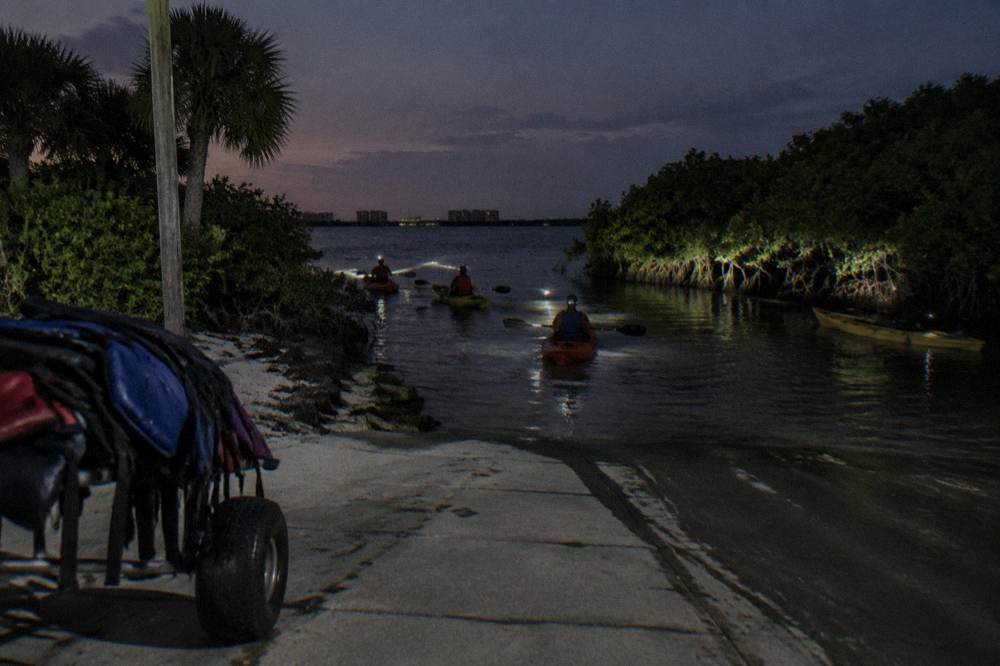
Booking smart on this coast mostly means booking to the moon. Check a lunar calendar, find the new moon nearest your stay, confirm departure times on the operator's live listing for that week, and reserve the small-group listings well ahead for prime nights. Then check the most recent guest reviews on the listing, where paddlers describe what the glow actually did the last few nights, the closest thing to a forecast this phenomenon offers. The site behind this article, Dolphin Tours Cocoa Beach, tracks all four night listings alongside every daytime dolphin and kayak tour on the coast, with verified prices and review counts.
Common Questions About Bioluminescent Kayaking
Is bioluminescent kayaking worth it?
For most visitors, yes. The glow is a real, motion-triggered phenomenon, the four listings run $51.36 to $75 per person with free cancellation across the board, and review ratings run 4.5 to 5.0. The value depends on timing: a dark-moon night in peak season in a small group is consistently spectacular, while a full-moon night in a transition week can underwhelm.
What is the best month for bioluminescent kayaking in Cocoa Beach?
July and August, when warm water produces the densest dinoflagellate blooms and the brightest sparkle on paddle strokes. June and September are reliable too, early October is the fading tail of the season, and roughly November through February brings the softer comb-jelly glow instead.
Does the moon phase really matter?
Yes. Moonlight reflects off the lagoon and reduces the contrast that makes the glow visible, so operators schedule around the new moon and shift departure times week to week to dodge a bright moon. If your dates are flexible, aim within a few nights of the new moon.
How much does a bioluminescent kayak tour cost?
Between $51.36 and $75 per person on the four listings serving the Cocoa Beach and Merritt Island lagoon. The Brady Yaks 1.5-hour tour starts at $51.36, the Kiwanis Island and Manatee Cove tours at $65, and the 2-hour Kelly Park East flagship at $75. All four include kayak, paddle and life jacket.
Is the glow guaranteed?
No. The organisms are wild and bloom density varies night to night with water temperature, weather and plankton conditions. Operators choose launch sites and departure hours to maximize the odds, and recent guest reviews on each listing are the best preview of what paddlers are currently seeing, but no listing guarantees a glow.
Is it safe to kayak the lagoon at night?
The water is calm and sheltered, guides lead every tour, and all four listings include life jackets. Florida rules for human-powered vessels after dark require a wearable life jacket, a sound-producing device and a white light, which is why the listings that name their safety kit include exactly those items.