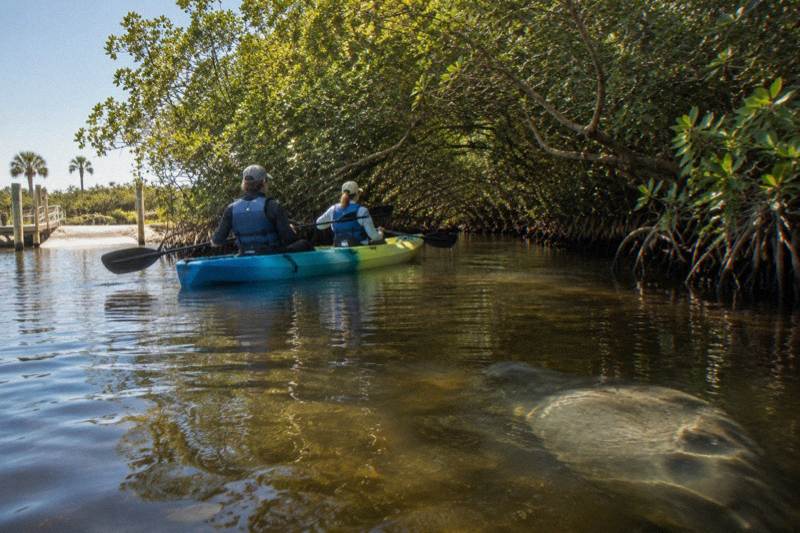
Is It Safe To Kayak In The Indian River Lagoon?
An honest safety guide to kayaking the Indian River Lagoon from Cocoa Beach: Florida life jacket rules, wildlife etiquette, weather, and which guided tours supply the gear.
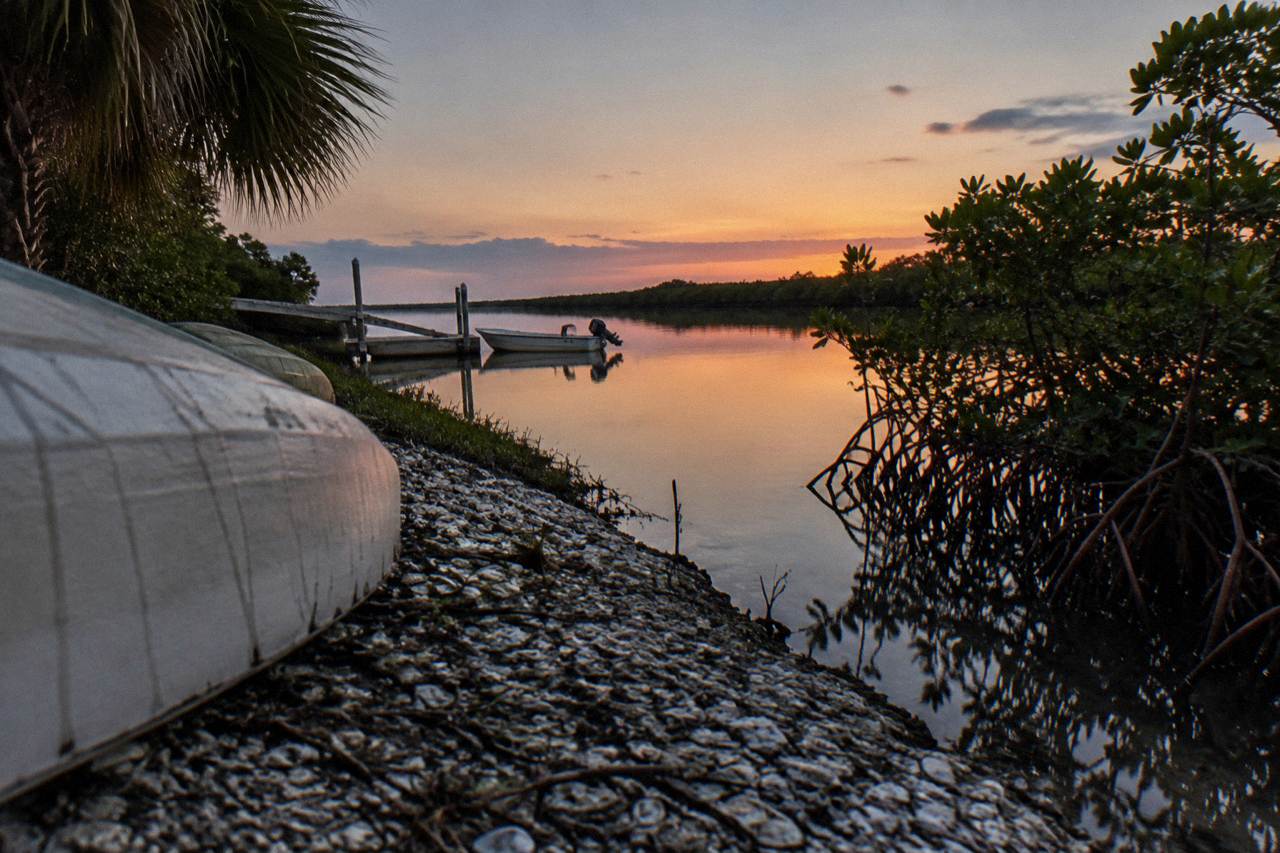
Is It Safe To Kayak In The Indian River Lagoon?
Cocoa Beach sits on the western edge of the Banana River, one of the three lagoons that make up the Indian River Lagoon system, and for visitors the question of safety comes up almost as often as the question of what they might see out on the water. The short answer is reassuring. This is a shallow, mostly protected estuary with little boat traffic in the areas where tours operate, no surf, and no current worth worrying about on a normal day. The risks that do exist are manageable and well understood: sun, summer heat, the occasional afternoon thunderstorm, and the temptation to get closer to a manatee or a dolphin than the law allows.
We compared the listings of every kayak and paddleboard tour on this site's roster, read the Florida Fish and Wildlife Conservation Commission's paddling rules, and pulled the federal wildlife viewing guidelines that apply to the lagoon's resident animals. This article lays out what the rules actually require, what the tours supply, what the real wildlife considerations are, and what a first timer should check before launching. Nothing here is medical advice, and conditions on the water change daily, so the final call on any given morning belongs to the operator and to you.
Is It Safe To Kayak In The Indian River Lagoon?
Yes, for most people kayaking the Indian River Lagoon near Cocoa Beach is a low-risk activity, and guided tours there have a strong safety record. The water is shallow and sheltered, groups are small, and Florida law requires simple equipment: one USCG-approved life jacket per person, a sound-producing device such as a whistle, and a white light if you paddle at night. The main hazards are sun, heat, and summer thunderstorms, not the water itself.
That answer deserves some unpacking, because "safe" means different things to different families. A confident adult who grew up around canoes will find the lagoon trivially easy. A parent of a six-year-old wants to know about life jacket rules for children, and the Florida rule is specific: children under 6 must wear their USCG-approved life jacket while on a vessel, and that includes kayaks and paddleboards. Everyone else is strongly advised to wear one, and on the guided tours around Cocoa Beach, wearing it is the norm rather than the exception.
The lagoon itself is a forgiving classroom. In the Thousand Islands area behind Cocoa Beach and along the mangrove shorelines of the Banana River, depths are often measured in feet rather than fathoms, the water is warm, and there is no wave action. Wind can pick up on open stretches in the afternoon, which is one reason most tours schedule morning departures. The tours on this site's roster run groups as small as 6 and as large as 42, and every one of them is led by a professional guide who knows the local weather patterns and the shallow routes.
If you are weighing options, these three guided paddles cover the range most first timers want, from a small-group mangrove tunnel tour to a combined kayak and paddleboard outing:
For a broader comparison of formats and prices, the Cocoa Beach kayak tours guide breaks down every paddle option on the Space Coast, and the site's homepage comparison can help you decide between a boat tour and a paddle in about a minute.
What Florida Law Requires When You Paddle
Florida treats kayaks, canoes and paddleboards as vessels, except in designated swimming areas. That means each person on board needs one USCG-approved wearable life jacket, children under 6 must wear theirs, and every craft needs a sound-producing device such as a whistle. If you paddle at night or in restricted visibility, you also need a white light ready to display. None of this is optional, and guided tours supply all of it.
The Florida Fish and Wildlife Conservation Commission publishes these requirements on its paddleboard and paddle craft regulations page, and the rules are the same whether you launch from a city park in Cocoa Beach or a refuge ramp on Merritt Island. A whistle clipped to your vest sounds trivial until you need one: on a quiet evening paddle it is the fastest way to signal your guide or another boat. The white light rule matters most for the bioluminescence tours, which are the only paddles on this roster that routinely run after dark.
There are a few practical points worth adding. Life jackets only work if they fit, and the tour operators around Cocoa Beach carry a range of sizes, including child sizes, because they run family trips every day. If you are bringing your own craft, check the jacket's label for the USCG approval stamp and the weight range it covers. Florida also asks paddlers to follow the navigation rules that apply to any vessel: keep to the right in channels, give way to larger craft that cannot maneuver, and observe idle-speed zones in canals and manatee protection areas (see Bioluminescence Right Now).
One more thing that surprises visitors: the law does not require paddling experience. Nothing on the FWC page asks how long you have been on the water. The guided tours fill that gap themselves, with a short paddle lesson on land before launch and a guide positioned at the front and rear of the group. The listings for the mangrove tunnel tours around Cocoa Beach describe exactly this arrangement, a friendly and knowledgeable guide with you the entire time, which is the single biggest safety upgrade over paddling alone.
Which Cocoa Beach Tours Supply Life Jackets And Gear
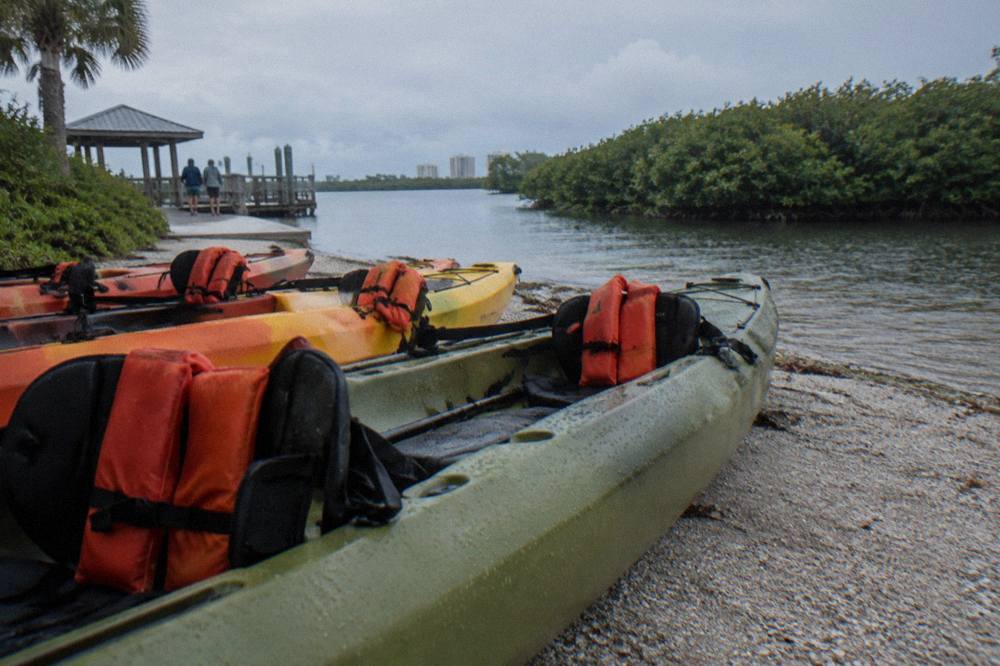
Every kayak and paddleboard tour on this site's roster includes life jackets in the listing price, along with the paddle craft and paddles. Several also include dry bags, whistles and safety lights where the format requires them. The table below shows what each listing states it provides, so you can check the specific tour you are considering rather than assume.
| Tour (listing title) | Safety gear stated on the listing | Group max | Price from |
|---|---|---|---|
| Mangrove Tunnels, Dolphins, Manatee Tour | Life jackets, high back seats, paddles, guide throughout | 11 | $64.82 per person |
| Dolphin and Manatee Kayak and SUP Adventure | Lifejackets, kayak paddles, paddle board paddles | 20 | $69.22 per person |
| Manatee and Dolphin Kayak Tour | Kayaks, paddles, life jackets, dry bags, sunscreen, bug spray, bottled water | 20 | $50 per person |
| Wildlife Refuge Manatee, Dolphin & Mangrove Tour | Kayak, lifejacket, paddle, dry bags | 10 | $100 per person |
| Bioluminescence Kayak Tour | Kayak, paddle, PFD, professional guide | 42 | $75 per person |
| Bioluminescent Kayak Tour in Floridas Indian River Lagoon | Kayak, life jacket, whistle and safety light | 9 | $65 per person |
Two details in that table stand out. The night bioluminescence tour that launches from Manatee Cove Park is the only listing that spells out the whistle and safety light, which matches the FWC night-paddling requirement exactly. And the Manatee and Dolphin Kayak Tour from Ramp Road Park is the most generous with extras, listing dry bags, sunscreen, bug spray and bottled water alongside the required gear, which tells you something about what first timers usually forget.
The Mangrove Tunnels, Dolphins, Manatee Tour is the one we would point a nervous first timer toward, and not only for the gear. Its group max of 11 is among the smallest on the roster, the listing includes complimentary photos so you are not juggling a phone on the water, and parking at the Tom Warriner Boulevard launch is free, which removes one more moving part from the morning. It rates 5.0 from 898 reviews, from $64.82 per person, with free cancellation. You can Check availability on the live listing, and the tour page has the full details on what to expect on a guided mangrove paddle.
If a smaller budget or a bigger group matters more than intimacy, the two other tours in the selection band above cover those cases: the SUP adventure at from $69.22 lets you switch between kayak and paddleboard mid-tour, and the Ramp Road tour at from $50 is the least expensive guided paddle on the roster.
Alligators, Manatees And Dolphins: The Real Wildlife Picture
The animals of the Indian River Lagoon are not a threat to paddlers who keep their distance. Alligators in the Cocoa Beach area are rare in the salty lagoon water and are far more common in freshwater canals inland. Manatees are gentle but protected by strict state and federal rules: look, never touch, never feed, never chase. Dolphins must be given at least 50 yards of space by law when you view them from any watercraft.
Start with the animal most visitors ask about. Alligators tolerate salt water poorly, so the brackish lagoon behind Cocoa Beach is not prime gator habitat. They do live in the freshwater canals and retention ponds of Brevard County, and occasionally one wanders into a lagoon pocket, but tour guides in the Thousand Islands and the Banana River mangroves report that a sighting is a notable event, not a routine one. The honest framing is that an alligator encounter on a Cocoa Beach paddle is unlikely, and a dangerous one is close to unheard of on a guided tour in a group.
Manatees are the opposite story: you are quite likely to see them, especially from late spring through early fall, and the rules around them are strict because too many people have loved them badly. The FWC manatee viewing guidelines put it plainly: look but do not touch, feed, or give water to manatees; do not pursue, chase, poke, or prod them; and if a manatee changes its behavior because of you, you are too close. The Florida Manatee Sanctuary Act makes disturbing a manatee unlawful, with state penalties that can include a fine of up to $500 and up to 60 days in jail, and federal penalties under the Marine Mammal Protection Act reach far higher. The safe move on a paddle is to stop, stay still, and let the manatee decide whether to pass.
Dolphins are the lagoon's resident stars, with an estuarine stock estimated at just over 1,000 animals across the Indian River Lagoon system, and the federal rule for them is a number you can remember: NOAA Fisheries asks boaters and paddlers to stay at least 50 yards away, about half a football field. Feeding or harassing wild dolphins is illegal under the Marine Mammal Protection Act. In practice, dolphins often approach kayaks on their own, curious and unbothered, and that is their choice. What the law prohibits is you closing the distance, chasing, or trying to interact. Guided tours handle this well because guides know the local pods and idle or hold position while the animals pass.
The lagoon's recovery is part of why wildlife encounters feel more frequent lately. Seagrass mapping by the St. Johns River Water Management District showed coverage growing from 9,924 hectares in 2023 to 17,042 hectares in 2025, a gain of more than 7,000 hectares, and the manatee unusual mortality event that ran from December 2020 into 2022 was officially declared over in March 2025. More grass means more grazing manatees and more of the small fish that dolphins hunt, which is good news for anyone paddling with eyes open.
Weather, Thunderstorms And Who Cancels A Tour
The weather risks on the lagoon are Florida's standard ones: summer afternoon thunderstorms, heat, and the Atlantic hurricane season that runs from June 1 to November 30. Tour operators make the cancellation call, and they announce it, typically by message to the booking contact, when lightning or storm conditions are in the forecast. Morning departures exist largely to beat both the storms and the midday heat.
Summer afternoons in Brevard County follow a pattern you can set a watch by: heat builds through late morning, towering clouds appear over the mainland, and lightning storms roll through between early and late afternoon. Paddling in a lightning storm is the one genuinely dangerous scenario in this whole article, and it is entirely avoidable, which is why nearly every kayak tour around Cocoa Beach schedules its departures before the window opens. If a storm is already on the radar at launch time, operators cancel and refund or rebook; the listings on this roster carry free cancellation, so a weather call by the operator does not cost you the fare. The rest of the planning pages sit on Dolphin Tours Cocoa Beach.
Heat is the quieter hazard. The lagoon offers no shade, and summer water temperatures in the Cocoa Beach area average in the low 80s Fahrenheit, which means the air above it is hot too. Bring more water than feels reasonable, wear a hat and a light long-sleeve shirt, and apply sunscreen before arrival; the sunset mangrove tour's listing asks guests to apply sunscreen prior to arrival precisely because there is nowhere to reapply comfortably. The tours that depart around sunset trade heat for insects, and bug spray is worth having in the warmer months.
Hurricane season deserves a plain sentence rather than alarm. The season runs June 1 through November 30, and the Space Coast's tour calendar keeps operating through it, because most days in most months are fine. When a named storm approaches, operators cancel early and the announcement comes from them and from local authorities, not from a guess. The practical rule for visitors: check the forecast the evening before, keep your phone with you, and book tours with free cancellation so a weather change is an inconvenience rather than a loss. Port Canaveral also runs a phased severe weather awareness program, and its conditions are public, so a storm's approach is never a surprise to the people running your tour.
Night Paddles And Bioluminescence Safety
Night bioluminescence paddles are safe when run as guided tours, and the safety case rests on three things: the FWC-required white light and whistle, the calm sheltered water the tours launch into, and the guide who leads every group. The tours that run after dark around Cocoa Beach and Merritt Island launch from protected parks and keep groups tight, with the brightest glow typically in the warm months and around the darkest moon phases.
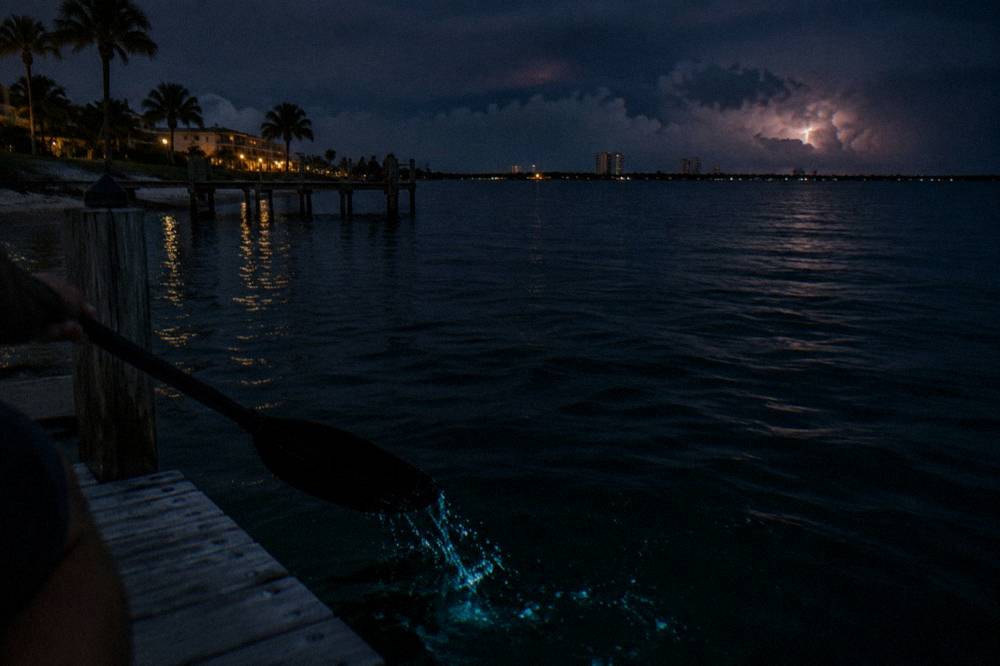
The night requirement list is short. Every paddler needs a life jacket, every craft needs a sound-producing device, and a white light must be ready to signal. The listing for the bioluminescent tour that launches from Manatee Cove Park states that use of a kayak, life jacket, whistle and safety light are included, which is the roster's clearest match to the night rule. Other night tours on the roster include a PFD and a professional guide; if a specific piece of equipment matters to you, the live listing for the tour you are considering states what is included.
The glow itself is harmless. The bright blue-green sparks come from dinoflagellates, microscopic organisms that flash when the water around them is disturbed, and they peak in the warmest months, roughly late May into early October, with the densest displays typically in July and August. Cooler months bring comb jellies, which glow more softly and do not sting. Neither organism poses any risk to a paddler, and the tours' launch sites at places like Kelly Park East, Kiwanis Island Park and Manatee Cove Park sit in calm, shallow, low-traffic water where a night paddle is closer to a float than a voyage.
The real night considerations are the ordinary ones: you cannot see the shoreline as well, so stay with the group; your eyes adapt in about ten minutes, so give them that time before deciding it is too dark; and a headlamp on a red setting preserves that adaptation better than a white beam. Guides manage all of this, which is why the night tours on this roster have review histories in the hundreds. The bioluminescence kayak tour from Kelly Park East rates 4.8 from 928 reviews, from $75 per person, and the shorter Brady Yaks outing rates 4.5 from 167 reviews, from $51.36. For the full seasonal picture, see the bioluminescence season guide.
Going Alone Versus Going With A Guide
For a first timer, a guided tour is the safer choice, and not because the lagoon is dangerous. A guide brings local weather judgment, wildlife-distance judgment, navigation through mangrove tunnels that all look alike, and a second pair of hands if anything goes wrong. Experienced paddlers with their own craft can launch safely from public ramps, but they take on every one of those judgments themselves.
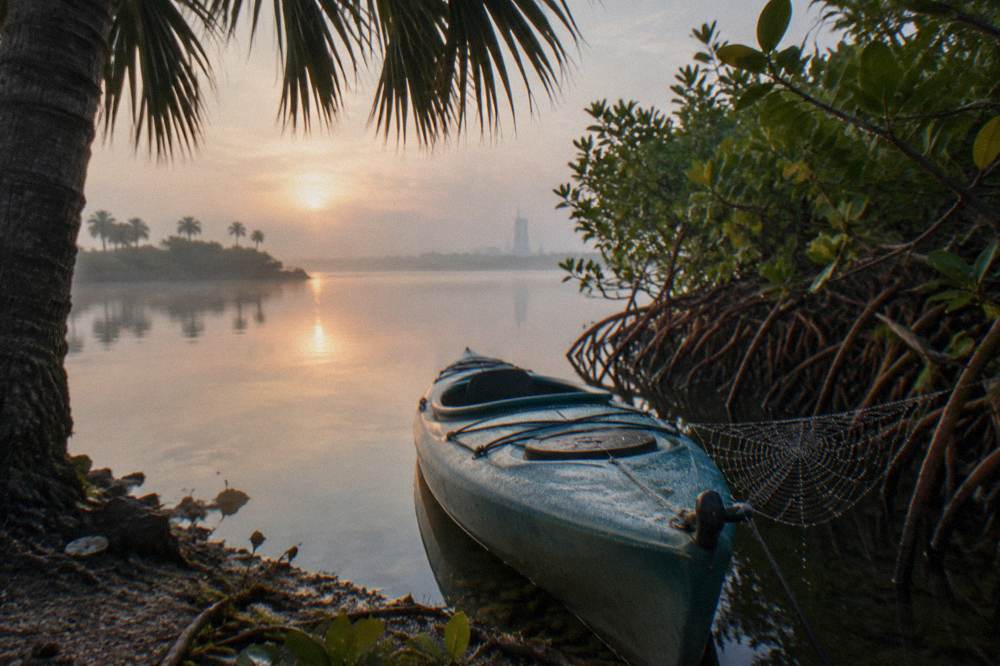
The case for a guide is easiest to see in the group sizes. The wildlife refuge paddle from the Merritt Island National Wildlife Refuge area caps at 10 paddlers; the mangrove tunnel tour caps at 11; the Indian River bioluminescent tour caps at 9. When the guide can see everyone in the group at once, the margin for a capsized paddler, a stuck kayak, or a sudden weather change is wide. Larger groups exist, up to 42 on one bioluminescence listing, and those tours compensate with multiple guides and routes in very sheltered water.
If you do paddle independently, the public launches are the same ones the tours use, and they are well chosen. Ramp Road Park on the Banana River in Cocoa Beach reopened in June 2026 after improvements, with parking managed under the city's paid parking program, daily 7 a.m. to 7 p.m. at beach access points and parks. Kelly Park East on Merritt Island is another calm, protected launch. Note that some ramps and roads inside Merritt Island National Wildlife Refuge require a daily pass, $10 per vehicle, purchasable at the visitor center, self-pay stations or online, and refuge roads and ramps are open sunrise to sunset, per the refuge's official visit page.
The honest trade-off is freedom versus margin. Alone, you choose your route and your pace, and on a weekday morning the Thousand Islands can feel like your private lagoon. With a guide, you give up some of that solitude and gain someone who knows where the manatees were yesterday, how the wind will shift by eleven, and which tunnel has the roseate spoonbills in it this week. For a first paddle in an unfamiliar estuary, that trade favors the guide, and the price difference is smaller than most visitors expect: guided tours on this roster start at from $50 per person.
A Practical Safety Checklist Before You Launch
Before any lagoon paddle, guided or not, check five things: the forecast for thunderstorms, the life jacket fit for every person including any child under 6, your water supply, a whistle and light if the trip runs past dusk, and the launch point's parking rules. Every one of these is a five-minute check, and together they remove nearly all of the avoidable risk from a Cocoa Beach paddle.
The checklist below is the same one a good guide runs mentally before every departure. It is worth having even when someone else is running it, because knowing what should be true lets you notice when it is not.
| Check | Why it matters | What good looks like |
|---|---|---|
| Forecast and radar | Afternoon lightning is the lagoon's main hazard | Morning departure, no storms within the tour window |
| Life jacket per person | Florida requirement; children under 6 must wear one | Correct size, buckled, worn not sat on |
| Water and sun protection | No shade on open water; heat builds fast | More water than feels reasonable, hat, sunscreen applied before arrival |
| Whistle and white light | FWC requirement; light needed at night or in fog | Clipped whistle, light accessible, not buried in a dry bag |
| Launch and parking | Some lots are paid; refuge ramps need a pass | Cash or app ready, arrival 15 minutes early to sign waivers |
| Wildlife distances | 50 yards from dolphins; never touch or feed a manatee | Guide briefed, distance kept, behavior watched |
Two small additions earn their place. Arrive early: several listings ask for arrival 15 minutes before departure to sign waivers, and a rushed start is how life jackets end up worn loose. And leave the headphones home. On a paddle, your ears are a safety tool, for thunder, for approaching boats, and for your guide's instructions across the water.
That is the whole picture. The Indian River Lagoon around Cocoa Beach is one of the gentler places in Florida to be in a small boat, the rules that protect you are short enough to memorize, and the animals you came to see are protected by rules that are just as short. Pick a guided tour that supplies the gear, show up early, and the lagoon does the rest. These three paddles are the ones we would shortlist for a first visit:
Common Questions About Kayaking The Indian River Lagoon
Is it safe to kayak in the indian river lagoon?
Yes, for most people it is a low-risk activity. The lagoon is shallow, sheltered and warm, guided tours keep small groups with professional guides, and Florida law requires a USCG-approved life jacket per person, a whistle, and a white light for night paddling. The main hazards are sun, heat and afternoon thunderstorms in summer, all of which are avoidable with a morning departure.
Do I need to wear a life jacket kayaking in Florida?
Florida requires one USCG-approved wearable life jacket per person on board any kayak or paddleboard, and children under 6 must wear theirs at all times. Everyone else is strongly advised to wear one, and on guided Cocoa Beach tours wearing it is standard practice. Every tour on this site's roster includes life jackets in the listing price.
Are there alligators in the Indian River Lagoon near Cocoa Beach?
Alligators prefer freshwater, so they are uncommon in the brackish lagoon behind Cocoa Beach and are rarely seen on guided paddles there. They do live in the freshwater canals and retention ponds of Brevard County inland. A gator encounter on a guided lagoon tour is a notable event, not a routine one, and a dangerous one is close to unheard of.
Can a manatee or dolphin hurt my kayak?
Injuries to paddlers from these animals are extremely rare. The rules run the other way: manatees are protected by the Florida Manatee Sanctuary Act, which makes touching, feeding or chasing them unlawful, and NOAA Fisheries requires at least 50 yards of distance from dolphins viewed from any watercraft. Stay still, keep your distance, and let the animals choose whether to pass.
Is it safe to kayak the lagoon at night for bioluminescence?
Guided night paddles are safe and routinely run from calm, protected launches such as Kelly Park East, Kiwanis Island Park and Manatee Cove Park. Florida's night requirements apply: life jacket, whistle, and a white light ready to signal. The bioluminescent tour from Manatee Cove Park lists a kayak, life jacket, whistle and safety light as included, along with a professional guide.
Do I need experience to join a guided kayak tour?
No. Tours on this roster run a short paddle lesson on land before launching, and guides stay with the group the entire time, a point several listings state explicitly. Group sizes range from as small as 6 to as large as 42 depending on the tour, and the smallest groups are the most comfortable fit for a nervous first timer.