What To Wear On A Cocoa Beach Boat Or Kayak Tour?
A practical packing and clothing guide for Cocoa Beach dolphin boat tours, daytime kayak tours and night bioluminescence paddles: sun kit, footwear, layers and what the listings actually include.
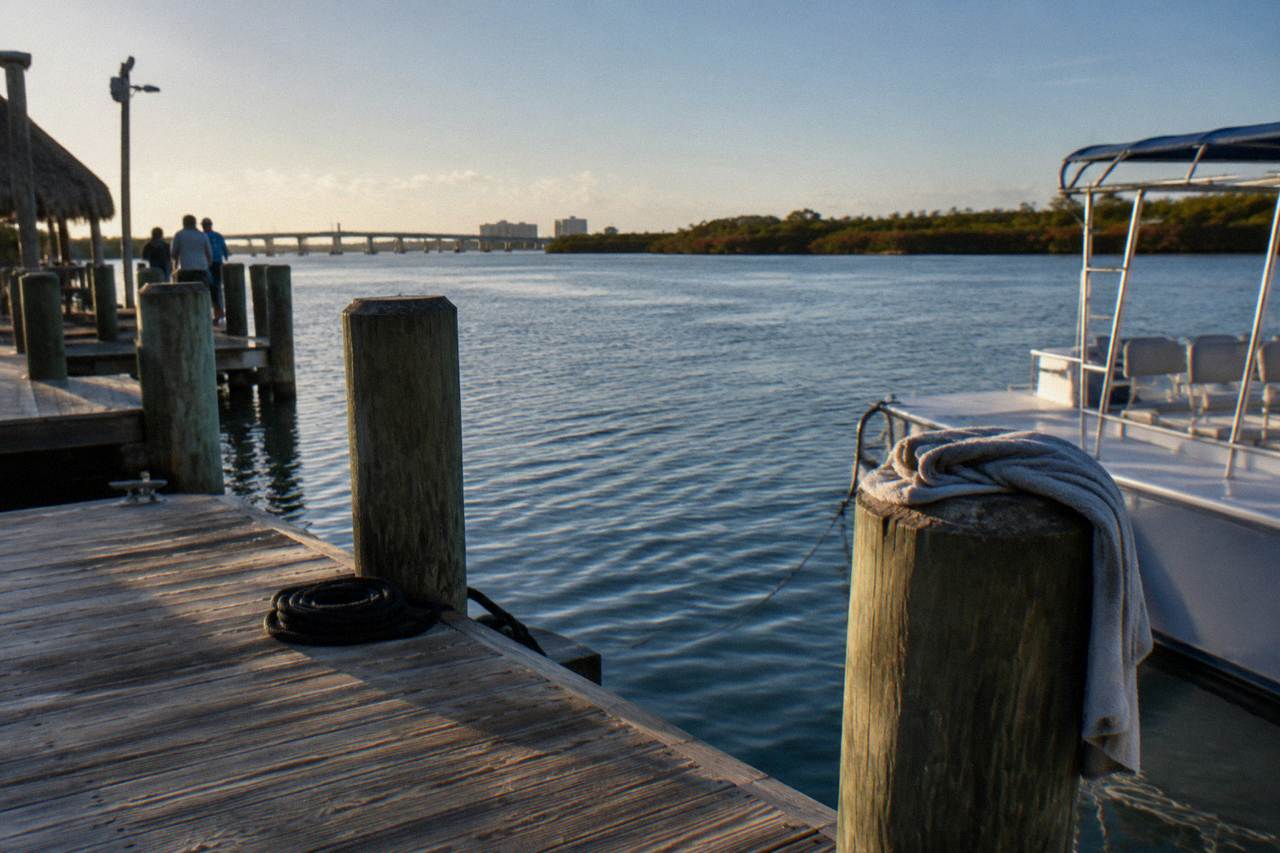
Cocoa Beach sits on a shallow lagoon system where the sun, the spray and the insects all have opinions about your outfit. The town's dolphin boat tours leave from the Banana River side, the kayak tours launch from lots on Tom Warriner Boulevard and the Aquatic Center, and the night bioluminescence paddles push off from Merritt Island parks after dark. Same stretch of Florida water, three genuinely different packing problems. This guide works through each one, using only what the tour listings actually say they include, from life jackets to rain ponchos, so nothing here is guesswork.
What To Wear On A Cocoa Beach Boat Or Kayak Tour?
The short answer for a Cocoa Beach boat tour or kayak tour: quick-dry clothing, a hat with a brim, sunglasses, reef-safe sunscreen applied before arrival, and closed-toe sandals or water shoes. Every listing on the roster supplies life jackets. Rain ponchos are supplied only on the eco boat activity. For a night bioluminescence paddle, add a warm layer and bug spray, because both are excluded from most listings.
That is the skeleton. The details differ by format, and the differences matter more than most packing lists admit. A two-hour boat tour with a bathroom on board is a forgiving environment: you can bring a bag, stash a jacket, change plans. A tandem kayak in the mangrove tunnels is a sealed system: whatever you wear when you launch is what you have for two hours, and the listing for that tour specifically asks you to apply sunscreen before arrival, not at the dock.
The sun is the constant. Florida's UV in summer is brutal before 10 a.m., and the water doubles your exposure by reflecting light back up at you. Then the format decides everything else. If you want a quick comparison of the boat and kayak formats before you pack for either, the how to choose a dolphin tour guide walks through the trade-offs, and the site's tour picker does the same in three questions.
If you already know your format, these three cover the range: a stable eco boat with ponchos supplied, a mangrove kayak with photos included, and the night bioluminescence paddle that needs its own layer strategy.
Sun Protection: The One Decision That Ruins Trips When Ignored
Sun protection is the highest-stakes clothing decision on any Cocoa Beach tour: a brimmed hat, polarized sunglasses with a strap, a rash guard or long-sleeve sun shirt, and sunscreen applied before you arrive. The mangrove kayak listing explicitly asks that sunscreen go on prior to arrival, and no boat or kayak tour on the roster supplies it. Plan for reflected glare off the water, which hits your face and the underside of your chin even in shade.
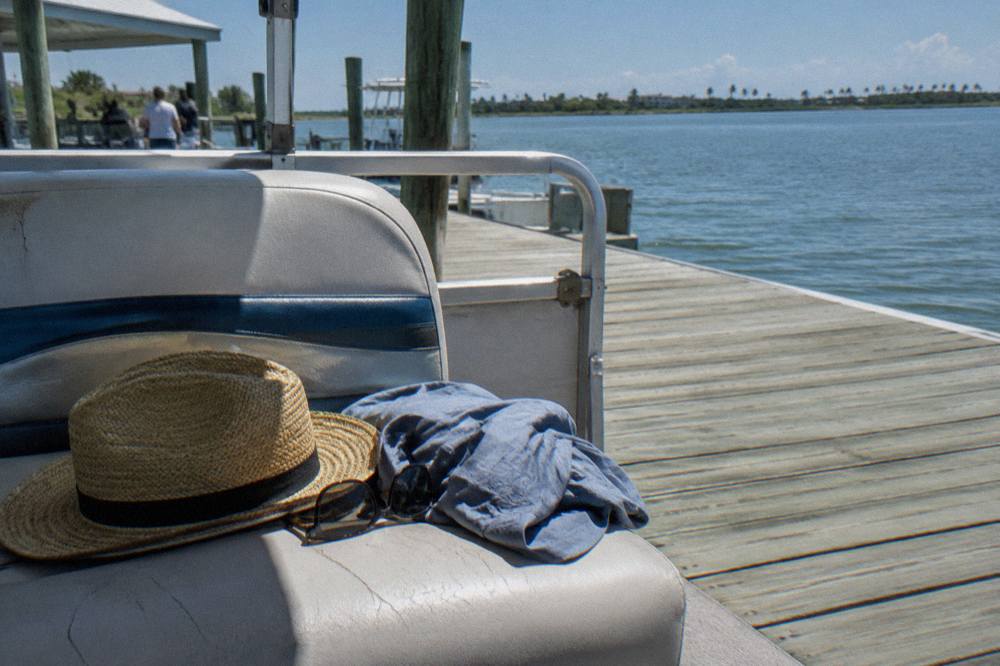
A quick-dry long-sleeve shirt outperforms sunscreen alone on a two-hour paddle, because it never sweats off and never needs a mid-tour reapplication on hands that are wet. Rash guards and swim shirts are the standard answer. Light colors beat dark ones in direct sun, though dark can help on the night paddles where sun is not the issue. A hat with a chin or neck cord survives the boat's cruise-speed wind; an unsecured ball cap on a moving pontoon is a coin flip.
Polarized sunglasses do two jobs here. They cut the surface glare so you can actually watch dolphins through the water rather than at it, and they protect your eyes during two hours of constant lagoon reflection. A cheap strap keeps them on your head during a paddle stroke or a sudden look up when someone shouts "dolphin, port side." Sunscreen should be the reef-safe kind; this is a lagoon estuary, and several listings ask for pre-applied sunscreen rather than on-board application for exactly that reason.
The timing question comes up on the kayak tours specifically. The sunset mangrove kayak listing states plainly: apply sunscreen prior to arrival. On a tandem kayak there is nowhere stable to set a bottle, and dripping lotion onto a fiberglass or plastic hull makes the deck slippery. Do it in the parking lot at Tom Warriner Boulevard, let it absorb, then launch. The same logic applies to insect repellent on the dusk departures, which we cover in the night paddle section.
Wondering what the trip itself looks like before you pack for it? The what to expect on a dolphin and wildlife tour guide covers the on-water sequence, and the eco boat's own listing carries free cancellation if the forecast turns.
What To Wear On A Dolphin Boat Tour In Cocoa Beach?
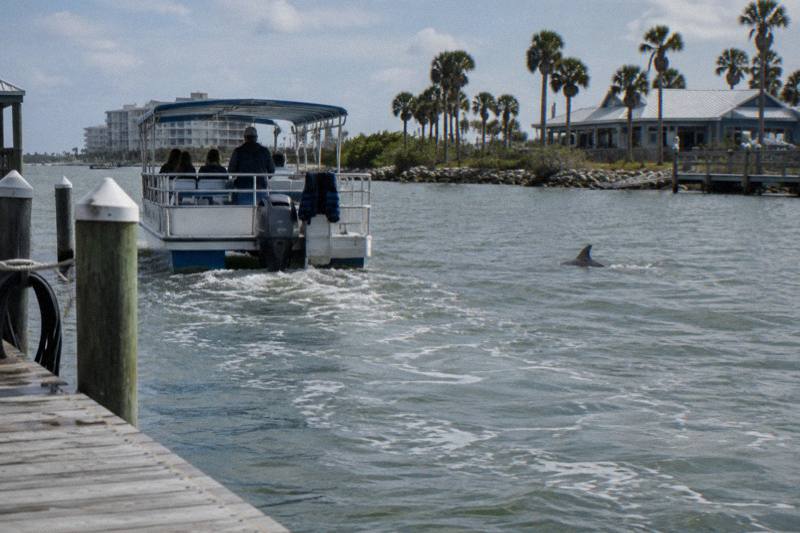
For a Cocoa Beach dolphin boat tour, wear quick-dry casual clothes you would not mind getting sprayed: shorts or light trousers, a sun shirt, a hat and sandals with a heel strap. The eco boat activity is the only listing that supplies rain ponchos, the two-hour dolphin and wildlife tour has toilets on board, and the sunset tour excludes snacks and drinks, so bring your own water bottle.
The boat format is the most forgiving of the three, and people routinely over-pack for it. You are not paddling, so your clothing stays mostly dry unless the wind pushes spray over the bow on the run between dolphin sightings. The big Dolphin and Wildlife Tour and the Sunset Tour both carry up to 49 passengers on the Banana River near the causeway, which means bench seating, rail viewing and a bathroom down below. That bathroom changes your clothing math: you can layer up for a cool morning departure knowing you can shed a layer without a production.
The eco activity listing is unusually generous on gear. It includes the captain and guide, rain ponchos, free parking and a bathroom on the boat. That poncho line matters for packing: a sudden Space Coast squall on a 2.5-hour trip is a real scenario in summer, and this is the one listing where you can leave your own rain shell in the car. Note the cancellation policy difference too, because it affects what you wear on the day: the eco activity does not offer free cancellation on the listing, unlike most of the roster, so the weather call is more consequential when you book it.
The small-group sail from Cape Crossing Resort and Marina caps at 6 guests and includes soda and bottled water on board, which tells you the seating is social and close to the waterline. Shorts dry fast there. The tiki boat sightseeing tour, also from Cape Crossing, is a flat deck with bar seating: flat soles beat heels, and the deck can be wet near the rails.
Here is how the boat roster compares on what it supplies versus what you must bring:
| Boat tour (from price) | Supplies per listing | You bring |
|---|---|---|
| Dolphin and Wildlife Tour, 2h, from $38.99 | Toilets on board | Water, sun kit |
| Dolphin and Wildlife Eco Activity, 2.5h, from $42.80 | Rain ponchos, free parking, bathroom, captain and guide | Water, sun kit |
| Sunset Tour, 2h, from $38.99 | Toilets on board | Snacks and drinks, all excluded on the listing |
| Dolphin Adventure Sail, 2h, from $50.85, max 6 | Soda, bottled water | Sun kit, wind layer |
| Banana River, Canaveral Locks Cruise, 2h, from $40 | Operator-run cruise | Sun kit, camera |
One practical note that saves a surprising number of trips: the meeting point for the two big dolphin boats is the dock at Sunset Waterfront Bar and Grill, 200 feet from the customer lot at 420 W Cocoa Beach Causeway. That is a two-minute walk on hot asphalt. Wear shoes you can actually walk in, not flip-flops you are breaking in.
What To Wear On A Kayak Or Paddleboard Tour In Cocoa Beach?
For a Cocoa Beach kayak tour, wear clothes that can get fully wet without ruining your day: boardshorts or quick-dry leggings, a rash guard, water shoes or strapped sandals, and a clip for sunglasses. Every kayak listing supplies life jackets and paddles; dry bags are included on the wildlife refuge paddles and the ecological manatee tour, but not everywhere, so check your specific listing.
Florida law treats kayaks and paddleboards as vessels, and the Florida Fish and Wildlife Conservation Commission requires one USCG-approved wearable life jacket per person on board, worn by children under 6 and strongly advised for everyone else. You do not need to bring your own: the listings all include them, from the high-back seats and life jackets on the mangrove tunnels tour to the PFDs on the bioluminescence paddles. Wear it rather than sitting on it. The FWC states this plainly on its paddlecraft regulations page.
Footwear is where kayak tours punish bad choices. You will step in the water at the launch, either at the Tom Warriner Boulevard lot, Ramp Road Park or Kiwanis Island, and the bottom is soft muck in places. Water shoes with a sole, or sandals with a heel strap, keep you attached to your footwear and off the oyster shells. Barefoot works for some paddlers on the tandem tours; it does not work on the paddleboard formats where you stand and the deck gets hot.
The clothing itself should assume a wet seat at minimum. Cotton is the enemy: it holds lagoon water against your skin and stays cold when the wind picks up. Synthetic or merino quick-dry fabric, a rash guard over a swimsuit, and a hat you can secure. The mangrove tunnels tandem kayak tour includes complimentary photos of your experience, which is a quiet argument for looking like you planned the trip: those photos land in your inbox whether or not you dressed for them.
On storage, read your listing closely before assuming your phone will survive. The mangrove tunnels tour, the sunset mangrove tour and the wildlife refuge paddles include dry bags or the equivalent. The bioluminescence kayaks include kayak, paddle, PFD and a whistle and safety light on some options but list bottled water as excluded, which tells you there is no cooler of supplies waiting. Whatever the listing says, a zip-lock bag inside a zip-lock bag is a reasonable backup for a phone.
The mangrove tunnels tour is the one to beat for a first paddle: a 5.0 rating from 898 reviews, from $64.82 per person, free parking, and high-back seats that make two hours of paddling comfortable for beginners. Check availability on the live listing for your date, since the 11-person group cap fills on weekends.
What To Wear On A Night Bioluminescence Paddle?
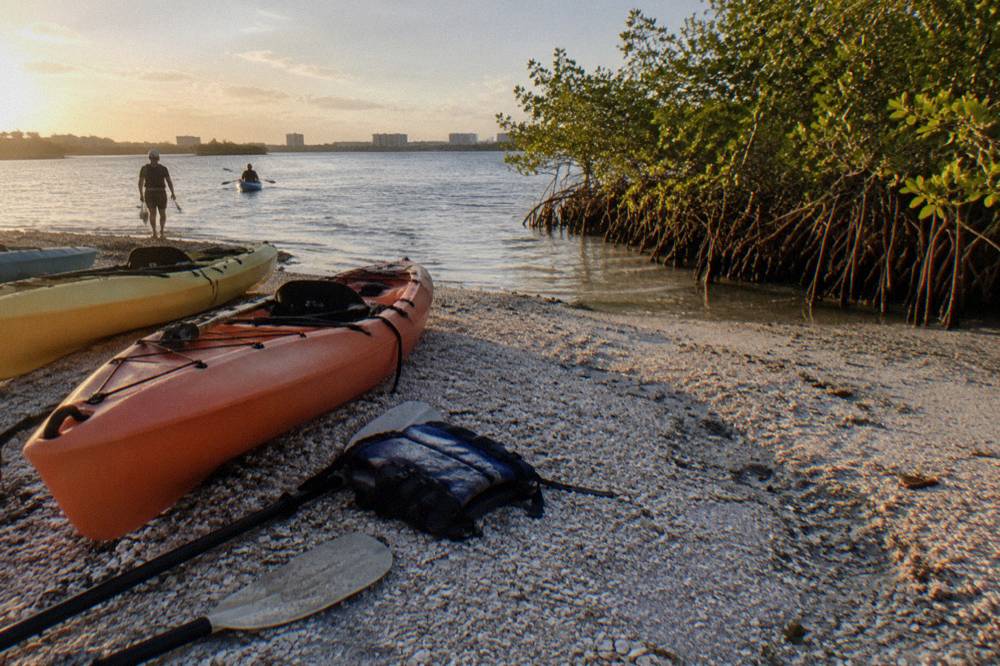
For a night bioluminescence paddle near Cocoa Beach, wear a warm layer even in summer, full-length coverage for bugs, water shoes, and dark clothing if you want the best photographs. The listings include kayak, paddle, PFD and, on the Indian River Lagoon option, a whistle and safety light. Bug spray is on you: multiple listings list it as an exclusion or ask you to bring it.
The warm layer advice sounds wrong for Florida, and it is the single most common mistake on these tours. The bioluminescence paddles leave around and after sunset from Kelly Park East, Kiwanis Island Park or Manatee Cove Park on Merritt Island, run 1.5 to 2 hours, and you are sitting wet in moving air the entire time. Evening water temperatures feel far cooler than the afternoon's, especially with wind across the lagoon. A fleece or windbreaker over your rash guard turns the last hour from shivering into comfort.
Bug spray is the other non-negotiable. Dusk on a Florida lagoon is mosquito prime time, and the listings are explicit: the bioluminescent Indian River Lagoon tour asks you to bring bug spray for a night tour, and the sunset mangrove tour asks for pre-applied sunscreen while excluding bottled water. Apply repellent at the car, long before the launch, and wear long sleeves and full-length lightweight trousers rather than relying on chemicals alone. Light-colored clothing also makes it easier for your guide to keep track of you in the dark, a small point that matters on the 42-person group sizes some bio tours run.
For photographers, dark clothing reduces the light pollution that ruins long exposures of the glow, and a red-light headlamp preserves everyone's night vision including your own. The Florida night-paddling safety rules require a white light ready to signal, which the tour carries; your job is mostly to not blind your fellow paddlers with a phone flashlight. The dinoflagellate season runs roughly late May into early October, with the brighter comb jelly glow taking over in the cooler months, and the moon phase matters for contrast. The bioluminescence season guide breaks down the timing, and the is bioluminescent kayaking worth it article weighs the experience itself.
No listing guarantees the glow, and no listing should: bioluminescence is a wild organism whose density varies with water temperature, salinity and recent weather. Operators reposition between launch sites when levels drop, which the Kiwanis Island listing states outright with its alternate-launch note. Dress warm, arrive sprayed, and treat the glow as very likely rather than promised.
The Bioluminescence Kayak Tour from Kelly Park East runs 2 hours from $75 per person with a 4.8 rating from 928 reviews and free cancellation, which is worth having on a moon-and-weather dependent trip.
Footwear And Fabric: The Small Choices That Decide Comfort
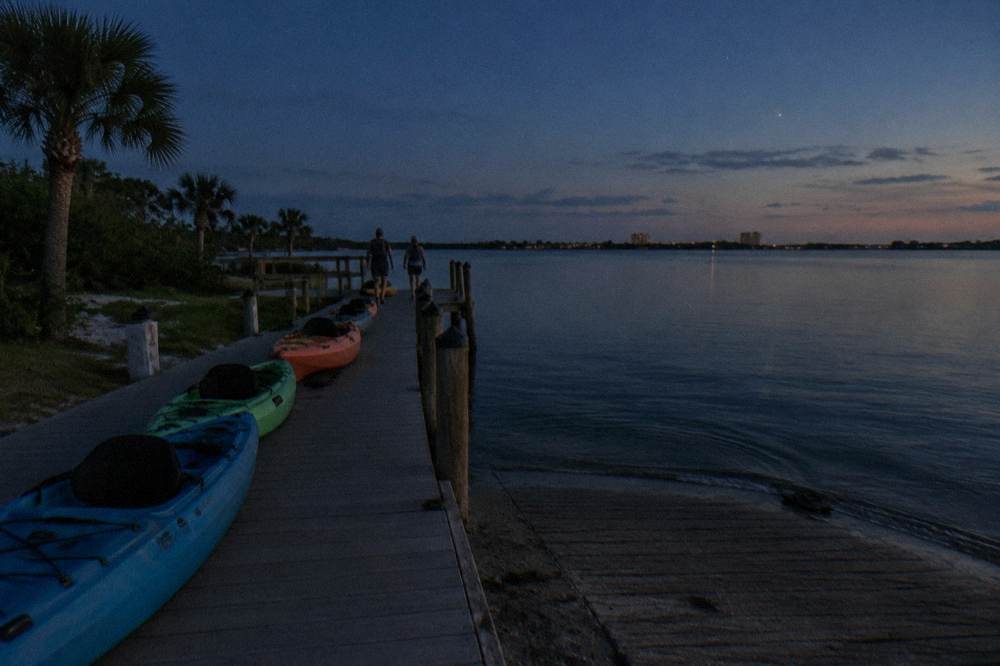
Choose closed-toe water shoes or strapped sandals for every format, quick-dry synthetic fabric over cotton for everything, and skip denim entirely. The launches involve soft muck and hot asphalt, the boats involve wet decks, and cotton, once soaked with lagoon water, stays cold and heavy for the rest of the tour.
Footwear breaks down by format. Boat tours: anything you can walk a parking lot in, since the dolphin boats board at a restaurant dock and the sail and tiki tours board at a resort marina. Kayak tours: a sole that handles muck, because the Tom Warriner, Ramp Road and Kiwanis Island launches all put your feet in the water. Night paddles: the same water shoes, plus a check that they are broken in, because a blister discovered at 10 p.m. two miles from the launch is a long hour home.
On fabric, the hierarchy is simple. Synthetic quick-dry and merino perform. Cotton fails, slowly and then thoroughly. A swimsuit under a rash guard covers most paddlers; leggings or boardshorts over the suit cover the rest. For the night paddle, add the warm layer already discussed. For anyone sensitive to sun, a neck gaiter adds protection on the water without a reapplication cycle, and it doubles as a bug barrier at dusk.
A compact what-to-wear summary by format:
| Item | Boat tour | Daytime kayak | Night bio paddle |
|---|---|---|---|
| Life jacket | Not worn on board | Supplied, wear it | Supplied, wear it |
| Sun shirt or rash guard | Yes | Yes | Yes, under a layer |
| Hat with strap | Yes | Yes | Optional, warm hat better |
| Rain poncho | Supplied on eco boat only | Bring a light shell | Warm layer instead |
| Bug spray | Rarely needed | Dusk departures: yes | Yes, apply at the car |
| Footwear | Any walking shoe | Water shoes or strapped sandals | Water shoes, broken in |
| Dry storage | Cabin or bag | Dry bag on some listings | Dry bag or double zip-lock |
What Not To Wear Or Bring On The Water
Leave denim, loose flip-flops, cotton hoodies, glass bottles and valuable jewelry off every Cocoa Beach tour. Two boat listings explicitly exclude alcoholic beverages, several exclude soda and snacks, and two state that animals are not permitted on board. Drones, fishing gear and spearfishing equipment appear nowhere in the listings and have no place on a wildlife tour.
The exclusions on the listings are the honest guide here. The two big dolphin boats exclude soda and pop and state no animals, which rules out bringing the dog to the dock. The Sunset Tour additionally excludes snacks and alcoholic beverages. The small-group sail excludes alcohol and snacks but includes soda and bottled water. None of this is arbitrary: these are wildlife tours on a protected lagoon, and the operators keep the decks clean and the animals untempted.
Beyond the written rules, the practical fails are consistent. Phones without a lanyard or pocket go into the lagoon at a steady rate, especially during the moment a dolphin surfaces and everyone lunges for a photo. Expensive sunglasses without a strap follow them. Denim shorts feel fine at the dock and are miserable an hour into a wet kayak seat. And anything you would be upset to lose should either stay in the car or go into the dry bag your listing provides.
There is a wildlife-rule dimension too, not just a comfort one. NOAA's marine life viewing guidelines require staying at least 50 yards from dolphins when viewing from watercraft, and feeding or harassing wild dolphins is illegal under the Marine Mammal Protection Act. Nothing you wear violates that, but the temptation to reach out from a kayak when a manatee drifts past is real, and the Florida Manatee Sanctuary Act makes touching, feeding or pursuing manatees unlawful. The NOAA viewing guidelines and the FWC manatee viewing rules spell it out. Dress to watch, not to touch.
Weather, Seasons, And Booking Around The Forecast
Atlantic hurricane season runs June 1 to November 30, thunderstorms build most afternoons in summer, and tour operators, not visitors, make the weather call: most Cocoa Beach listings offer free cancellation and rebooking when a departure is scrubbed. Pack a light rain shell everywhere except the eco boat, which supplies ponchos, and watch the forecast rather than the calendar when choosing a departure time.
The Space Coast summer pattern is predictable enough to plan around: clear mornings, building clouds, afternoon storms, clearing evenings. That makes morning boat tours and sunset paddles the calmest windows, and it is no accident the roster leans on those times. The kayak tours in the mangroves are sheltered enough to run through scattered cloud. Winter flips the problem: cold fronts bring wind that can scrub kayak departures, and the same warm layer logic from the night paddle section applies to any December or January morning tour.
Who announces a cancellation matters. Operators make the safety call and contact booked guests; the city manages launch conditions, and Ramp Road Park on the Banana River, one of the kayak meeting points, reopened in June 2026 after improvements with parking managed under the city program. City parking at beach access points and parks is paid daily 7 a.m. to 7 p.m., so factor a parking step into your arrival time, or choose listings that include free parking: the eco boat and the mangrove tunnels kayak both do.
Water temperature is a useful packing input. Cocoa Beach sea temperatures run roughly 70 to 72 degrees in January, around 82 in the peak of summer, and back to the low 70s by December. The tours run year-round regardless, but the shoulder months, April, May and October, are the ones where a layer you can shed earns its place in your day bag.
If you are still choosing between formats, dates or price points, the dolphin tour prices guide lays out the full roster cost by cost, and Dolphin Tours Cocoa Beach keeps the comparison current across boat, kayak and night paddle options.
Whatever you book, the clothing answer circles back to the same three sentences. Cover your skin from the sun. Expect to get at least your seat wet on a kayak. Bring one more layer than you think you need after dark.
Common Questions About What To Wear On A Cocoa Beach Tour
What To Wear On A Cocoa Beach Boat Or Kayak Tour?
Wear quick-dry clothing, a brimmed hat, polarized sunglasses with a strap and water shoes or strapped sandals. Apply sunscreen and, for dusk trips, bug spray before arrival. Life jackets are supplied on every kayak and paddle tour; rain ponchos are supplied only on the eco boat activity; bring a warm layer for night bioluminescence paddles.
Do Cocoa Beach tours supply life jackets?
Yes. Every kayak and paddleboard listing on the roster includes life jackets and paddles, and Florida law requires one USCG-approved wearable life jacket per person, worn by children under 6. Guides fit them at the launch, so you do not need to bring your own.
Should I wear sneakers or sandals on a kayak tour?
Water shoes or sandals with a heel strap beat both. The launches at Tom Warriner Boulevard, Ramp Road Park and Kiwanis Island put your feet in soft muck and shallow water, so footwear needs a sole and needs to stay attached. Bare feet work for some paddlers but leave you exposed to shells and hot decks.
What should I wear on a bioluminescence kayak tour?
A warm layer over quick-dry clothing, full-length sleeves and trousers for bugs, water shoes, and bug spray applied before arrival. Bring your phone in a double zip-lock or dry bag. The listings include kayak, paddle and PFD, and the Indian River Lagoon option includes a whistle and safety light.
Can I bring a bag or backpack on the boat tours?
Yes, the boat format is forgiving: the two big dolphin boats have toilets on board and bench seating, so a small day bag is manageable. The eco boat supplies rain ponchos, free parking and a bathroom. On kayaks, storage is limited to what the listing includes, and several but not all kayak tours provide dry bags.
Do I need bug spray on a dolphin boat tour?
Rarely on the boats, which move through open water, but yes on dusk kayak departures and always on night bioluminescence paddles. Several listings name bug spray or bottled water as exclusions or ask you to bring it, so treat repellent as your own responsibility on any sunset or after-dark tour.