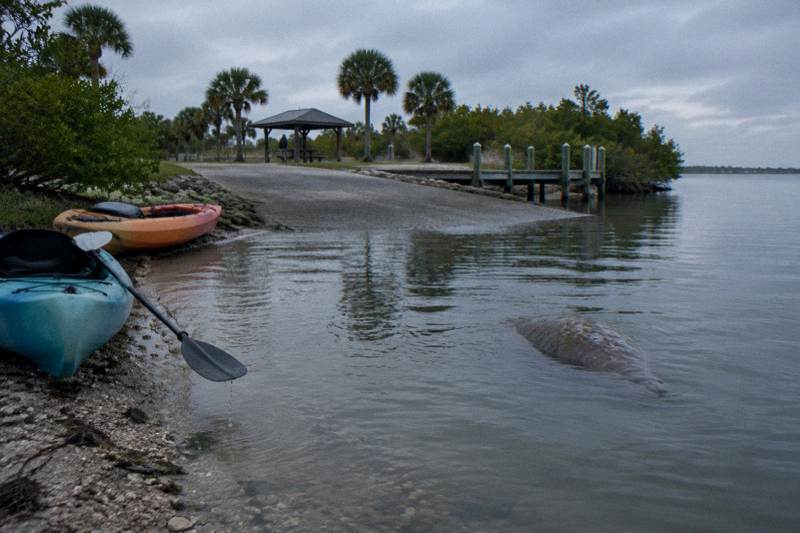
When Can You See Manatees In Cocoa Beach?
Manatees live year-round in the Cocoa Beach area, with sightings peaking in spring and summer. This guide covers the best months, the best viewing spots and the rules that protect them.
When Can You See Manatees In Cocoa Beach?
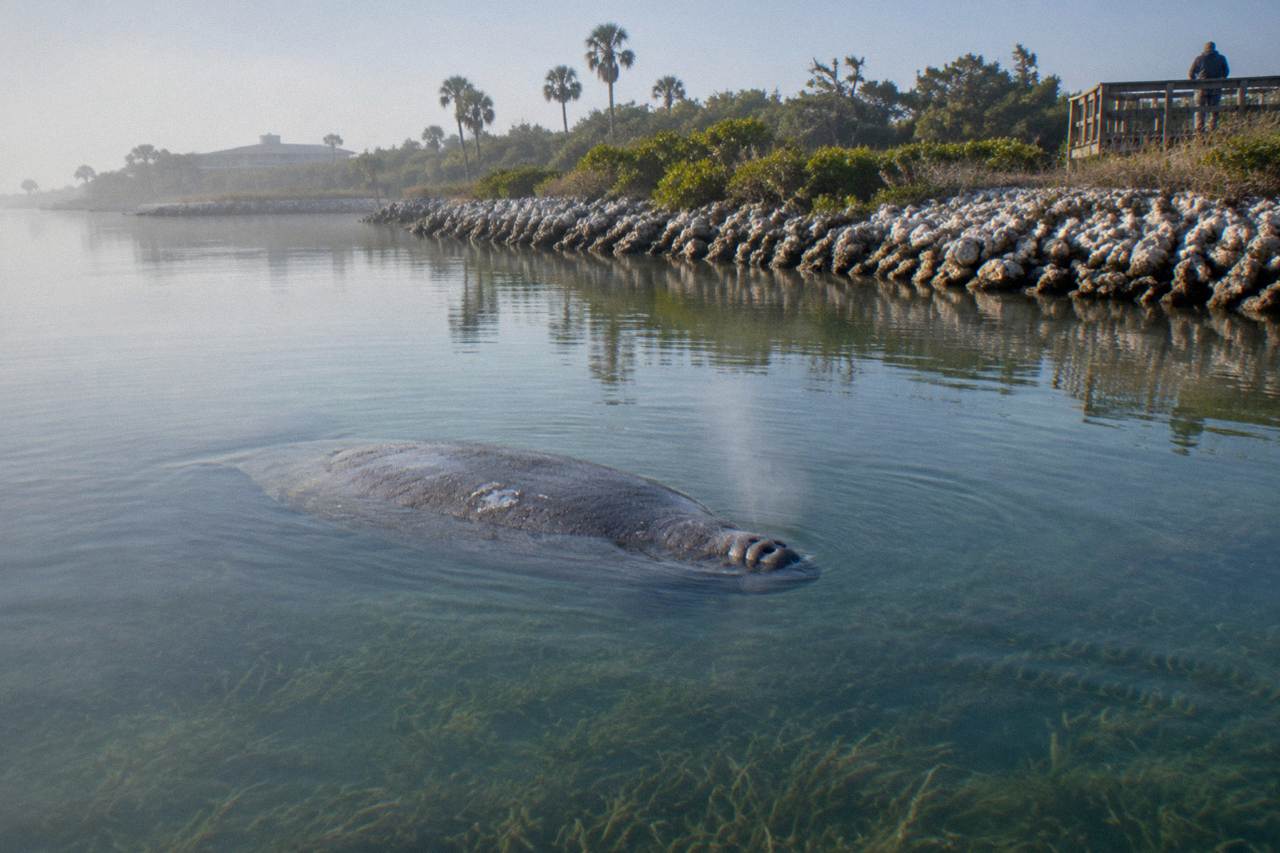
Manatees are present in the Cocoa Beach area every month of the year. The Indian River Lagoon system, which includes the Banana River just west of the beach, is one of the most important manatee habitats on Florida's Atlantic coast, and the animals shift around inside it as water temperatures move. In spring and summer they spread out to feed on recovering sea grass almost anywhere in the lagoon, including the Thousand Islands mangrove maze behind Cocoa Beach. When winter cools the water, they concentrate near warm refugia and power-plant outfalls, which changes where a visitor should look.
When Can You See Manatees In Cocoa Beach?
You can see manatees in Cocoa Beach at any time of year, because a resident population stays in the Banana River and Indian River Lagoon system through every season. Sightings are most frequent from April through October, when warm water spreads the animals across feeding grounds close to shore. Winter viewing is possible but concentrated at a smaller number of warm-water spots farther from the beaches.
The practical answer depends on what kind of encounter you want. A paddler on a summer morning in the mangrove tunnels off Ramp Road Park has a realistic chance of a manatee surfacing within a few yards, because the animals are feeding, mating and traveling everywhere in the lagoon at that time of year. A visitor in January has fewer animals nearby but can find them reliably at warm-water aggregation sites, where dozens may gather in a single basin, and where viewing platforms and slow-speed zones exist for exactly that purpose.
Local reporting from June 2026 captured this seasonal pattern well: Florida Today documented a manatee mating aggregation in the Indian River Lagoon near Cocoa, with multiple animals gathered near Dixon Boulevard and Indian River Drive for most of a day. Mating herds like that one are a warm-season phenomenon around here, and they are one of the most dramatic manatee sights a visitor can witness from shore without a boat at all.
There is no month in which manatees vanish from Brevard County. What shifts is distribution. That single fact drives almost every timing decision below, and it is why the answer to "when" is really two answers: when are they closest to Cocoa Beach, and when are they easiest to find in numbers.
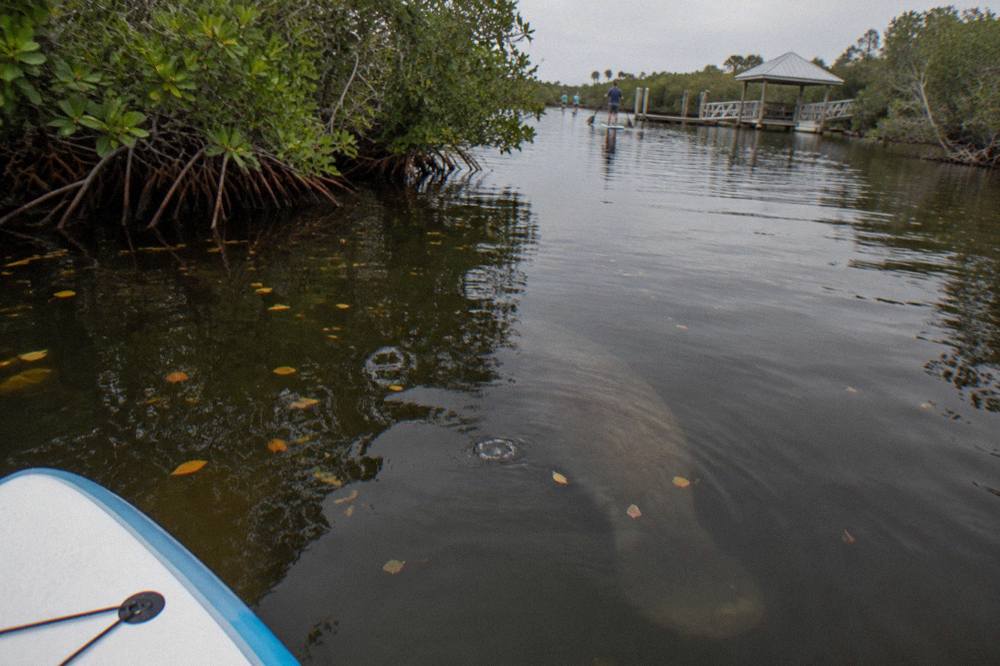
For travelers who want the encounter from the water rather than from a dock, a guided kayak tour removes most of the guesswork. Guides track where manatees have been feeding all week and paddle to those areas, which matters in a habitat this large. The related tour on this page, the Manatee and Dolphin Kayak Tour, launches from Ramp Road Park right in Cocoa Beach, and you can Check availability if the timing lines up with your trip. Our guide to choosing a Cocoa Beach dolphin tour walks through the same decision for boat-based viewing.
Which Months Have The Most Manatees Near Cocoa Beach?
April through October is the high season for manatee sightings near Cocoa Beach, with the warmest months, June through September, offering the most encounters on the water. Manatees disperse widely across the lagoon to feed on sea grass in this window, so tours out of Cocoa Beach and Merritt Island report them regularly. Winter months thin the local crowd but concentrate animals elsewhere.
Water temperature is the engine behind this calendar. Manatees are vulnerable to cold stress when lagoon water cools in winter, and Cocoa Beach's sea temperatures run from roughly 70 to 72 degrees in January to about 84 degrees at the September peak. In the warm months the whole lagoon is comfortable habitat, and the animals behave accordingly: they graze, rest and travel through the same mangrove channels and shallow flats that kayak tours use.
A monthly summary looks like this, built from the seasonal pattern in the verified lagoon data:
| Month | Water conditions | Manatee presence near Cocoa Beach |
|---|---|---|
| January | Around 70 to 72 degrees, coolest of the year | Fewest local animals; most move to warm refugia |
| February | Still cool, around 70 to 72 degrees | Similar to January, aggregations persist |
| March | Warming toward 72 to 73 degrees | Animals begin dispersing back to feeding areas |
| April | Near 75 degrees | Dispersal under way, sightings pick up |
| May | Near 79 degrees | Strong season begins, mating activity possible |
| June to August | 81 to 84 degrees | Peak: feeding and mating herds across the lagoon |
| September | Around 84 degrees, warmest on record averages | Excellent, before any cooling begins |
| October | Cooling toward 81 degrees | Very good, animals still widely spread |
| November | Near 77 degrees | Declining locally, movement toward refugia starts |
| December | Back to roughly 72 degrees | Low near the beach, high at warm-water spots |
Two notes of caution on that table. It describes a typical year, not a promise for a specific week, because cold fronts in November or a warm February can shift the pattern. And it describes where the animals are, not what any tour will show you: manatees are wild, sightings are never guaranteed by any operator, and any listing that says otherwise should be read skeptically. Our page on whether dolphin tours guarantee sightings covers the honest version of that question.
The sea grass recovery matters here too. Aerial mapping released by the St. Johns River Water Management District showed lagoon sea grass coverage growing from 9,924 hectares in 2023 to 17,042 hectares in 2025, a gain of more than 7,000 hectares. More food in more of the lagoon supports more manatees spending more of the year dispersed across it, which is one reason warm-season encounters near Cocoa Beach have become so dependable in recent seasons.
If the monthly view leaves you choosing between a summer trip and a winter one, weigh what you actually want to do. Summer favors paddlers and wildlife watchers who want animals near the beach town itself. Winter favors travelers willing to drive 45 minutes north to the refuge, where the viewing is from land. There is no wrong answer, only a different one.
Where Do Manatees Gather When The Lagoon Cools Down?
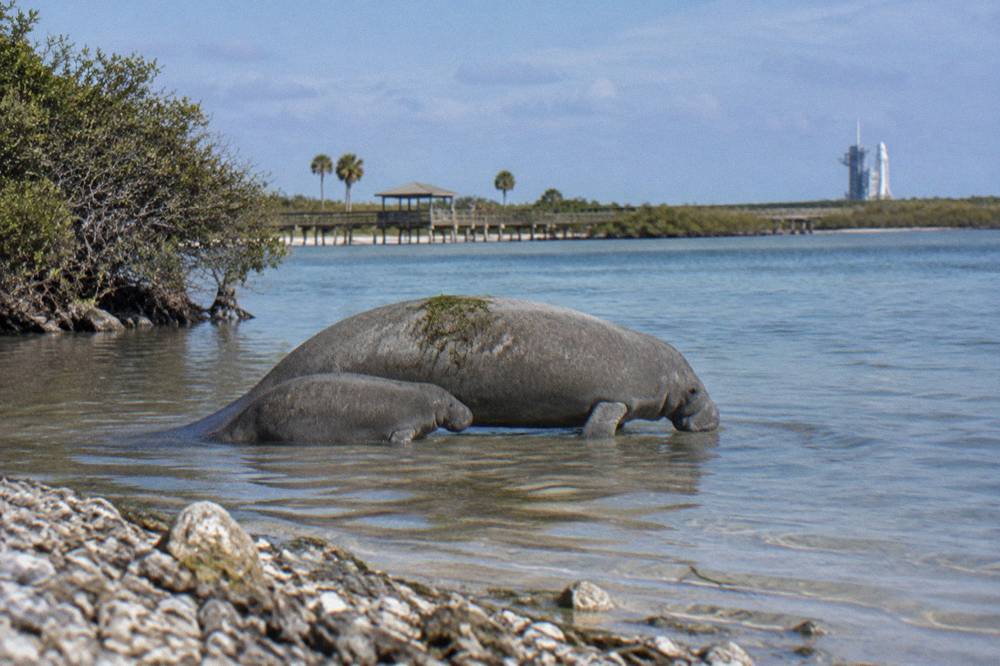
When water temperatures fall, manatees leave the open lagoon and concentrate at warm-water refugia, including spring runs, power plant discharge basins and passive thermal basins north of Cocoa Beach. Merritt Island National Wildlife Refuge operates an accessible Manatee Observation Deck for exactly this season. These sites hold the largest visible aggregations from December through February.
The refuge, which sits on the north end of the lagoon system, is the closest reliable winter destination for a Cocoa Beach visitor. Its roads, trails and boat ramps are open year-round from sunrise to sunset, and the Visitor Center is open Tuesday through Saturday, 8:30 a.m. to 4 p.m. A daily vehicle pass costs $10 and is required for some interior roads and ramps. The U.S. Fish and Wildlife Service's refuge visit page carries current hours, fees and any road notices before you drive up.
Winter aggregation viewing has a rhythm. Early morning is often best, because manatees cycle between warm refugia overnight and feed in nearby grass beds during the day. Watch for the tell-tale flat swirl on the water's surface, the tip of a snout breaking for a breath, or the round scar pattern many animals carry from past boat strikes. Patience beats motion: find a spot, wait, and let the animals surface on their own schedule.
Back in Cocoa Beach itself, winter manatee viewing is thinner but not zero. The Banana River's shallow flats warm quickly on sunny afternoons even in January, and a few animals, especially those not stressed by a particular cold snap, will still move through the Thousand Islands and the canals behind the causeway. Lori Wilson Park on State Road A1A has free parking and a 3,155-foot boardwalk if you want a shoreline vantage without a boat, and the Cocoa Beach Pier is free to walk for the same reason. Our free things to do in Cocoa Beach guide lists more of these no-cost viewpoints.
For visitors who would rather be on the water than at a railing, the refuge also anchors a different kind of tour. The Manatee and Dolphin Kayak Tour at the Wildlife Refuge out of Titusville, rated 4.9 from 231 reviews and priced from $55 per person, paddles the refuge's sheltered waters where manatees overwinter nearby. Its meeting point is sent after booking, which is typical for refuge-adjacent launches.
How Close Can You Get To A Manatee Legally?
Very close is legal, but only on the manatee's terms: Florida law prohibits touching, feeding, chasing, poking or disturbing manatees, and instructs paddlers to move away if a manatee reacts to their presence. The Florida Manatee Sanctuary Act makes harassment a criminal offense. Passive observation from a respectful distance is the only lawful form of manatee encounter in Cocoa Beach.
The rules are explicit and worth quoting in substance. The Florida Manatee Sanctuary Act of 1978 states that it is unlawful for any person, intentionally or negligently, to annoy, molest, harass or disturb any manatee. State penalties can reach a $500 fine and up to 60 days in jail, and federal penalties under the Marine Mammal Protection Act and Endangered Species Act run far higher. The Florida Fish and Wildlife Conservation Commission's manatee viewing guidelines spell out the practical version: look but do not touch, feed or give water to manatees.
For paddlers this creates a well-known paradox. Manatees are curious, and in the warm months one may drift toward a kayak or raise its snout within arm's reach. That is legal and unforgettable. What is illegal is reaching out, blocking an animal's path, or pursuing it when it moves away. The FWC's guidance for paddlers says that if a manatee responds to your presence, you are too close, and the right move is to withdraw. A responsible guide will say all of this before the paddle starts.
| Behavior | Legal status | What to do instead |
|---|---|---|
| A manatee approaches your kayak and surfaces nearby | Legal, if you stay still | Hold position, keep hands and paddle out of the water |
| Touching or petting a manatee | Illegal under state and federal law | Never, even if the animal seems to invite it |
| Giving fresh water from a hose or bottle | Illegal feeding-related harassment | Let the animal drink only from its environment |
| Chasing or following a departing manatee | Illegal harassment | Stop paddling and let it leave |
| Circling a resting animal for photos | Risky, can constitute disturbance | One pass, then move off |
| Watching from a dock, boardwalk or deck | Always legal | Use the observation deck or shoreline parks |
The same framework protects dolphins, by the way. NOAA Fisheries asks boaters and paddlers to stay at least 50 yards from dolphins, and its marine life viewing guidelines apply across the lagoon. If a question about swimming with manatees or dolphins comes up in your group, the short answer is no: swimming with wild dolphins in Cocoa Beach is covered in more depth on our dedicated page.
Which Tours Give You The Best Chance Of A Manatee Encounter?
Kayak and small-boat tours out of Cocoa Beach and Merritt Island offer the best manatee odds in the warm half of the year, with several operators reporting regular manatee sightings alongside dolphins. Prices run from about $38.99 per person for a large boat to $100 per person for a small wildlife-refuge paddle. No operator guarantees a manatee, but guided routes consistently beat solo paddling for encounters.
The reason is local knowledge. Manatees in the dispersed season move with the grass and the tides, and a guide who launched yesterday knows where the animals were. Kayaks also have an advantage over powerboats: silence. A quiet paddle through the mangrove tunnels off Tom Warriner Boulevard or the flats behind the Aquatic Center can pass within yards of a grazing animal without altering its behavior, which is the entire legal and ethical standard from the section above.
The main manatee-capable options on this site's roster:
| Tour | Style | Price from | Rating | Best season |
|---|---|---|---|---|
| Manatee and Dolphin Kayak Tour (Cocoa Beach) | Kayak, Ramp Road Park | $50 per person | 4.6 from 125 reviews | Warm months |
| Manatee and Dolphin Kayak Tour, Wildlife Refuge | Kayak, Titusville | $55 per person | 4.9 from 231 reviews | Year-round |
| Dolphin and Manatee Small Group Eco Boat | Boat, Kelly Park | $63 per person | 4.8 from 100 reviews | Warm months |
| Dolphin and Manatee Kayak and SUP Adventure | Kayak or SUP, Aquatic Center | $69.22 per person | 4.9 from 229 reviews | Warm months |
| Wildlife Refuge Manatee, Dolphin and Mangrove Paddle | Kayak or SUP, refuge area | $100 per person, 1.5 hours | 4.9 from 229 reviews | Year-round |
For families with small children or anyone unsure about paddling, the eco-boat side of the roster is the easier entry. The Cocoa Beach Dolphin and Wildlife Eco Activity, rated 5.0 from 309 reviews at from $42.80 per person for 2.5 hours, runs a larger vessel with a bathroom on board and rain ponchos included, and its route covers the same Banana River flats where manatees feed in season. Note that this one listing does not offer free cancellation, unlike most of the roster, which is worth knowing if your plans might shift.
Booking timing deserves a word. Warm-season weekend slots on the popular kayak tours fill ahead of time, especially around holidays, and our page on whether to book a Cocoa Beach dolphin tour in advance covers how far ahead is realistic. Weekday mornings are the quiet compromise: easier to book, calmer water, and manatees feeding actively after the overnight fast.
What Is Happening To The Lagoon's Manatee Food Supply?
The lagoon's sea grass, the manatee's main food, collapsed badly from 2009 to 2017, triggering a starvation mortality event that killed over 1,100 manatees in 2021 alone. FWC declared that unusual mortality event over in March 2025, and 2025 mapping shows sea grass at 17,042 hectares, up from 9,924 hectares in 2023. Recovery is real but not finished.
That history explains a lot about manatee timing today. During the die-off years, winters became emergencies: animals without grass in the northern lagoon lost condition in the cold, and rescue teams hauled lettuce to aggregation sites in an unprecedented supplemental feeding effort. The event's formal end in March 2025, with annual deaths falling to 565 in 2024, marked a genuine turn. The 2026 picture is cautiously good: preliminary FWC data recorded 70 manatee mortalities in Brevard County through late September 2026 across all causes, a level consistent with a stabilizing population rather than a crisis. For a fuller picture of the dangers that remain, the biggest killer of manatees explains why boat traffic around Cocoa Beach still demands attention even after the die-off ended.
Why this matters for a visitor is simple: the warmer months near Cocoa Beach are good precisely because the grass came back. The lagoon's best estimate of resident bottlenose dolphins in the Indian River Lagoon estuarine system stock is 1,032 animals, and manatees share the same recovered feeding grounds. The system supports both, which is why a single two-hour paddle out of Cocoa Beach so often turns up both species in one outing.
None of this is guaranteed to continue in a straight line. Water quality in the lagoon has lurched between recovery and bloom for two decades, and scientists describing the current trend use words like fragile. Treat the present abundance as a window worth visiting during, not a permanent fixture.
Common Questions About Manatee Timing
when can you see manatees in cocoa beach?
Manatees are in Cocoa Beach waters every month, but sightings are most frequent from April through October when warm water spreads them across the lagoon's feeding grounds. In winter, most animals concentrate at warm-water refugia north of the beach town, including viewing areas at Merritt Island National Wildlife Refuge.
What time of day is best for seeing manatees?
Early morning is generally the most productive time, especially in warm months, because manatees feed actively after resting overnight. Midday finds many animals resting near the bottom, though in shallow lagoon water they still surface every few minutes to breathe. At winter aggregation sites, animals cycle between warm basins and nearby grass beds throughout the day.
Are manatees visible from shore in Cocoa Beach?
Yes, particularly in the warm half of the year. Shorelines and boardwalks along the Banana River side, including Lori Wilson Park with its free parking and long boardwalk, can produce sightings. The Cocoa Beach Pier is free to walk and sits near lagoon-side waters where manatees pass. Chances improve the more quiet time you spend watching the water.
Can you swim with manatees in Cocoa Beach?
No, and no legitimate operator offers it here. Manatees are protected by the Florida Manatee Sanctuary Act and federal law, which prohibit touching, feeding and disturbing them. The lawful encounter is passive observation from a kayak, boat or shoreline. If a manatee approaches you, stay still and let it pass.
Do manatee tours in Cocoa Beach guarantee sightings?
No tour guarantees manatee sightings, and any claim of a guarantee should be treated as a red flag. Manatees are wild animals whose movements change with tides, temperature and food. Guided tours improve the odds substantially because guides track current feeding areas, and warm-season tours report manatees regularly, but the honest framing is "very likely," never "guaranteed."
Why do manatees gather at power plants in winter?
Manatees have little body fat and cannot tolerate cold lagoon water for long, so in winter months they seek water that stays warm. Power plant discharge basins and warm spring runs hold stable temperatures when the open lagoon cools, and manatees congregate there in numbers, often dozens at a single site, until the lagoon warms again in spring.
Whether your trip lands in the peak of the warm season or the middle of a mild Space Coast winter, Dolphin Tours Cocoa Beach keeps the full roster of manatee and dolphin tours with verified prices, ratings and meeting points, so you can match the timing to the water.