What Is The Biggest Killer Of Manatees?
Watercraft collisions are the leading human-related cause of manatee deaths, ahead of cold stress and the seagrass starvation crisis that ended in 2025. Here is what that means for visitors on Cocoa Beach tours.
Watercraft collisions are the single largest human-related cause of manatee deaths in Florida, and the waters around Cocoa Beach sit inside one of the species' most important strongholds. The Indian River Lagoon system, which includes the Banana River that most local dolphin and manatee tours paddle, historically hosts more manatees than almost any other stretch of Florida coastline. That concentration puts the animals directly in the path of boat traffic, and it is why every responsible tour operator in the area treats slow speeds and respectful distance as non-negotiable. The full mortality picture is bigger than propellers, though: cold stress and the seagrass starvation crisis of 2020 to 2022 killed animals on a scale that boat strikes never approached, and understanding the difference explains a lot about how these animals are faring now.
This page lays out what the verified record shows, drawing on NOAA Fisheries, the Florida Fish and Wildlife Conservation Commission, and the U.S. Fish and Wildlife Service, and it connects those facts to the decisions a Cocoa Beach visitor actually makes: which tour to book, how close to get, and why a guided group beats a rented kayak for wildlife viewing. None of this is presented as bad news to scare anyone off the water. Manatees are regularly sighted on local tours, the population situation has genuinely improved since the mortality event was declared over, and the rules that protect the animals are easy to follow.
What Is The Biggest Killer Of Manatees In Cocoa Beach Waters?
Across all causes, the deadliest period for manatees in this region was the 2020 to 2022 starvation event linked to seagrass loss, which killed well over a thousand animals; among human-related causes that persist year after year, watercraft collisions are the leading killer, followed by entanglement in fishing gear and crushed or drowned animals in flood gates and canal locks. The distinction matters. Starvation was a temporary catastrophe tied to an ecological collapse, and it officially ended in March 2025 when FWC declared the Atlantic coast Unusual Mortality Event over. Boat strikes are chronic. They happen every month of every year, they are almost entirely preventable, and the manatees around Cocoa Beach live in exactly the kind of shallow, busy lagoon water where they happen most.
The numbers tell the story in two registers. During the worst year of the mortality event, 2021, Florida recorded more than 1,100 manatee deaths statewide, the vast majority along the Atlantic coast from starvation as the lagoon's seagrass meadows, the animals' primary food, had collapsed after years of phytoplankton blooms shaded them out. By 2024, after seagrass began recovering and the FWC resumed supplemental feeding during the worst winter months, the statewide death toll had fallen to 565. Those are not Cocoa Beach specific figures, but Brevard County, which contains Cocoa Beach and the northern Banana River, was the epicenter of the event, so the statewide trend reflects what happened in this local water.
Watercraft collisions sit in a different category. A boat strike death is individually traceable: necropsies find propeller wounds and impact trauma, and FWC logs each case. In an ordinary recent year, watercraft account for roughly a tenth of total manatee mortality statewide, but among deaths caused directly by people, they rank first, and the survivors matter too. Many living manatees carry healed propeller scars on their backs, which is how researchers identify individual animals from photographs. If you have ever seen a manatee with pale scar patterns on its back, you were looking at an animal that survived the leading human-related killer.
That context shapes how tours operate here. A kayak or a slow eco-boat simply cannot injure a manatee the way a speeding powerboat can, which is one reason wildlife agencies consistently promote paddling and slow guided vessels as the low-impact way to see these animals. The comparison below covers the rest of this page: how boat strikes actually happen, what the starvation event was, whether the lagoon is recovering, and how to pick a tour that keeps manatees safe without giving up a good morning on the water.
Watercraft Strikes: The Leading Human-Caused Manatee Death
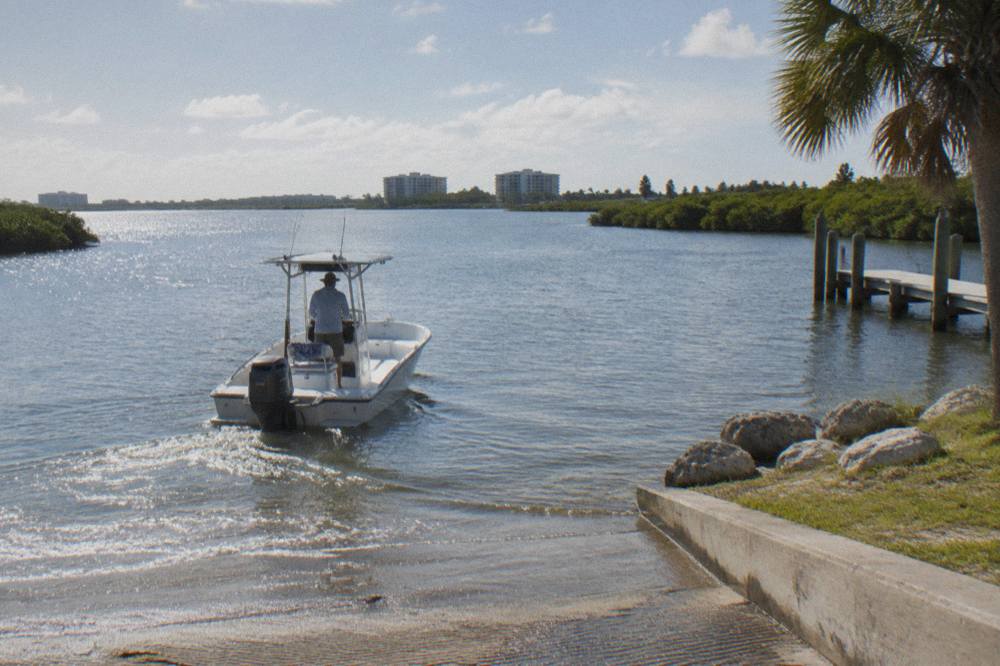
A watercraft strike kills a manatee through hull impact or propeller cuts, and it happens because manatees feed, rest and travel in the same shallow, near-shore water where boaters travel fast; manatees are slow, dark-backed and often just below the surface, so a boat on plane can pass directly over one without the driver ever seeing it. FWC necropsy data year after year puts watercraft at the top of the human-related causes. The animals cannot dodge, and when they are resting they buoy motionless just under the surface for long stretches at a time, invisible to anyone not going slow enough to watch.
The mechanics are grim but worth understanding, because they explain the regulations. A manatee hit by a fast hull can die instantly from blunt trauma. Propeller wounds that do not kill outright often leave deep, parallel scars that heal as pale ridges, and researchers use those scar patterns like fingerprints to track individual animals across years. Some frequently sighted manatees in the Indian River Lagoon are recognizable entirely by old strike scars, a living ledger of how common near misses are.
Florida's response has been a network of slow-speed and idle-speed zones, posted through the lagoon system including the Banana River, and seasonal zones that tighten when manatees aggregate in warm months and during winter cold snaps. Law enforcement patrols them, and violations carry fines. The rule a paddler or tour passenger most needs to know is simpler: manatees have no way to get out of your way, so the burden is entirely on the vessel. NOAA's marine life viewing guidance puts the same principle in one line for dolphins, stay at least 50 yards away, and Florida's manatee rules go further for manatees: do not pursue, chase, poke, prod or disturb them, and if a manatee changes its behavior because of you, you are too close.
For a visitor, the practical translation is choosing a vessel whose design makes strikes impossible or nearly so. Kayaks and paddleboards move at walking speed and sit inches above the water. Eco-boats, by contrast, vary: some are pontoon vessels confined to idle speed in manatee zones, others are faster craft that depend on the captain's discipline. When you compare listings, the group size cap is a decent proxy for the whole operating philosophy, because an operator who limits a trip to 10 or 12 people is usually also the operator threading quiet backwaters rather than running a fast circuit.
Cold Stress And Starvation: The 2020 To 2022 Unusual Mortality Event
Manatees are tropical animals with almost no fat insulation, so when lagoon water stays cold for extended winter stretches they stop eating, develop skin lesions and die of cold stress; starvation works more slowly but on the same population, and between December 2020 and spring 2022 the two together killed roughly 1,255 manatees along the Atlantic coast, enough for NOAA and FWC to declare an Unusual Mortality Event. The word unusual is a formal designation, not a description. A UME is declared when a spike in deaths is significant, unexpected and requires an investigative response, and this one was the worst manatee die-off ever documented in the region.
The chain of cause ran from water quality to seagrass to manatee. Phytoplankton blooms in the northern Indian River Lagoon, including the Banana River, blocked the sunlight that seagrass needs, and the meadows collapsed: one widely cited measure put acreage losses in the northern lagoon at 56 percent by 2017 following years of decline. Manatees in this system are not fish eaters in any significant way, they are grazers, and with the meadows gone they entered winter with nothing to eat. Rescue centers filled with emaciated animals. In the winter of 2021 to 2022, FWC took the extraordinary step of feeding lettuce to manatees at a warm-water outfall, an emergency intervention never attempted at that scale before.
Cocoa Beach sits at the southern edge of the affected zone, and the Banana River was among the hardest hit water bodies, which is why local memory of those two winters is sharp. Tour operators on this water watched the aftermath firsthand, and several of the small-group paddle outfits now frame their manatee education around exactly this history: what seagrass is, why it collapsed, and why its recovery is the single best sign for the species here.
The event's official end in March 2025 was not a proclamation that everything is fine. It meant deaths had fallen back toward baseline and the emergency response stood down. Seagrass mapping since then has given the clearer signal: coverage in the lagoon grew by more than 7,000 hectares between 2023 and 2025, per the St. Johns River Water Management District, and manatees have been observed grazing on returning meadows in areas that were barren during the event. Recovery ecologies wobble, and one bad bloom season can set acres back, but the trajectory since 2023 is the most encouraging in over a decade.
How a visitor should weigh all this: the manatees you are likely to see on a Cocoa Beach tour are the survivors and their descendants of a genuine near-disaster, and the two threats that remain active for them are boats and cold winters. A guided kayak tour is about the lowest-impact way there is to be among them, and the Cocoa Beach manatee tours guide on this site breaks down the full range of options, from paddle trips to eco-boats.
Is The Manatee Population Recovering In The Indian River Lagoon?
Partly, and the strongest evidence is the seagrass, not a headcount: lagoon seagrass coverage expanded from 9,924 hectares in 2023 to 17,042 hectares in 2025, manatee deaths fell from more than 1,100 statewide in 2021 to 565 in 2024, and no new Unusual Mortality Event has been declared since the last one ended in March 2025. What no one has is a clean, current population number for the Banana River specifically. The last serious regional abundance work predates the die-off, and preliminary 2026 mortality tables, which recorded 70 manatee deaths in Brevard County through late September, are explicitly marked by FWC as provisional and not suitable for trend claims.
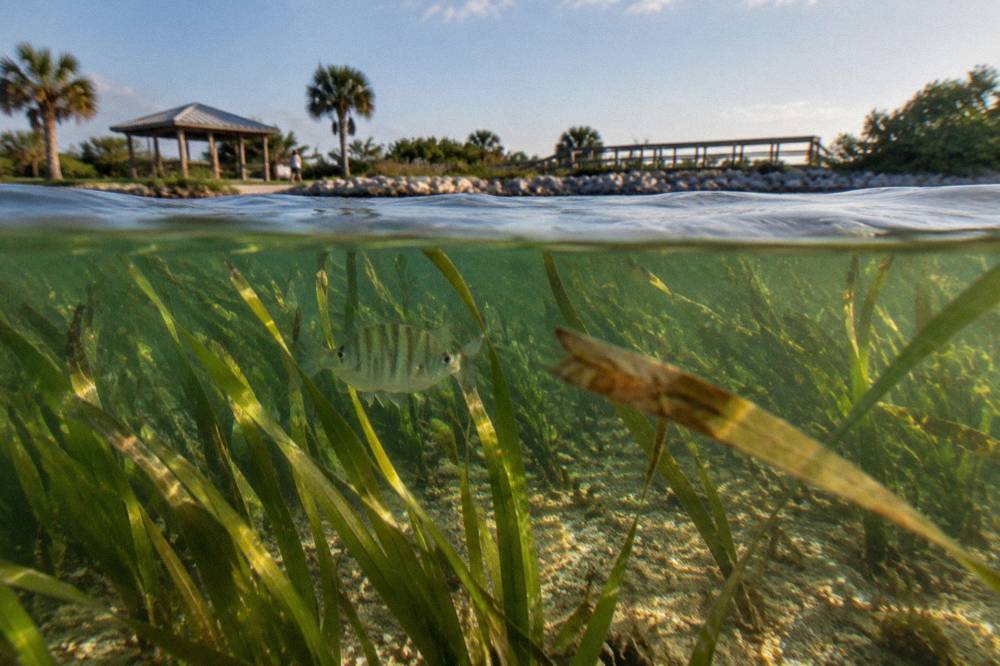
The seagrass number deserves a moment, because it is the one genuinely new fact in this story. Seagrass is the manatee's food supply, so acreage is a leading indicator: animals cannot rebound until the meadows do. A gain of more than 7,000 hectares in two years represents a substantial expansion of habitat that had been stripped bare, and biologists have documented both new beds and increased density inside existing ones. In June 2026, manatees were observed gathering in a mating aggregation in the Indian River Lagoon near Cocoa, a routine but visible sign of a population doing what healthy populations do.
The honest caveats are two. First, seagrass recovery in a shallow, warm lagoon is fragile; a single severe bloom summer can reverse several years of gains, which is why water quality projects around Cocoa Beach, including a major lagoon cleanup effort now underway, matter as much as any feeding program ever did. Second, recovery from a die-off of that scale takes years of good conditions, and manatees reproduce slowly, a single calf every two to three years for a mature female. The 2025 data says the arrow points the right way. It does not say the work is finished.
For the tour-going public, this reframes what a manatee sighting is. On a paddle through the Thousand Islands mangrove maze or along the refuge shoreline, a manatee rising beside your kayak is a member of a population that came through the worst stretch in its recorded local history. Guides on the better tours say this out loud, and it changes the tone of a trip: less aquarium, more field biology. If your interest runs that way, the best time to see dolphins and manatees in Cocoa Beach guide maps the seasons when sightings are most consistent.
How Slow-Speed Zones And Small Guided Groups Protect Manatees
Slow-speed zones work by giving boaters time to see manatees before they are over them, because a manatee is dark, slow and often submerged just under the surface, and small guided groups work by putting a trained set of eyes between wildlife and visitors, so neither an overeager paddler nor an unwatched jet skier closes the gap. Neither tool is sentimental; both are the direct engineering response to the mortality data above. The posted zones in the Banana River and around the wildlife refuge are legally enforceable, and the group-size caps on guided tours are the operator's way of controlling the one variable they fully own: how their guests behave near an animal.
The legal framework protecting manatees is unusually explicit. Under the Florida Manatee Sanctuary Act of 1978, it is unlawful to intentionally or negligently annoy, molest, harass or disturb any manatee, and conviction can carry a fine of up to $500 and 60 days in jail at the state level, with federal penalties under the Marine Mammal Protection Act and Endangered Species Act reaching $50,000 and a year in prison. Touching, feeding or giving water to a manatee all count. The FWC viewing guidelines state the practical rule in one line: look but do not touch, and if a manatee responds to your presence, you are too close.
A guided tour earns its fee here in ways a rental does not. A guide sets the line the group holds when a manatee approaches, and manatees do approach, out of curiosity or because a paddler is sitting over their grazing path. The correct move is to stop paddling, stay still, and let the animal pass, and a guide calling that instruction calmly is worth more than any printed rule. Guides also read behavior: a manatee that changes course, rolls away or dives was disturbed, and a good operator moves the group on. In June 2026 a manatee mating aggregation near Cocoa drew crowds of onlookers to a lagoon shoreline, and wildlife officials repeated the same message they post every season, view from a distance and never try to touch or enter the group, because a startled mating herd can be dangerous to swimmers as well as to the manatees.
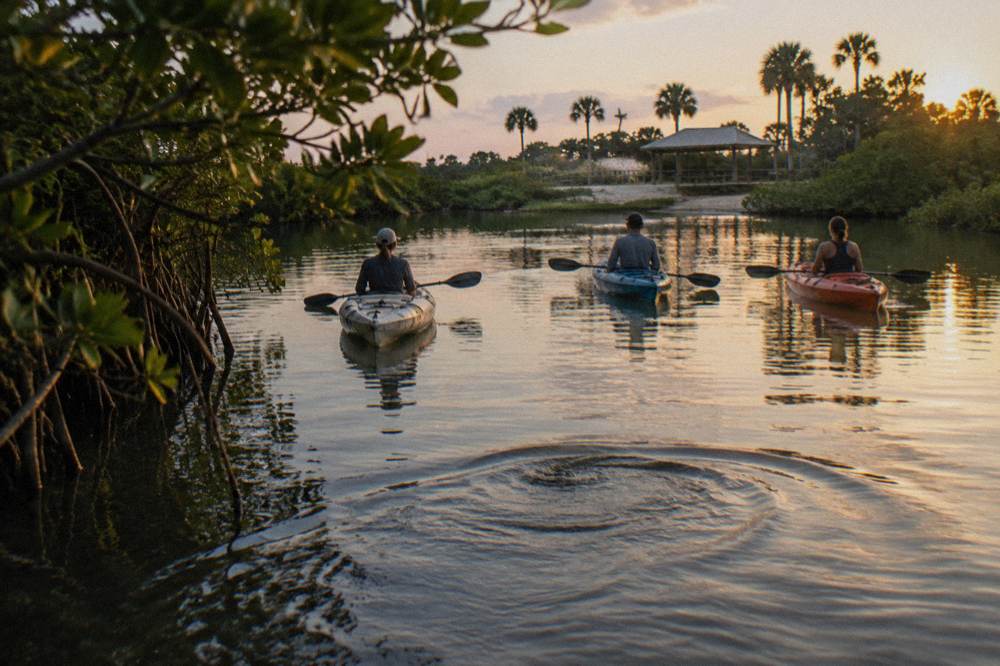
The vessel choice completes the picture. Kayaks and paddleboards are silent, sit low and travel at a pace where a strike is essentially impossible in the conditions tours use. The small-group eco-boats around Cocoa Beach run idle or slow speed in manatee waters, with a captain spotting from an elevated helm. What you want to avoid assuming is that every boat labeled eco operates the same way; read the listing for the group cap, the vessel type and the route, and check what the tour says about wildlife distance. The NOAA marine life viewing guidelines are the federal baseline and apply to dolphins and manatees alike.
Where To See Manatees Safely On A Cocoa Beach Tour
The safest manatee viewing around Cocoa Beach is from a guided kayak or paddleboard tour or a small-group slow boat on the Banana River, and the listings below, all bookable with free cancellation, range from $50 per person for a two-hour guided paddle to $63 per person for a small-group eco-boat, with sighting odds best in the warm months when manatees disperse across the lagoon's recovering seagrass meadows. No tour on this water guarantees a sighting, and any listing that implied one would be dishonest; manatees are wild, and the honest framing is that they are regularly reported on these routes, especially from spring through early fall.
| Tour | Format | Price (from) | Rating | Group max |
|---|---|---|---|---|
| Ecological Manatee and Dolphin Kayak Tour | Guided kayak, Ramp Road Park, 2 hours | $50 per person | 4.6 from 125 reviews | 20 |
| Manatee and Dolphin Kayak Tour, Wildlife Refuge | Guided kayak, Titusville refuge area, 2 hours | $55 per person | 4.9 from 231 reviews | 42 |
| Dolphin and Manatee Small Group Eco Boat | Small-group eco-boat, Kelly Park, 2 hours | $63 per person | 4.8 from 100 reviews | small group |
| Sunset Mangrove, Dolphins and Manatee Kayak | Guided kayak, Tom Warriner Blvd, 2 hours | $60 per person | 5.0 from 212 reviews | 12 |
Two of those options deserve a note. The Ecological Manatee and Dolphin Kayak Tour launches from Ramp Road Park on the Banana River in Cocoa Beach itself, includes kayaks, dry bags, sunscreen, bug spray and bottled water, and caps the group at 20 paddlers; it is the tour this page recommends as a first manatee trip because the price is modest, the gear list is complete, and the water it paddles is the recovering Banana River itself, the same system whose seagrass story fills the sections above. You can Check availability on the live listing, and free cancellation applies.
The refuge option runs on the Merritt Island National Wildlife Refuge side, where group caps run larger but the setting is the least developed water in the region. Visitors who want to combine a paddle with land-based viewing should know the refuge also operates an accessible Manatee Observation Deck, and refuge roads are open sunrise to sunset year-round with a $10 per vehicle daily pass. The full picture is in the Merritt Island kayak tours and refuge launches guide.
For free, unguided viewing, the shorelines work: manatees surface along the Banana River sea walls and in the canals off the Cocoa Beach causeway, and patient watching from land harms nothing. The trade-off is that you see an animal; a guided tour gets you the context, the distance discipline and, on the better outings, a running lesson in the exact ecology this page has been describing.
What Every Cocoa Beach Visitor Should Take From The Mortality Data
The biggest threats to manatees here are boats and habitat loss, one ongoing and one recently eased, and a visitor's meaningful actions are simple: book a slow or human-powered guided tour, obey posted speed zones if operating a vessel, never touch, feed or chase a manatee, and treat seagrass recovery as the region's shared project rather than a footnote. Nothing on that list costs much effort, and the first item is something most visitors were already planning to do anyway.
It helps to see the numbers side by side, because the two categories of threat get conflated in casual conversation. Starvation during the UME killed on a catastrophic scale but has subsided with the seagrass. Watercraft kill fewer animals in any given year but kill them every year, and the toll is cumulative, preventable and paid in animals that carry the scars as proof. Cold stress sits between the two, spiking in hard winters, especially for animals already weakened.
| Threat | Scale in the record | Status | What addresses it |
|---|---|---|---|
| Watercraft collisions | Leading human-related cause, every year | Ongoing | Slow-speed zones, paddling, small guided groups |
| Starvation and seagrass loss | 1,255 deaths, Dec 2020 to spring 2022 UME | UME declared over March 2025; seagrass recovering | Water quality projects, lagoon cleanup work |
| Cold stress | Spikes in hard winters, compounding weakened animals | Recurring, weather dependent | Warm-water refugia, rescue and rehabilitation |
| Entanglement and ingestion of debris | Regular, individually documented | Ongoing | Line and trash disposal, rescue calls to FWC |
A trip built around these facts tends to be a better trip. The operators who cap groups at 6, 10 or 12 are also the ones whose guides talk about the 2021 die-off, the returning seagrass and the scar patterns on the resident animals, and that knowledge turns a nice paddle into the kind of outing people remember. This site's Dolphin Tours Cocoa Beach comparison pages exist for exactly that pairing of a good morning with a low-impact one. Before booking, see the Cocoa Beach dolphin tour prices guide for the full cost picture, and check the live listing of whichever trip you choose, since times and availability move with the seasons.
Common Questions About Manatee Mortality
What is the biggest killer of manatees?
Among human-related causes, watercraft collisions are the leading killer, year after year. The deadliest single event in the record was different: starvation tied to seagrass loss killed roughly 1,255 manatees along the Atlantic coast from December 2020 to spring 2022, an Unusual Mortality Event FWC declared over in March 2025.
Do boats kill a lot of manatees in Cocoa Beach?
Boat strikes are the top human-related cause of manatee deaths statewide, and the Banana River around Cocoa Beach is shallow, popular boating water full of manatees, which is why slow-speed zones are posted throughout it. Kayaks, paddleboards and idle-speed eco-boats, the formats most local tours use, pose almost no strike risk.
Are manatees still starving in the Indian River Lagoon?
The mass starvation event is over. FWC declared the Atlantic coast Unusual Mortality Event over in March 2025, statewide deaths fell from more than 1,100 in 2021 to 565 in 2024, and seagrass coverage grew from 9,924 hectares in 2023 to 17,042 hectares in 2025. Biologists caution that recovery depends on water quality holding.
Is it illegal to touch a manatee in Florida?
Yes. Under the Florida Manatee Sanctuary Act it is unlawful to annoy, molest, harass or disturb a manatee, and it is also illegal under federal law. Penalties can reach $500 and 60 days at the state level and up to $50,000 and a year in prison federally. Watch from a distance and never touch, feed or chase one.
What is the best way to see manatees near Cocoa Beach without harming them?
A guided kayak or paddleboard tour, or a small-group slow eco-boat, on the Banana River. Guided groups keep a respectful distance, guides read manatee behavior, and human-powered vessels cannot strike an animal. The Ecological Manatee and Dolphin Kayak Tour from Ramp Road Park runs from $50 per person with free cancellation.
Did the manatee population recover after the 2020 to 2022 die-off?
Partially. The food supply is clearly recovering, with lagoon seagrass more than 7,000 hectares larger in 2025 than in 2023, and deaths have fallen steeply from the 2021 peak. Manatees reproduce slowly, one calf every two to three years, so full population recovery takes years of continued good conditions.