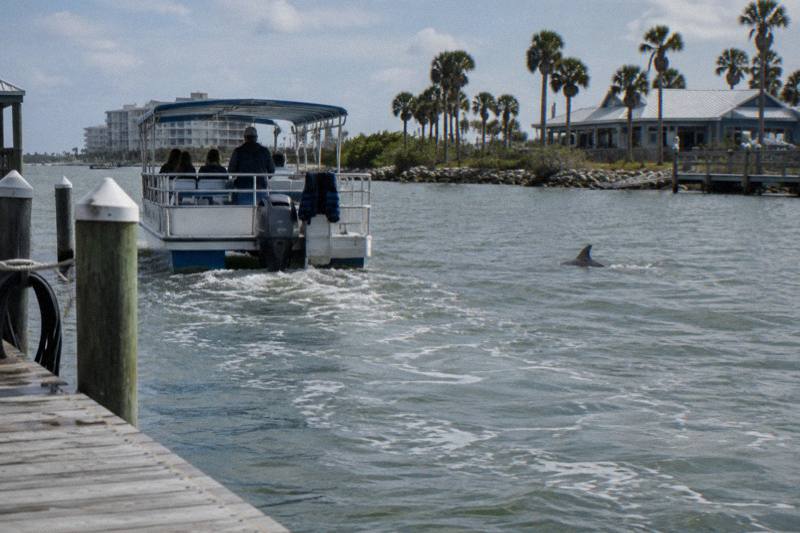
Can You See Dolphins In Cocoa Beach?
Yes, dolphins live year round in the waters around Cocoa Beach. Here is where to see them from shore, from a boat, and what the science says about the Banana River population.
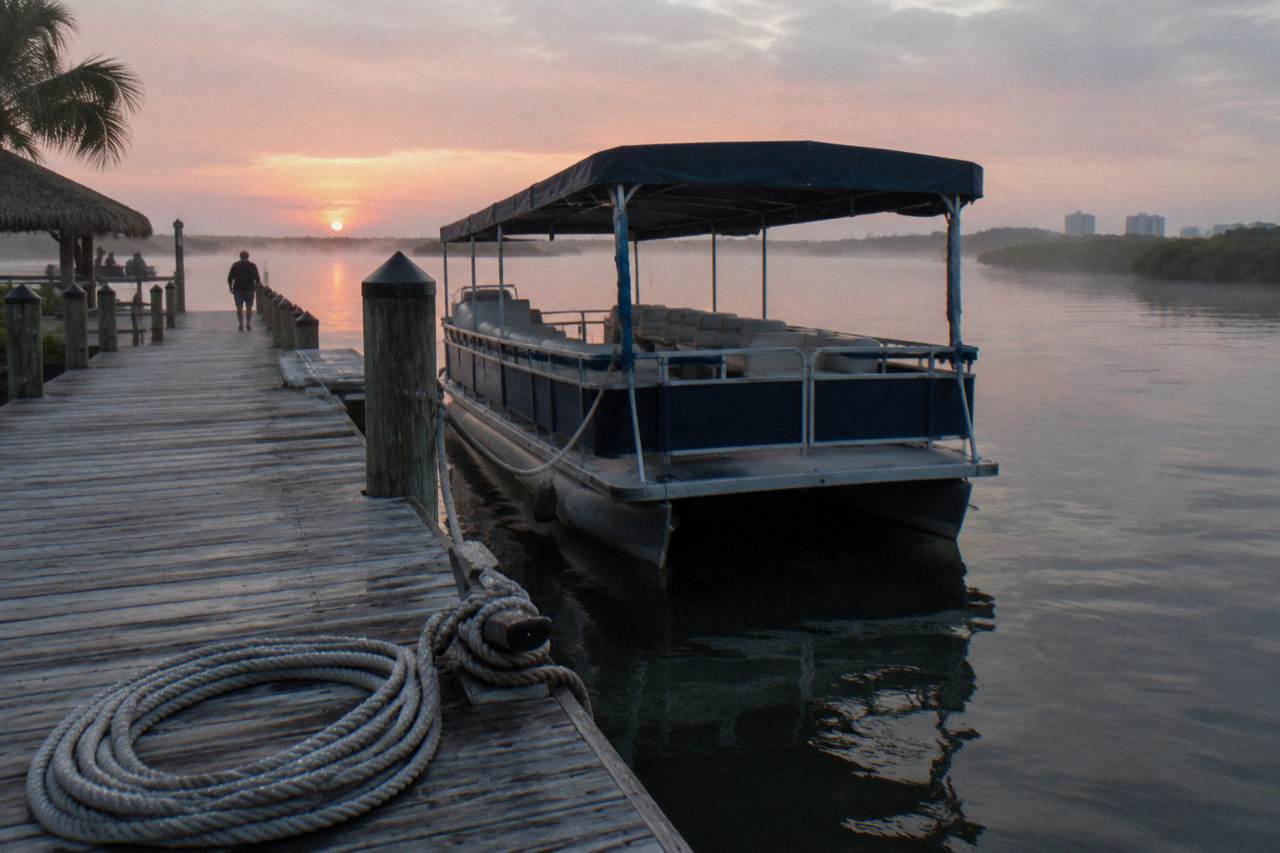
Cocoa Beach wraps around the northern Banana River, a shallow lagoon behind the barrier island, and that stretch of water is home to a resident population of bottlenose dolphins that does not migrate away with the seasons. Sightings are regularly reported from tour boats, from kayaks and even from the causeway bridges, though no honest source will tell you a dolphin will appear on any given outing. What the science and the tour records do show is that the odds here are better than almost anywhere else on Florida's Atlantic coast, and that how you look, from shore, from a paddle or from a boat, changes those odds more than the calendar does. Dolphins get most of the attention out on the lagoon, but plenty of visitors also ask about gators, so this guide to where alligators actually live around Cocoa Beach is worth a read.
Can You See Dolphins In Cocoa Beach?
Yes. Cocoa Beach sits beside the Banana River and the wider Indian River Lagoon system, which holds a resident stock of common bottlenose dolphins with a best available abundance estimate of 1,032 animals, according to NOAA Fisheries. These dolphins live in the lagoon year round rather than passing through on migration, so the question is not whether they are here but where and when your odds of crossing paths with them are highest.
That population figure deserves a moment of explanation because it is the backbone of every honest claim on this page. NOAA's stock assessment covers the Indian River Lagoon Estuarine System, which includes the Banana River, Mosquito Lagoon and the Indian River proper, and it puts the best estimate at 1,032 dolphins within a range of roughly 969 to 1,098. The same report notes the stock has weathered several unusual mortality events over past decades, including a morbillivirus outbreak in 2013 to 2015 that killed more than 1,600 dolphins from New York to northern Florida. The population today is considered resident and stable enough that sightings on local tours are a regular, reported occurrence rather than a lucky fluke.
Local reporting from 2026 backs this up from the water side. Resident bottlenose dolphins continue to be regularly sighted alongside manatees on tours in the Banana River and the Thousand Islands area, near the Merritt Island refuge boundary, with no new abundance count suggesting a decline. In practice this means a two hour tour on the river usually crosses dolphin territory several times, and operators report encounters on most departures without ever promising them.
What the population number does not do is guarantee you a dorsal fin at a specific hour. Dolphins move with the tides, the fish and their own social schedules, and a resident pod that fed near the causeway at dawn may be two miles up the lagoon by noon. The rest of this page breaks down how to stack the odds: where to stand if you are not taking a tour, when the calendar helps, and what a boat or a kayak adds over the seawall.
If you are already sold on getting on the water, these three tours cover the main ways to do it, a large covered boat, a small group eco boat and a sunset departure.
The featured option on this site is the Cocoa Beach Dolphin and Wildlife Tour, a two hour boat trip from $38.99 per person, rated 4.8 from 1,211 reviews, which carries up to 49 guests on the Banana River with toilets on board and free cancellation. It is the volume leader for a reason: more departures means more total dolphin encounters logged, and the covered vessel works in Florida sun and the odd passing shower alike.
Where The Dolphins Actually Live Around Cocoa Beach
The short answer is the Banana River lagoon immediately behind Cocoa Beach, especially the flats and channels between the causeway and the Thousand Islands mangrove maze. This is sheltered, shallow, brackish water warmed by the sun, dense with baitfish, and it functions as a year round nursery and feeding ground for the resident stock rather than a corridor the dolphins pass through.
The geography matters more than visitors expect. Cocoa Beach is a barrier island, and the water on its western side is not the open Atlantic but the Banana River, a lagoon so shallow in places that a tour boat's draft is a real constraint on where it can go. Shallow warm water is exactly what bottlenose dolphins in this stock favor, and the mangrove channels of the Thousand Islands area give juvenile fish cover, which in turn gives dolphins a reason to work those edges at rising tide. Our guide to Banana River and Thousand Islands wildlife maps this system in detail.
North of the city the lagoon widens into the Merritt Island National Wildlife Refuge, where the same resident dolphins share the water with manatees, and the refuge's own pages describe both as regular viewers' sightings from ramps and the Manatee Observation Deck area. The refuge's visitor information notes that roads, trails and boat ramps are open year round sunrise to sunset, and a daily pass of $10 per vehicle covers the wildlife drive and certain ramps. Kayakers launching in that zone regularly report dolphins passing within sight, though federal viewing rules keep a legal distance between paddler and animal.
One point worth separating: the ocean side is not where the dolphin tours go. The Atlantic off Cocoa Beach holds dolphins too, but the resident, reliably encountered population is in the lagoon, which is why essentially every tour on this roster departs from a river or lagoon dock rather than an ocean inlet. That is a genuine advantage of this destination over beach towns whose tours have to burn fuel finding open-water pods.
The 1,032 figure covers the whole lagoon system, so it is not a Cocoa Beach headcount, and nobody should picture a thousand dolphins queued outside the causeway. What it does establish is a breeding, feeding population that lives here permanently, which is the biological fact under every "regularly sighted" claim a local operator makes.
Best Places To Watch Dolphins From Shore In Cocoa Beach
You can see dolphins from shore in Cocoa Beach without paying for anything, and the best free spots are the Cocoa Beach Pier, the westward causeway shorelines, and parks on the lagoon side such as Lori Wilson Park's edge and the Ramp Road Park area on the Banana River. Shore watching trades closeness for zero cost, expect dolphins a hundred or more yards out rather than beside you, and it works best with binoculars and patience at tide change.
The pier is the easiest starting point. The Westgate Cocoa Beach Pier stretches out over the Atlantic, walking it is free, and while the ocean side is more about surfers and pelicans, the structures and nearby water draw feeding activity at times. The bigger shore payoff is usually the lagoon side, where the W Cocoa Beach Causeway area puts you over the Banana River itself, the same water the tour boats work. The city enforces paid parking at beach access points and parks, and posted signs at each lot carry the current rules, so check the signage rather than assuming.
Lori Wilson Park on North Atlantic Avenue is the free parking anchor for the beach side, a large regional beach park with a long nature boardwalk and dune crossovers, though its dolphins, when they appear, are offshore silhouettes rather than lagoon close ups. On the river side, Ramp Road Park reopened in June 2026 after improvements and gives small craft and shore viewers access to the Banana River flats. A resident dolphin working a rising tide there is visible to anyone standing at the water's edge.
Two honest limits on shore watching. First, distance: federal guidelines ask viewers to stay at least 50 yards from dolphins, and from shore that is not a constraint, but it also defines the view you get. Second, timing: shore sightings cluster around dawn and the couple of hours around tide movement, when fish are active, and a midday visit in flat calm can produce nothing but mullet jumps. Our page on free things to do in Cocoa Beach collects the no-cost options, dolphin watching among them.
A reasonable plan is a shore morning and a boat afternoon, the pier or the causeway at sunrise with coffee, then a scheduled departure when the tours are on the water. The shore half costs nothing and occasionally delivers the better story, because a wild dolphin surfacing on its own schedule, unannounced by a captain's radio, is its own kind of sighting.
Best Time Of Day And Year For Dolphin Sightings
Dolphin sightings around Cocoa Beach happen all year, because the population is resident, but the odds tilt toward early morning and the hours around tidal movement, and toward the warmer months when baitfish are most abundant. Water temperature in the lagoon runs from roughly 70 to 72 degrees Fahrenheit in winter to around 82 in July and August, and dolphin activity broadly follows that warmth.
Morning has the strongest reputation among operators and regulars, for physical reasons as much as biological ones. The lagoon is typically calmest early, glassy water makes a dorsal fin or a splash visible from far away, and boat traffic is lighter, which matters because dolphins in a busy channel spend more time diving and less time at the surface. A 9 a.m. departure will usually outperform a 2 p.m. one for pure visibility, though afternoon trips see plenty.
Tide is the subtler factor. The lagoon is weakly tidal, but water movement through the causeway and canals still moves baitfish, and feeding dolphins follow. If you are choosing between two identical departures, the one nearer a tide change is the slightly better bet. The sunset departures add a second quiet window: dolphins feed at dusk in the same flats they worked at dawn, and the falling light does not bother them. The Cocoa Beach Sunset Tour runs the same two hour route as the daytime wildlife tour, from $38.99 per person, rated 4.9 from 341 reviews, with free cancellation.
Seasonally, spring through early fall is the high-activity window, with the warmest water, the most baitfish and the most manatee traffic alongside the dolphins. Winter is quieter but far from empty, the resident stock does not leave, and cooler water can actually concentrate feeding in the deeper channels. Our month by month breakdown in the best time to see dolphins and manatees guide carries the detail, including why March through October doubles your species count if manatees are also on your list.
One seasonal caveat that belongs here and nowhere else: Atlantic hurricane season runs June 1 to November 30, and summer afternoon thunderstorms can scrub or shorten a departure. Operators, not this site, announce weather calls, and free cancellation on most listings means a storm decision rarely costs you the fare.
Boat Tour, Kayak Or Shore: Which Gives You The Best Chance?
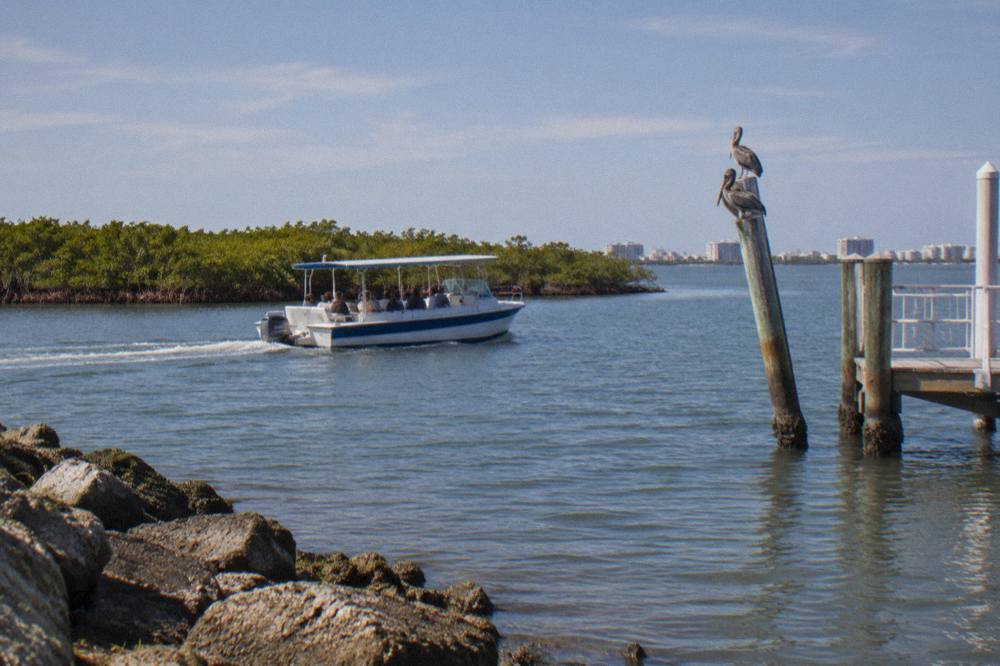
A boat tour gives the highest odds of a close, sustained dolphin encounter, because captains communicate sighting locations and cover several miles of known habitat in two hours. A kayak tour offers quieter, less predictable encounters in water a big boat cannot enter, and shore watching is free but distant. Price separates them less than group size and water access do.
The comparison below uses the verified listing figures for the main formats available on this roster.
| Format | Example tour | From (USD) | Rating | Duration | Group max | Free cancellation |
|---|---|---|---|---|---|---|
| Large covered boat | Dolphin and Wildlife Tour | $38.99 | 4.8 from 1,211 reviews | 2 hours | 49 | Yes |
| Small group eco boat | Dolphin Family Eco Boat Tour | $63 | 4.8 from 100 reviews | 2 hours | Small group | Yes |
| Tiki boat cruise | Tiki Dolphin Sightseeing Tour | $65 | 4.7 from 69 reviews | 2 hours | Small group | Yes |
| Tandem kayak | Mangrove Tunnels, Dolphins, Manatee Tour | $64.82 | 5.0 from 898 reviews | 2 hours | 11 | Yes |
| Private boat | Private 2-Hour Dolphin Sightseeing Tour | $374.50 per group | 4.8 from 46 reviews | 2 hours | Your party | Yes |
The trade-offs behind those rows are consistent. The big boat, the featured wildlife tour style of departure, covers the most water and has toilets on board, which families weigh more than any rating, but 49 passengers means sharing rail space. Small group eco boats and tiki cruises trade capacity for intimacy, still with an experienced captain reading the water. Kayaks go where boats cannot, the mangrove tunnels and inches-deep flats, and encounters there feel closer precisely because there is no deck between you and the water, but the dolphin has to come to your general area rather than the other way around.
The private option is the one roster product priced per group rather than per person, $374.50 for the whole boat, and it suits a family or a group of six who want the route to themselves. No other private charter, fishing boat or dinner cruise exists on this site's roster, so if you read about those elsewhere in Cocoa Beach, they are different operators with different listings. The full index of guides sits on Dolphin Tours Cocoa Beach.
Whichever format you pick, the crew's local knowledge is the real product. A captain who has run the same lagoon for years knows which flat holds feeding activity on a rising tide and which channel the pods use to move between them, and that knowledge is what converts a resident population into an actual sighting on your particular Tuesday.
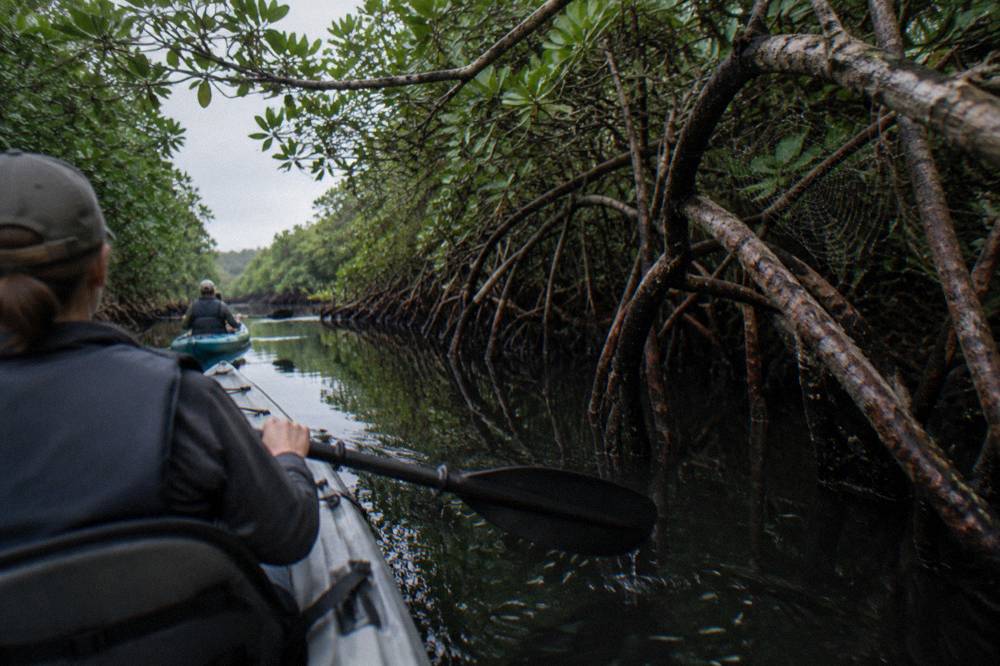
The kayak side of the ledger has its own standout. The Mangrove Tunnels, Dolphins, Manatee Tour holds a 5.0 rating from 898 reviews, from $64.82 per person, launching from the Tom Warriner Boulevard lot with free parking, complimentary photos and a guide throughout, capped at 11 paddlers. If the quiet-water version of dolphin watching appeals more than the boat version, that listing is the one to check times on.
The Rules: How Close You Can Legally Get To Dolphins
Federal law asks boaters and paddlers to stay at least 50 yards from dolphins, about half a football field, and it is illegal to feed, touch or harass wild dolphins under the Marine Mammal Protection Act. Tour boats follow these same rules, which is why a responsible captain will idle, hold a distance and let the dolphins decide whether to approach. Swimmers may not initiate contact with wild dolphins anywhere around Cocoa Beach.
The 50 yard figure comes straight from NOAA Fisheries' marine life viewing guidance, which also notes that some locations set 100 yards, so the lagoon's smaller buffer is not a loophole, it is the local rule. Licensed tour operators build their entire routine around it: they spot the pod, cut engine power or hold a steady slow course, and let the dolphins' own curiosity do the work. Dolphins frequently surf a boat's wake or pass close by an idling vessel on their own terms, and a sighting that starts at 50 yards often ends much closer without anyone breaking the law.
For paddlers the rule reads the same. A kayak or paddleboard is a vessel, and a group of kayaks surrounding a dolphin is harassment even with friendly intent. Good kayak guides position their groups to the side of a travel corridor and hold position, which is exactly the behavior described on the paddle listings in this roster. Manatees carry their own protection under the Florida Manatee Sanctuary Act, which makes it unlawful to molest, harass or disturb them, and the state's viewing guidance is blunt: look, but do not touch, feed or give water.
The reason this section exists on a "can you see dolphins" page is that the legal framework is also the answer. You can see dolphins in Cocoa Beach precisely because the rules have kept them from being chased, fed and handled into wariness. A dolphin that associates boats with harassment dives and disappears; a dolphin that associates boats with nothing in particular cruises past the rail. The resident stock's comfortable behavior around the tour fleet is a conservation outcome, not an accident.
If a listing anywhere promises interaction, touching or feeding, that is a red flag in itself, and no tour on this roster makes such a claim. The honest listings sell proximity and habitat, with the dolphins supplying whatever they supply on the day.
Why No Tour Can Guarantee A Dolphin Sighting
No Cocoa Beach tour guarantees dolphin sightings, and any operator that does is overpromising, because dolphins are wild animals that move on their own schedules across a lagoon dozens of times larger than any two hour route. What tours do guarantee is habitat, time on the water and an experienced crew, and the resident population makes encounters very likely without ever making them certain.
The honest phrasing you will see on real listings is words like "very likely" or "regularly reported," and that phrasing is doing real work. A resident stock of roughly a thousand animals spread across an entire lagoon system means the density in any given square mile is modest, and a tour's success comes from pattern knowledge, which pods work which flats at which tide, rather than from the dolphins being everywhere. The 4.8 and 4.9 ratings across this roster's dolphin boats reflect thousands of guests who did see dolphins, but each of those reviews describes a day when the formula worked.
Weather and season add honest variance. A stiff wind chops the lagoon and hides surfacing animals, a passing summer thunderstorm can push a pod into deeper channels, and an unseasonable cold snap can shift feeding patterns for a week. The tours handle this with free cancellation on nearly every listing, so a poor conditions day is a reschedule rather than a lost fare. Only one boat tour on the roster, the 2.5 hour eco activity, does not offer free cancellation on its listing, worth knowing before you book that specific one.
The same honesty applies to the two other species visitors ask about. Manatees are possible on most lagoon tours and very likely in warm months, but they are also wild and unbothered by your schedule. Bioluminescence, for the night paddles, is seasonal plankton rather than a resident animal, with its own peak windows. None of the three comes with a guarantee, and the tours that sell best are the ones that say so plainly and then deliver anyway.
The practical takeaway for a visitor is to book the tour whose format you will enjoy regardless of the wildlife outcome, a sunset you wanted anyway, mangrove tunnels worth paddling on their own, a boat your kids will remember for the ride. On most days around Cocoa Beach the dolphins then show up as the bonus they statistically tend to be.
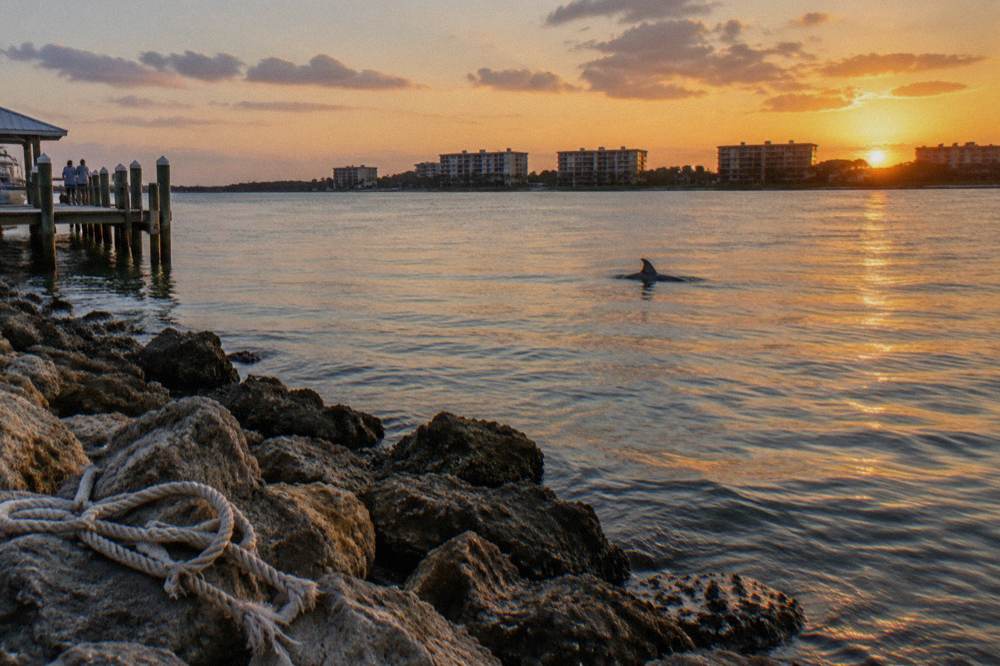
What Local Research Says About The Lagoon Right Now
Recent monitoring and mapping work points in one direction: the Indian River Lagoon system around Cocoa Beach is recovering, and the resident dolphins are part of that story. Seagrass coverage measured by the water management district grew by more than 7,000 hectares between 2023 and 2025, and the manatee starvation event linked to earlier seagrass loss was formally declared over in March 2025.
The lagoon's story over the past few years is genuinely encouraging for anyone hoping to see its wildlife, and the details rarely make it onto a first page of search results.
Why this matters on a dolphin page: seagrass is the base of the food chain that feeds the fish the dolphins eat, and the die-off years of 2009 to 2017, when the northern lagoon lost more than half its acreage, were lean years across the ecosystem. The recovery documented since 2023 is the backdrop to the current "regularly sighted" reports, more habitat means more baitfish, and more baitfish means resident dolphins with reasons to stay spread through the system rather than concentrated and stressed.
None of this is a sighting forecast, and it should not be read as one. It is the reason the honest answer to the page's question has strengthened over the past few years.
By now the practical picture should be clear: a resident population, several formats for meeting it, free shore options as a baseline, and honest odds rather than promises. If you are ready to pick a departure, these three cover the range.
Common Questions About Seeing Dolphins In Cocoa Beach
Can You See Dolphins In Cocoa Beach?
Yes. Cocoa Beach borders the Banana River lagoon, home to a resident bottlenose dolphin stock that NOAA estimates at about 1,032 animals across the wider Indian River Lagoon system. They are present year round, are regularly reported from tour boats and kayaks, and can occasionally be seen from shore, though no sighting on any given day is guaranteed.
can you see dolphins in cocoa beach
Yes, the lowercase version of the question has the same answer: the dolphins live in the lagoon behind the island permanently, and tours, paddlers and shore watchers all report them through the year.
What Is The Best Time Of Day To See Dolphins In Cocoa Beach?
Early morning and the hours around tide movement tend to produce the most sightings, because the lagoon is calmest and baitfish are most active then. Sunset departures also perform well. Dolphins feed at both ends of the day, and warm months from spring through early fall raise overall activity.
Can You See Dolphins From The Cocoa Beach Shore For Free?
Sometimes, yes. Walking the pier is free, the causeway shorelines overlook the Banana River where the tours operate, and Lori Wilson Park offers free parking. Shore sightings are distant compared with a boat, so bring binoculars and time your visit to dawn or a tide change.
How Close Can You Get To Dolphins On A Tour?
Boats and paddlers are asked to stay at least 50 yards from dolphins under NOAA viewing guidance, and feeding or harassing them is illegal under the Marine Mammal Protection Act. In practice dolphins often approach an idling boat on their own, so close encounters happen frequently, but on the animals' terms, never through pursuit.
Do Cocoa Beach Dolphin Tours Guarantee Sightings?
No, and any operator promising a guarantee is overpromising. Dolphins are wild animals moving across a large lagoon. Tours guarantee time on the water, habitat knowledge and an experienced crew, and with a resident population the encounters are very likely, but free cancellation on nearly every listing exists precisely because nature does not sign contracts.