Best Time To See Dolphins And Manatees In Cocoa Beach
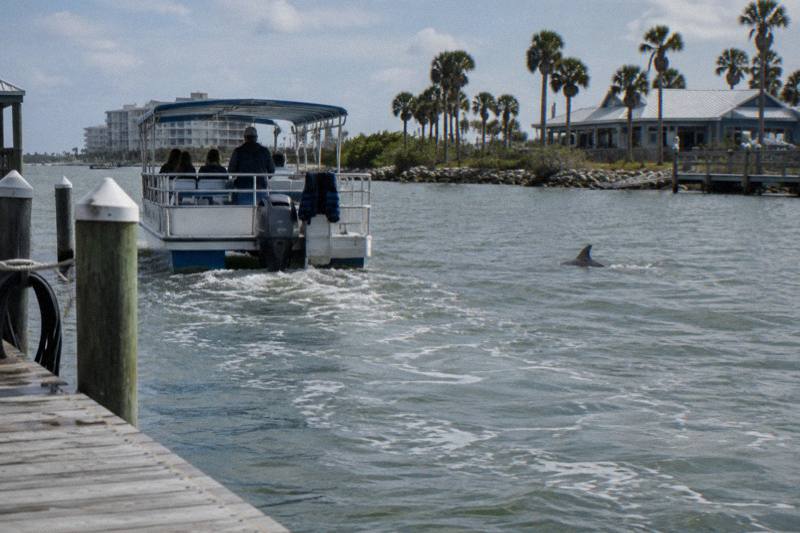
Dolphins live in the Banana River and Indian River Lagoon all year, so there is no wrong month to look for them. Manatees are also present year-round, but their behavior changes with water temperature, and that changes where a tour finds them.
Short answer
Yes, dolphins are resident in Cocoa Beach waters year-round: NOAA's best estimate for the Indian River Lagoon estuarine stock is 1,032 bottlenose dolphins. Manatees are likewise year-round, most visible in spring and summer and concentrated near warm-water refugia in winter. Early morning and late afternoon departures, and the sunset boat, are the strongest timing plays.
Dolphins do not migrate through Cocoa Beach, they live here. The Banana River, the Thousand Islands mangrove maze, and the wider Indian River Lagoon system hold a resident population of common bottlenose dolphins that NOAA's most recent stock assessment numbers at 1,032 animals, and the tours that leave the Causeway docks and the Merritt Island launches cross their feeding grounds in every month of the year. Manatees are the seasonal half of the equation. They are present year-round too, but their behavior changes sharply with water temperature: dispersed and grazing across the lagoon in spring and summer, concentrated around warm-water refugia when the water cools.
That combination is what makes timing a dolphin tour or a kayak paddle in Cocoa Beach a real decision rather than a coin flip. This guide walks through the hour-by-hour question first, because it matters more than the month, then the calendar, then the weather realities that occasionally move or cancel a departure.
Can You See Dolphins In Cocoa Beach All Year?
Yes. Bottlenose dolphins are resident in the Banana River and Indian River Lagoon system year-round, with NOAA's best available abundance estimate for the estuarine stock at 1,032 dolphins, and tour operators regularly report sightings in every month. No tour guarantees an encounter, but the population does not leave.
The distinction matters more than most visitors expect. Many coastal dolphin destinations are seasonal: animals pass through on migration, and a winter boat ride can come back empty. The lagoon stock is different. These dolphins are estuarine, meaning they live inside the sheltered waters between the mainland and the barrier islands, and the same individuals are tracked across years in the Banana River and Mosquito Lagoon. NOAA's marine life viewing guidance asks boaters and paddlers to stay at least 50 yards from dolphins, roughly half a football field, and feeding or harassing them is illegal under the Marine Mammal Protection Act. Licensed tour captains manage that distance for you.
Residency also explains why dolphin tour bookings in Cocoa Beach stay steady through winter, when the manatee side of the trip is less predictable. The resident dolphins keep feeding routes through the Thousand Islands channels and along the Causeway flats regardless of season, so a December boat has genuinely similar odds to a July one. The stock's history is not spotless: the lagoon system has seen multiple unusual mortality events, including a 2013 to 2015 morbillivirus outbreak that killed over 1,600 dolphins from New York to north Florida. But there is no current dolphin emergency, and sightings continue to be regularly reported on the water.
For readers weighing whether a tour is worth it at all, the deeper dive on odds and honest expectations is in do dolphin tours guarantee sightings.
What Time Of Day Is Best For Seeing Them?
Early morning, roughly the first three hours after sunrise, and the late afternoon window before sunset are the strongest times. Dolphin feeding activity peaks in cooler, calmer light, boat traffic is lighter, and the lagoon surface is typically glassier, which makes surfacing animals easier to spot. Midday works, just with more chop and more boats.
Ask any captain on the Causeway docks and you will get a version of the same answer: the morning boats see the calmest water. The Banana River is a shallow, wind-driven system, and the classic Florida pattern of calm mornings and building afternoon sea breeze means the 9 a.m. departures often glide over mirror-flat water where a dolphin's dorsal fin is visible from hundreds of yards. By early afternoon the chop picks up, which does not drive the dolphins away, it just makes them harder to see and photograph.
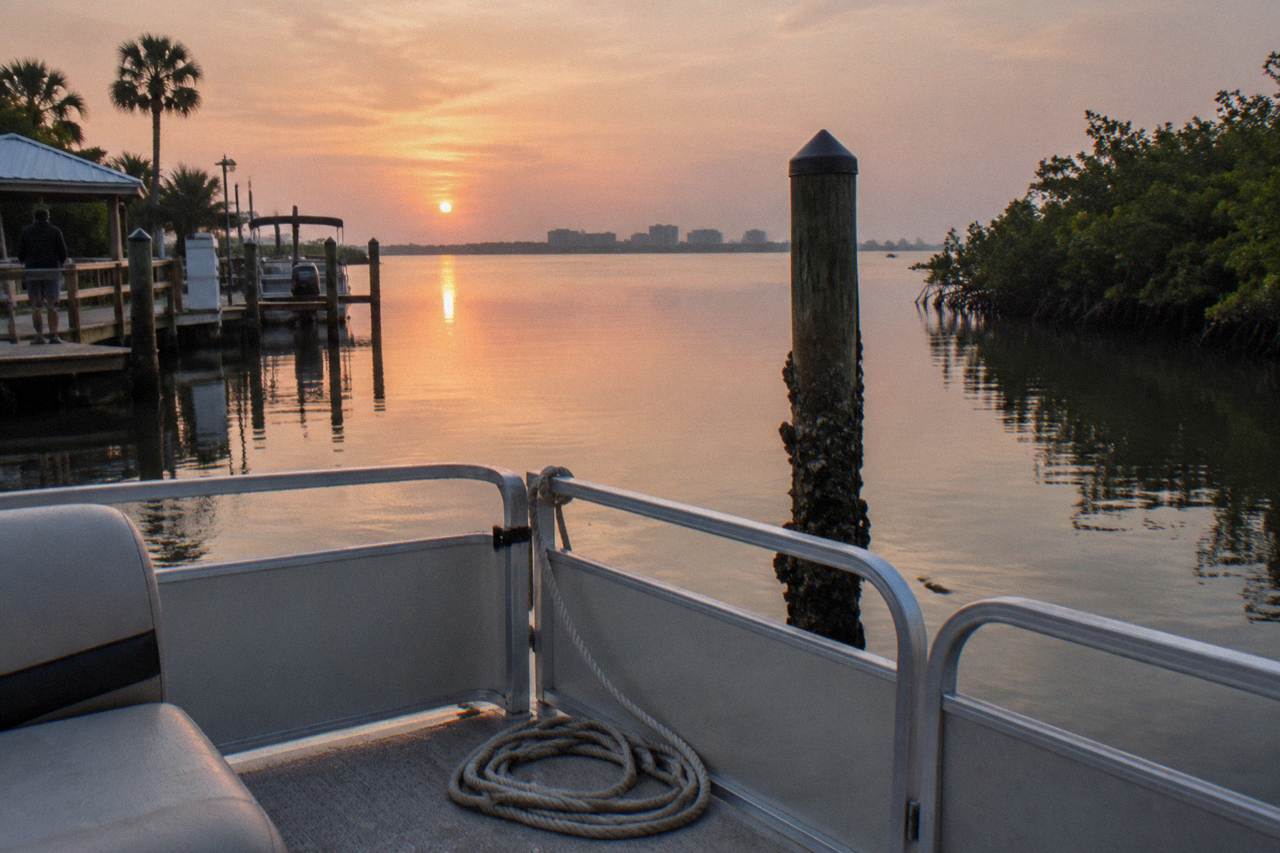
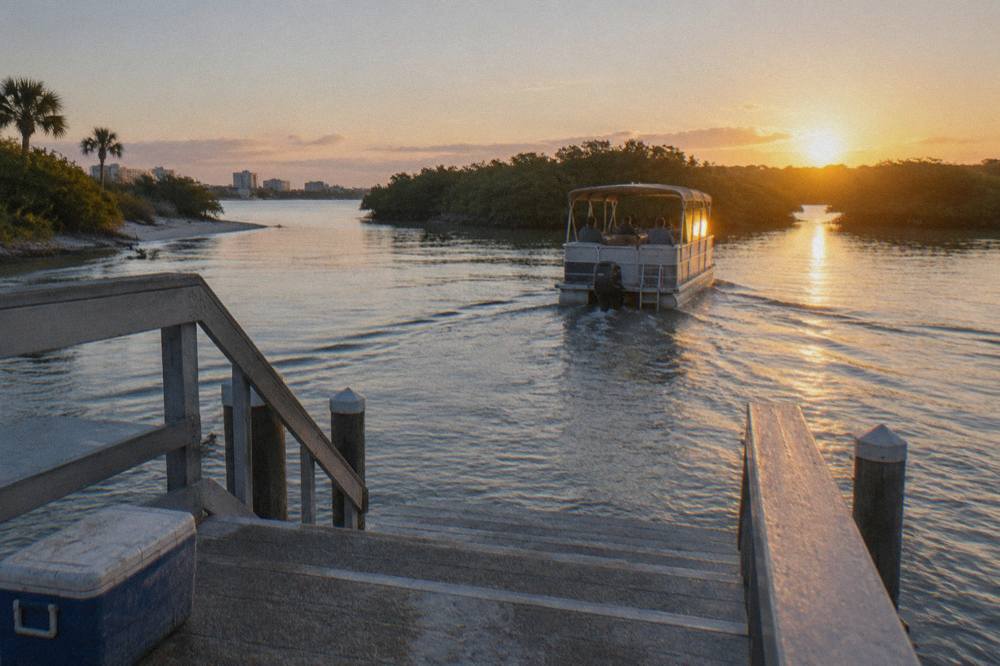
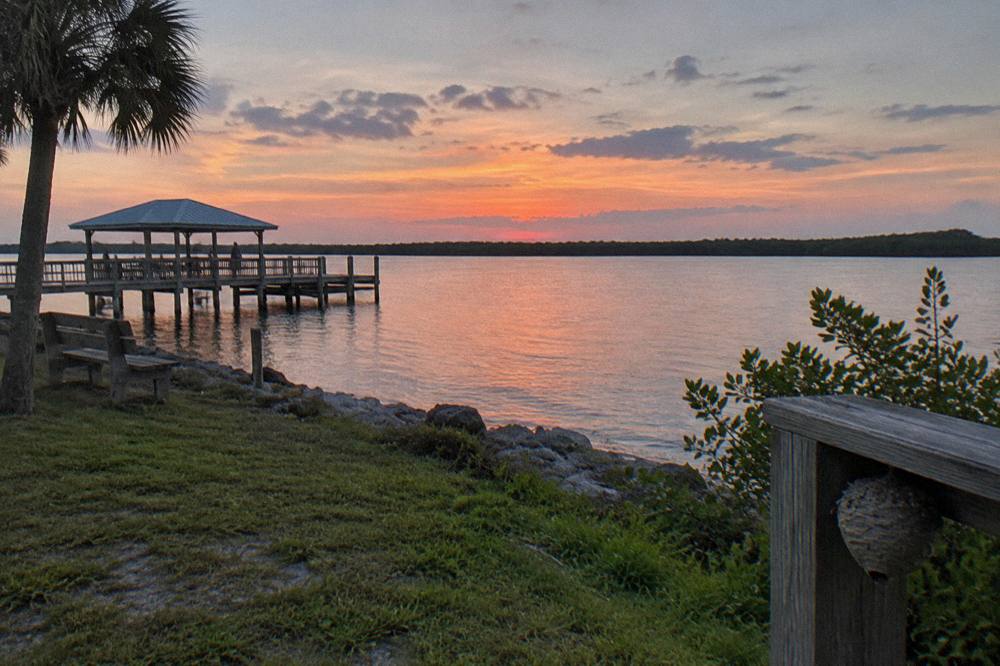
The late window has its own argument. Dolphins feed actively in the hour before sunset, and the resident manatees in the Thousand Islands channels are frequently spotted on the late paddles too. The site's comparison of Cocoa Beach sunset cruises covers that window in detail, but the short version is that the sunset departure trades a little wildlife odds for a lot of scenery. Some readers split the difference and book a morning dolphin tour one day and the sunset boat the next.
The practical comparison of departure windows on the site's main rostered boats:
| Departure window | Water conditions | Wildlife activity | Trade-offs |
|---|---|---|---|
| Early morning | Calmest, glassiest surface | Feeding activity high, dolphins active | Coolest air, earliest alarm |
| Late morning | Still workable, first chop | Steady, boats accumulating | Best fit for families with kids |
| Midday | Most chop, most traffic | Animals present but harder to spot | Convenient for beach-day scheduling |
| Late afternoon | Chop easing as sea breeze fades | Second feeding window | Sun angle in eyes heading west |
| Sunset | Settling, golden light | Active feeding window plus the sky | Photography and crowd favorite, books out |
Three listings cover that spread well. The main 2-hour dolphin and wildlife boat runs multiple daylight departures from the Sunset Waterfront Bar and Grill dock on the Causeway, from $38.99 per person, with free cancellation. The sunset version of the same route, also from $38.99, is the one to pick when the sky is the point. And the small-group eco boat out of Kelly Park caps its load lower for a quieter deck, from $63 per person.
Which Month Should You Visit For The Best Wildlife?
For both species in one trip, late April through September is the peak window: manatees are dispersed and feeding across the lagoon, dolphins are active, and water temperatures are warm. October through March favors dolphins, with manatees concentrated at warm-water refugia rather than spread through the tour routes.
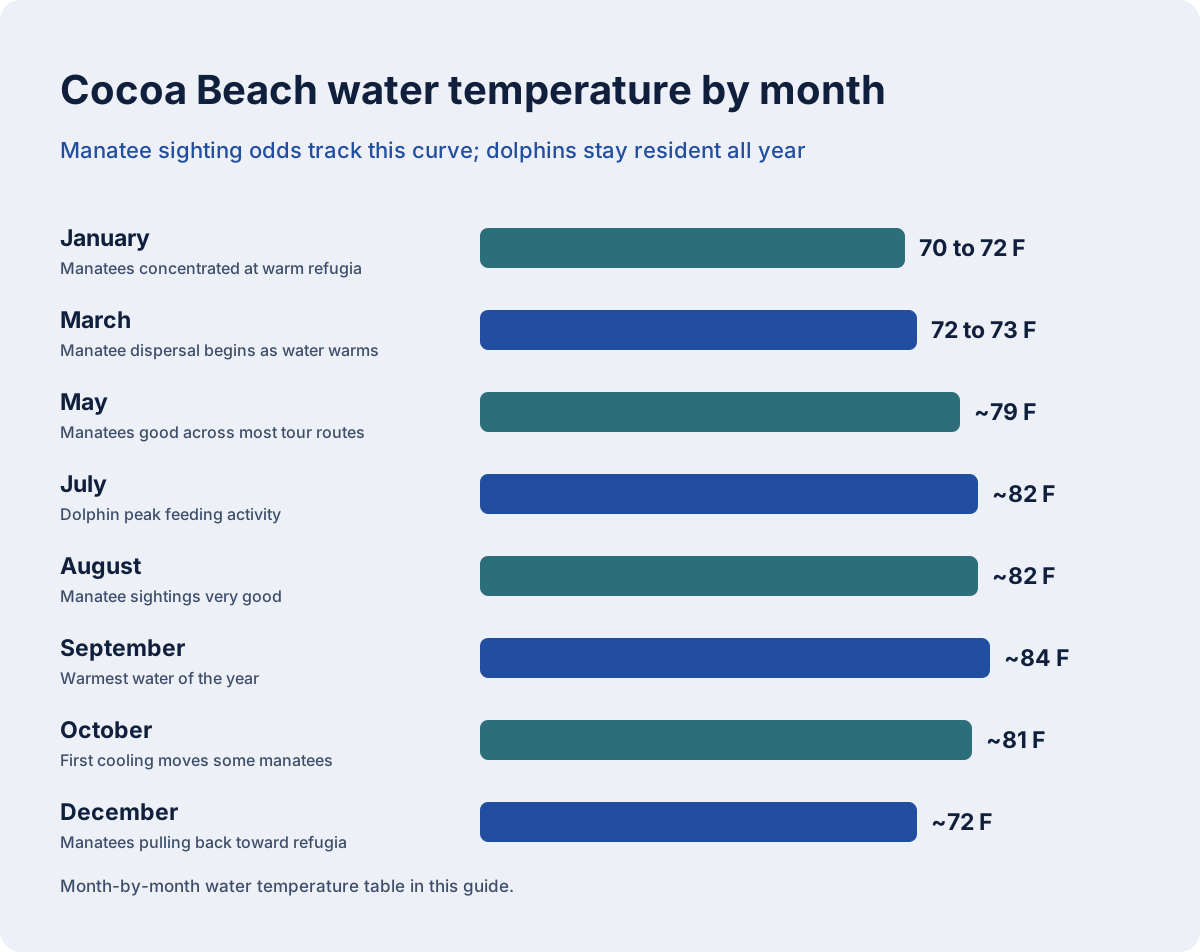
The month-by-month picture below sticks to what the verified facts support. Water temperatures in Cocoa Beach run from roughly 70 to 72 degrees Fahrenheit in January to a peak around 84 in September, and manatee behavior tracks that curve closely.
| Month | Approx. water temp | Dolphins | Manatees |
|---|---|---|---|
| January | 70 to 72 F | Resident, active | Concentrated at warm refugia |
| February | 70 to 72 F | Resident, active | Still concentrated, mating herds begin late |
| March | 72 to 73 F | Resident, active | Dispersal begins as water warms |
| April | ~75 F | Resident, active | Widely dispersed, sighting odds climb |
| May | ~79 F | Resident, active | Good across most tour routes |
| June | ~81 F | Resident, active | Very good, mating aggregations possible |
| July | ~82 F | Resident, peak feeding activity | Very good |
| August | ~82 F | Resident, active | Very good |
| September | ~84 F | Resident, active | Very good, warmest water of the year |
| October | ~81 F | Resident, active | Good, first cooling moves some animals |
| November | ~77 F | Good | Thinning on summer routes |
| December | ~72 F | Resident, active | Pulling back toward refugia |
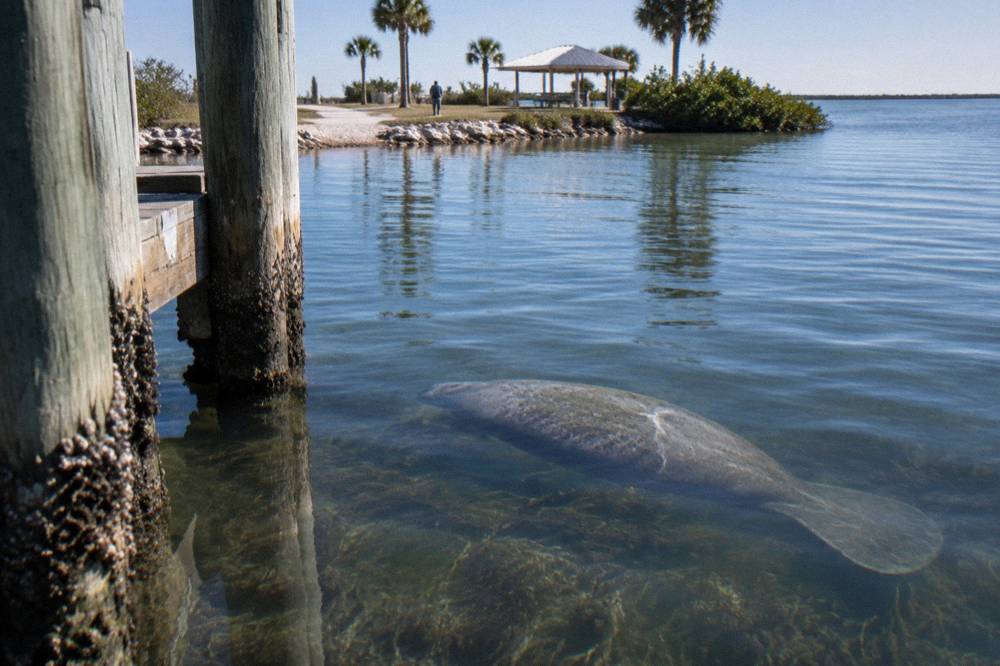
Two calendar notes add real information gain. First, the Atlantic coast manatee unusual mortality event, the starvation episode linked to seagrass loss that ran from late 2020 into 2022 and killed over 1,100 animals in 2021 alone, was officially declared over by Florida's wildlife agency in March 2025, with 2024 deaths down to 565. The lagoon's seagrass, the animal's food supply, has genuinely recovered: aerial mapping by the water management district measured 17,042 hectares in 2025, up from 9,924 hectares in 2023. That recovery is the mechanism behind improving manatee numbers in the lagoon, and it is why tour sightings have trended better in recent seasons than the grim headlines of a few years ago. Second, manatee mating herds are a real early-summer phenomenon: in early June 2026 a mating aggregation drew a crowd in the Indian River Lagoon near Cocoa, and tour paddlers occasionally encounter the commotion at a respectful distance.
The summer peak is also, inconveniently, the bioluminescence season, and some evening paddles in warm months put glow and wildlife on the same trip. The full glow calendar is covered in the bioluminescence season guide.
How Do You Time A Trip For Manatees Specifically?
Manatees are year-round residents of the lagoon system, but the best sighting window is spring through early fall, when they disperse to feed on recovering seagrass across the same channels the tours use. In winter, they concentrate around warm-water refugia and largely leave the standard summer routes.
The FWC viewing rule that governs every encounter is simple: look, but do not touch, feed, or give water to a manatee, and if the animal changes behavior because of you, you are too close. The Florida Manatee Sanctuary Act makes molesting or disturbing a manatee a criminal offense, and the penalties are not trivial, up to a $500 fine and 60 days in jail at the state level, and far more under federal law. Licensed tour guides structure every approach around passive observation, which is one of the stronger arguments for booking a guided paddle rather than renting a board cold.
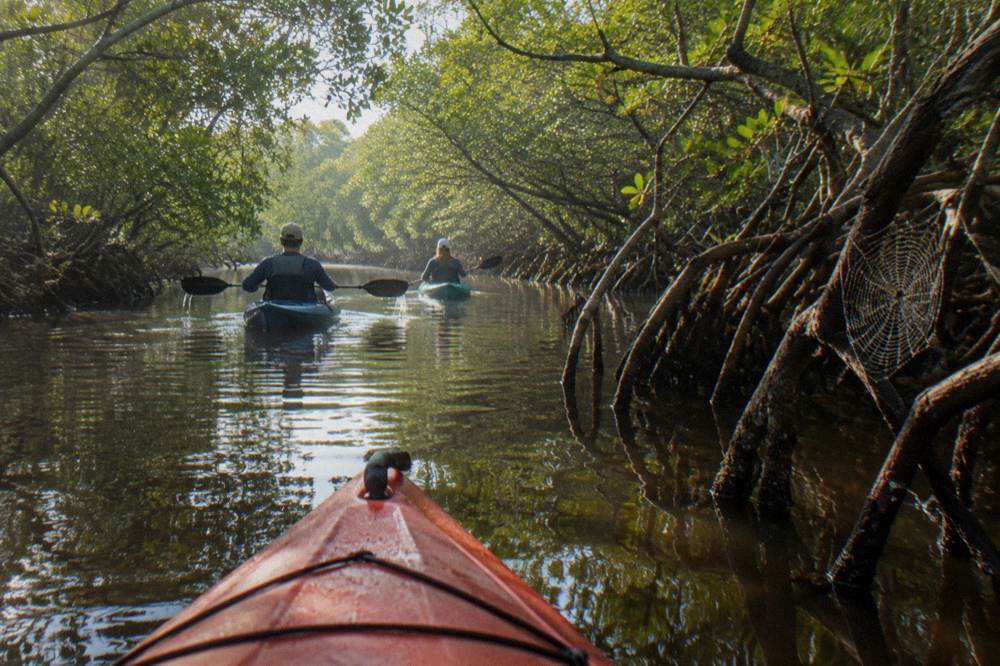
Timing-wise, the kayak side of the roster has an edge for manatees in the warm months. The Mangrove Tunnels tour out of the Tom Warriner Boulevard launch threads the narrow channels where manatees graze, from $64.82 per person, rated 5.0 from 898 reviews, with complimentary photos and free parking included. The smaller the water, the closer (legally and passively) the encounter tends to feel.
For readers planning around manatees specifically, the dedicated deep dive is when you can see manatees in Cocoa Beach, and the broader roster comparison is in the Cocoa Beach manatee tours guide. If your travel dates are fixed in winter, the honest move is a dolphin-focused boat with manatees as a bonus, or a drive to the Merritt Island refuge, which operates an accessible Manatee Observation Deck and keeps its roads and ramps open year-round sunrise to sunset.
Does Weather Change The Best Time To Go?
Yes. Afternoon thunderstorms are a routine Florida summer reality and can delay or cancel a tour on short notice, with the operator making the call, and the Atlantic hurricane season runs June 1 to November 30, so morning departures carry a weather advantage in summer and free-cancellation listings are worth prioritizing.
The classic Space Coast summer pattern is morning-clear, afternoon-violent. Storms build inland shortly after lunch and push toward the coast through mid to late afternoon, and lightning within a safety radius grounds every boat and paddle on the water. The operator, not the booking site, makes the weather call, and reputable operators err on the side of canceling, which is why the free-cancellation flag on a listing matters more in July than in February. Most of the rostered tours carry free cancellation, a welcome pattern: the main dolphin boat, the sunset boat, the small-group eco boat, and the kayak tours all include it. One exception on the roster, the 2.5-hour eco activity, does not offer free cancellation on its listing, worth knowing before you book a summer afternoon.
Beyond thunderstorms, the honest caveats are seasonal. Hurricane season overlaps the entire manatee peak, though direct storm disruptions to the area have historically been limited and the port authority runs a phased severe-weather program. Water conditions, plankton density, and wildlife movement all vary daily, and nothing in this article should be read as a promise of any particular day's conditions. When in doubt, book the earliest slot with free cancellation and let the operator's judgment handle the rest.
For what a departure actually looks like, dock to dock, the what to expect guide covers the sequence, and the meeting points and parking guide sorts the lots, including where paid city parking applies.
Which Tour Should You Book For Your Timing?
Match the format to your window: the 2-hour dolphin and wildlife boat from $38.99 for a flexible morning, the sunset departure from $38.99 for the golden-hour window, and the small-group eco boat from $63 for a quieter deck. Kayaks from $50 to $100 per person suit warm-month manatee timing and calm mornings only.
The featured 2-hour dolphin and wildlife tour is the site's default recommendation for first-timers precisely because of timing flexibility: it runs multiple daylight departures, carries toilets on board, caps at 49 guests, and meets 200 feet from the customer parking lot at 420 W Cocoa Beach Causeway, which keeps the logistics trivial. Rated 4.8 from 1,211 reviews, it has the deepest review pool on the roster, and its price point, from $38.99 per person, leaves room in the budget for a second outing.
The sunset boat is the same route re-timed: 2 hours, from $38.99 per person, rated 4.9 from 341 reviews, departing in the hour when dolphin feeding picks back up and the western sky does its work. For a couple or a photographer, that is the pick. For a family that wants the quietest possible deck, the small-group eco boat out of Kelly Park, from $63 per person and rated 4.8 from 100 reviews, keeps groups small along the Banana River.
A format comparison for the timing windows:
| Format | Best season fit | Best time of day | From price | Trade-off |
|---|---|---|---|---|
| Dolphin boat (49 max) | Year-round | Morning or late afternoon | $38.99 per person | Larger deck, shared space |
| Sunset boat | Year-round | Sunset departure | $38.99 per person | Scenery first, wildlife second |
| Small-group eco boat | Year-round | Morning | $63 per person | Higher price, quieter deck |
| Mangrove kayak tour | April to October | Morning | $64.82 per person | Weather dependent, closer to the water |
| Sunset kayak tour | April to October | Evening | $60 per person | Combines wildlife and dusk colors |
Check availability on the listings a few days ahead in summer and around holidays: the sunset departures are the first to go, a pattern covered from the booking side in whether to book a dolphin tour in advance.
Can You See Wildlife In Cocoa Beach Without A Tour?
Yes. The Cocoa Beach Pier is free to walk, Lori Wilson Park offers free parking and a boardwalk along the ocean side, and the Merritt Island National Wildlife Refuge operates year-round with a $10 per vehicle daily pass and a Manatee Observation Deck, giving non-tour options in every season.
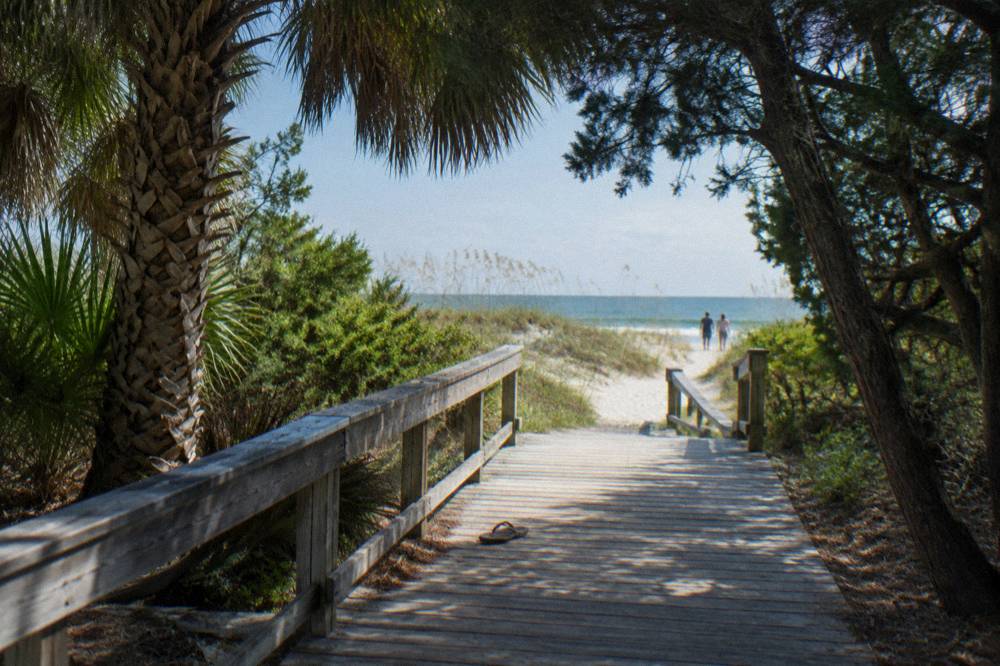
Free viewing rewards the same timing discipline as paid tours. Dolphins working the shallow flats are visible from shore in the first hours of daylight, and the lagoon-side parks on the Banana River put you over the same water the boats cross. Lori Wilson Park, at 1500 N Atlantic Avenue, is a regional beach park with a 3,155-foot nature boardwalk, restrooms, and free parking, open dawn to dusk. On the river side, the Haulover Canal area of the Merritt Island refuge is a designated year-round manatee refuge where watercraft must hold to slow speed, and the refuge's accessible observation deck is the region's most reliable land-based manatee spot in the cooler months.
The refuge adds a fee layer worth planning for: a $10 per vehicle daily pass covers Black Point Wildlife Drive, Bio Lab Road, and certain boat ramps, and the Visitor Center is open Tuesday through Saturday, 8:30 a.m. to 4 p.m. The full free-and-cheap rundown, including the pier, is in the free things to do in Cocoa Beach guide, and the refuge side is mapped in Merritt Island kayak tours and refuge launches.
One caveat from the rules that protect these animals: shore-based viewing is unguided, so the distance and no-contact rules fall on you. NOAA's viewing guidance applies from any watercraft, 50 yards minimum from dolphins, and Florida's manatee rules apply to swimmers, paddlers, and waders alike. A tour is not just transportation, it is a licensed framework for getting close without breaking federal law, and the full legality picture is in can you swim with dolphins in Cocoa Beach.
Putting The Calendar Together
Plan around three fixed facts: dolphins are a year-round given, manatees are a warm-month bonus on the water and a winter possibility at the refuge, and the morning or sunset windows beat midday in every season. Summer adds thunderstorm risk, so book early departures on free-cancellation listings and let the operator make the weather call.
The through-line of all of the above: dolphins are a year-round given, manatees are a warm-month bonus, the morning or sunset windows beat midday, and summer weather rewards early bookings with free cancellation. The wildlife of the Thousand Islands and the Banana River, covered further in the Banana River and Thousand Islands wildlife guide, sits within an hour of every dock on this roster, which is why Dolphin Tours Cocoa Beach treats timing, not location, as the main planning variable.
If your dates are flexible, target May through September for the highest combined odds, book the earliest dolphin departure you can realistically make, and hold the sunset boat as your second trip. If they are not, winter still delivers resident dolphins on calm mornings, and the refuge deck covers the manatee half on land. Either way, check availability before you lock the rest of your day around it: summer sunset slots go first, and the morning boats fill on holiday weekends.
Common Questions About The Best Time To See Dolphins And Manatees In Cocoa Beach
Can you see dolphins in Cocoa Beach?
Yes. Bottlenose dolphins are resident year-round in the Banana River and Indian River Lagoon, with NOAA's best stock estimate at 1,032 animals, and tours report sightings in every month. No tour guarantees an encounter, but the population does not migrate away.
What is the best month to see manatees in Cocoa Beach?
Late April through September. Manatees are present year-round, but in warm months they disperse across the seagrass beds the tours cross, while in winter they concentrate around warm-water refugia and leave many summer routes.
What time of day are dolphins most active in Cocoa Beach?
Early morning and the hour before sunset. Calm water in the first hours of daylight makes surfacing dolphins easy to spot, and a second feeding window opens as the afternoon sea breeze fades.
Do Cocoa Beach dolphin tours get canceled for weather?
Occasionally, especially in summer when afternoon thunderstorms build. The operator makes the call, which is why morning departures and free-cancellation listings are the safer summer booking.
Can you see manatees in winter in Cocoa Beach?
Yes, but not reliably from a summer tour route. Winter manatees gather at warm-water refugia, so the Merritt Island refuge's Manatee Observation Deck is the stronger winter play, with a $10 per vehicle daily refuge pass.
Is morning or sunset better for a dolphin tour?
Morning for wildlife odds and calm water, sunset for scenery plus a second feeding window. The sunset boat, from $38.99 per person, is the roster's pick for the golden-hour version of the same route.