Banana River And Thousand Islands Wildlife: What Lives Where The Tours Go
The Banana River and the Thousand Islands mangrove maze behind Cocoa Beach hold one of Florida's densest concentrations of wild dolphins and manatees. Here is what actually lives there, what the science says, and how a boat tour and a kayak tour reach different parts of it.
Short answer
The Banana River near Cocoa Beach holds resident bottlenose dolphins from the Indian River Lagoon stock, estimated at 1,032 animals, plus manatees, rays, herons and pelicans among the Thousand Islands mangroves. A boat tour covers open water, a kayak tour reaches the tunnels, and no tour on this roster guarantees any species.
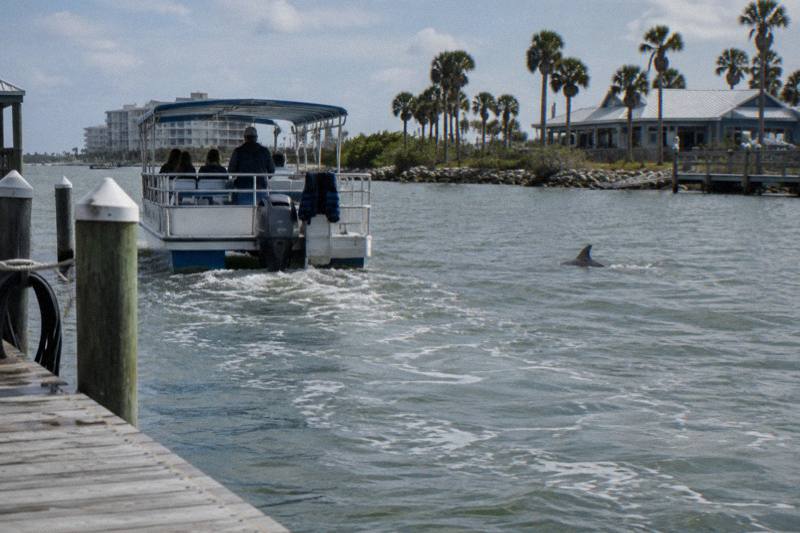
The Banana River is the narrow lagoon sandwiched between Cocoa Beach's barrier island and Merritt Island, and almost every dolphin tour on this site spends its two hours on this water or on its fringes. It is not a river in the moving-water sense. It is a shallow, brackish lagoon, part of the greater Indian River Lagoon system, where resident wildlife lives year round within a few miles of the cruise terminals at Port Canaveral. West of the causeways, the Thousand Islands, a maze of mangrove isles and dredged channels at Cocoa Beach's southern end, add a second habitat that a different style of tour explores.
What Wildlife Lives In The Banana River Near Cocoa Beach
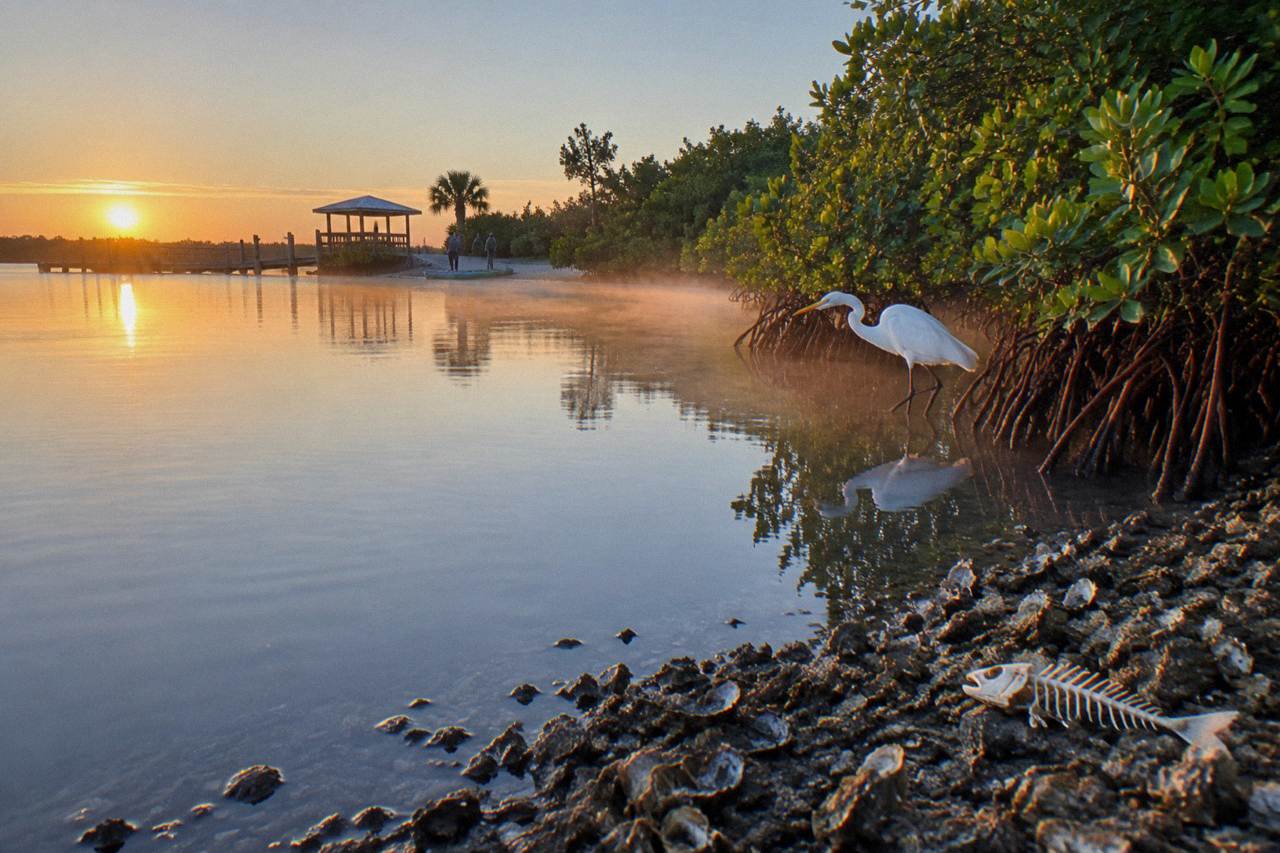
The Banana River and its Thousand Islands mangroves support resident bottlenose dolphins, West Indian manatees, stingrays, tarpon, herons, egrets, pelicans, roseate spoonbills and the fish and crabs that feed them all. Every one of them is wild and mobile, so every tour on this roster describes sightings as likely or regular rather than certain. The lagoon's health has been improving since seagrass began recovering, which matters because seagrass is the food chain's base.
Cocoa Beach sits on the barrier island; the Banana River lies immediately behind it. The water is calm most days because the barrier island blocks ocean swell, which is why this lagoon, rather than the open Atlantic, hosts the dolphin tours. Resident bottlenose dolphins patrol the channels. Manatees graze the seagrass meadows in warm months and retreat to warmer refugia when water temperatures drop, following the pattern described in detail in when manatees appear in Cocoa Beach.
The Thousand Islands are the exception to the open-lagoon scene. These roughly forty to fifty mangrove isles, created when Cocoa Beach's residential canals were dredged, sit at the city's south end along the Grand Canal. Their tunnels and dead-end channels hold mangrove crabs, juvenile fish, wading birds and the occasional manatee or dolphin that wanders in. A kayak reaches places a powered boat cannot, and that difference shapes the whole tour market here.
| Habitat slice | Where it sits | Flagship species | Which format reaches it |
|---|---|---|---|
| Open Banana River basin | Between causeways, main lagoon | Bottlenose dolphins, tarpon, rays | Boat tours |
| Seagrass meadows | Shallow flats basin-wide | Manatees, mullet, stingrays | Boat and kayak both |
| Thousand Islands tunnels | Mangrove isles at Cocoa Beach's south end | Wading birds, crabs, juvenile fish | Kayak and paddleboard only |
| Channel markers and spoil edges | Along the causeways | Ospreys, pelicans, cormorants | Any format passes |
The Dolphins Of The Banana River: One Lagoon, One Population
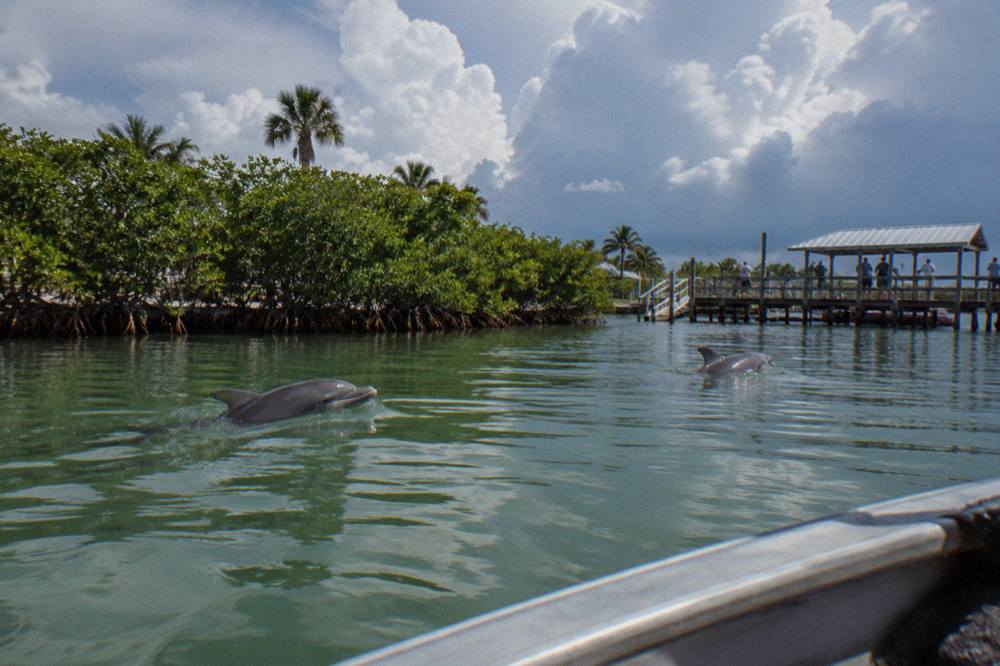
The dolphins seen on Cocoa Beach tours belong to the Indian River Lagoon Estuarine System stock of common bottlenose dolphins, whose best available abundance estimate is 1,032 animals, with a 95 percent confidence interval of 969 to 1,098, per NOAA's stock assessment. These are residents, not passing ocean dolphins, and they are sighted regularly in the Banana River and Thousand Islands area. No tour can promise an encounter with a specific animal.
That 1,032 figure comes from NOAA Fisheries' stock assessment for the estuarine system that includes the Banana River, Mosquito Lagoon and the Indian River proper, published in the 2022 assessment report. It is an estimate with wide error bars, not a census, and the same report notes the stock has weathered multiple unusual mortality events over recent decades, including a 2013 to 2015 morbillivirus event that killed over 1,600 dolphins from New York to north Florida. The population persists, and local reporting through 2026 continues to describe regular sightings on the water between Cocoa Beach and the Merritt Island refuge.
Behaviorally, these estuarine dolphins live in fission-fusion societies: small groups that merge and split over hours and days. They feed on mullet and other schooling fish, which is why tour captains watch for working birds and surface splashes. A dolphin tour on the Banana River is essentially a search pattern run by people who know where fish school, which raises the odds considerably without making anything a sure thing. The honest framing lives in whether Cocoa Beach tours guarantee sightings: they do not, and cannot legally promise one.
Federal rules also govern the encounter. NOAA's viewing guidance asks boaters and paddlers to stay at least 50 yards from dolphins, roughly half a football field, and feeding or harassing them is illegal under the Marine Mammal Protection Act. Licensed tour operators build their approach around those distances, which is one quiet argument for taking a guided tour over renting a boat.
Manatees And The Seagrass Comeback
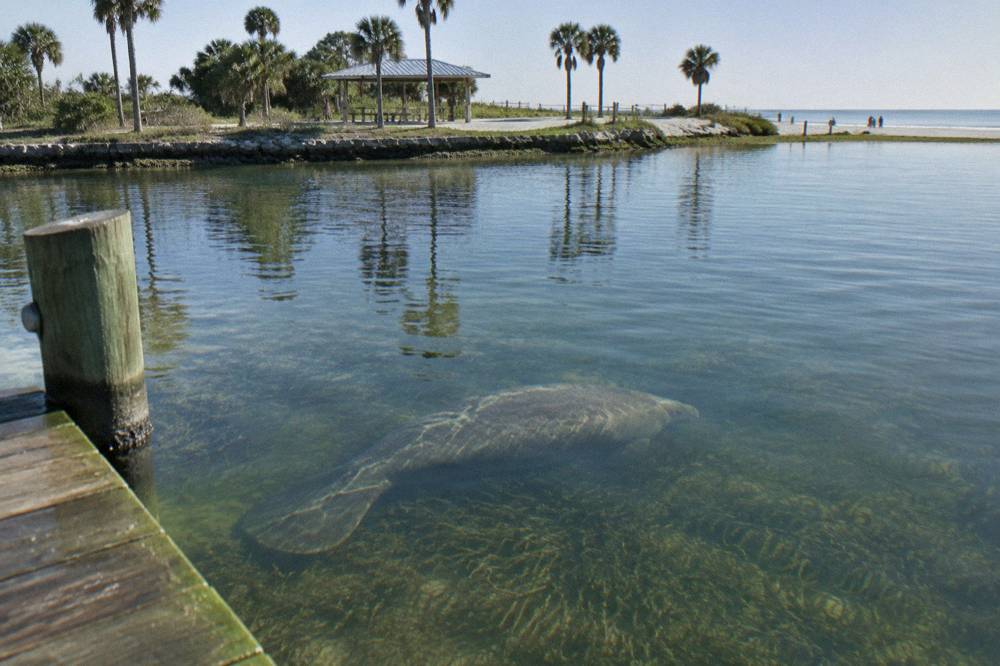
Manatees are present in the Banana River year round, with numbers strongest in spring and summer when they disperse to feed, and the seagrass they depend on is measurably recovering: lagoon-wide coverage grew from 9,924 hectares in 2023 to 17,042 hectares in 2025. Their numbers declined severely during the 2020 to 2022 starvation event, which regulators declared over in March 2025. Even as their food supply recovers, boat strikes still kill more manatees than any other human-related cause, and our guide to the biggest killer of manatees explains what that means for anyone watching for them from a kayak or tour boat.
The story matters to anyone booking a Banana River dolphin tour because manatees are the second headline species on nearly every listing. The die-off earlier this decade was driven by seagrass loss: blooms shaded out the meadows, the meadows collapsed, and manatees starved, with over 1,100 deaths in 2021 alone. Recovery followed the water. The district's updated mapping shows the seagrass expansion, and preliminary state data recorded 70 manatee mortalities in Brevard County in 2026 across all causes, a fraction of the peak years. None of this guarantees a sighting on a given Tuesday, but it explains why operators now report manatees alongside dolphins as a routine part of a tour rather than a rarity.
Protecting that recovery is the law. Under the Florida Manatee Sanctuary Act it is unlawful to annoy, molest, harass or disturb a manatee, and state penalties reach $500 and 60 days, with federal penalties far higher. Tours observe from a distance; paddlers on the kayak listings get the same instruction from guides. If a manatee changes behavior because of you, you are too close, which is the standard the refuge itself repeats in its public messaging.
For the small-group format specifically, the eco boat listing from Kelly Park carries a 4.8 rating from 100 reviews, runs two hours from $63 per person with free cancellation, and caps its passenger count well below the big-boat tours. That smaller group size is the practical difference when the captain spots a manatee working a channel and wants to hold position without crowding it.
The Thousand Islands: What Paddlers Actually See
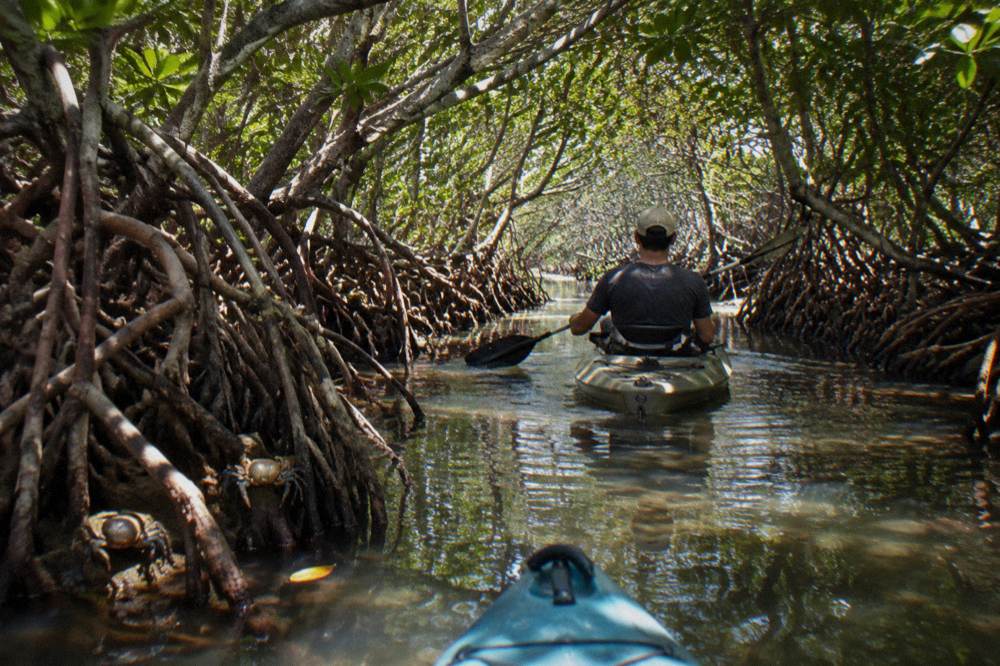
The Thousand Islands behind Cocoa Beach are a mangrove maze of dredge-spoil islets and narrow tunnels, home to wading birds, mangrove crabs, juvenile fish, rays and the manatees and dolphins that occasionally push in from the Banana River. A kayak or paddleboard reaches these channels; a motorized tour boat generally stays in the open lagoon outside them.
The islands are human history as much as nature. When Cocoa Beach dredged its residential canals, the spoil became islets, and mangroves colonized them. Today the city's waterways and the adjacent Banana River Aquatic Preserve protect the result. The tunnels, overhung by red, black and white mangroves, are shallow, shaded and quiet, which suits herons, ibis, terns and the small fish that shelter among the roots. Paddlers on the mangrove tunnel listings regularly report manatees in the wider channels and dolphins along the fringes, with the caveat, always, that these are wild animals deciding their own itinerary.
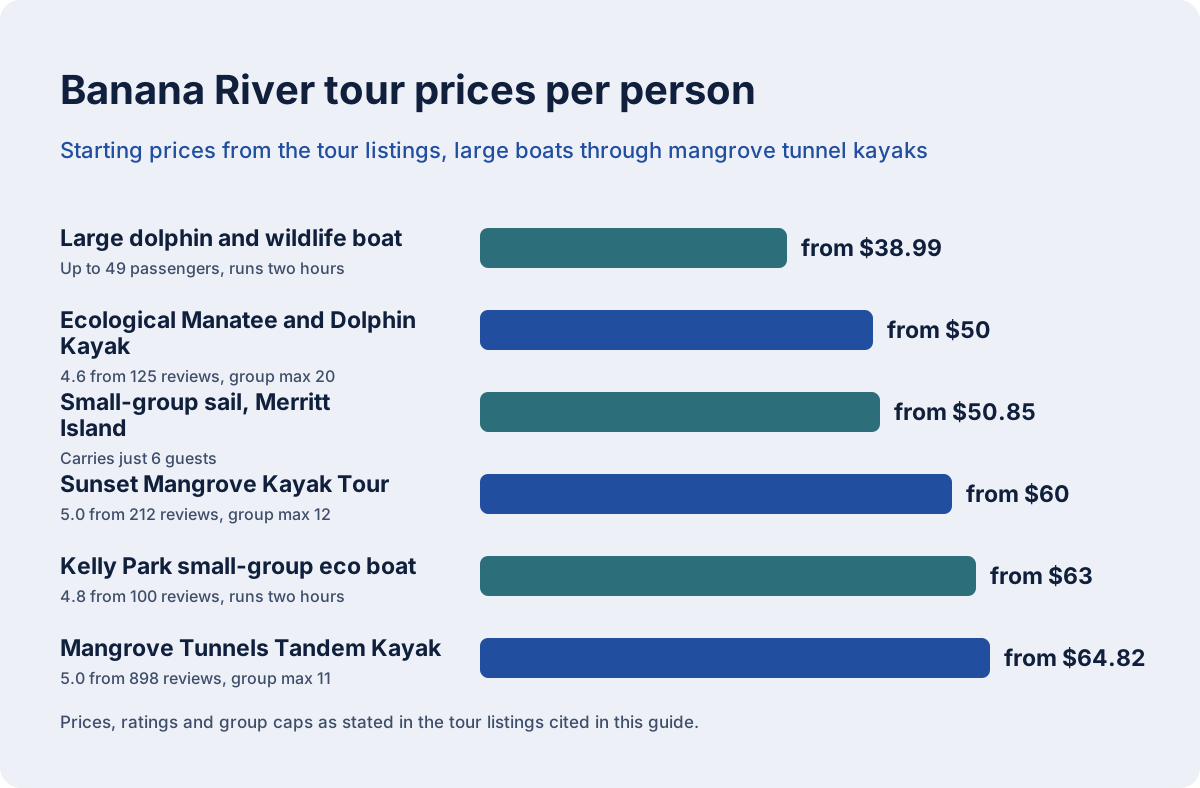
Two roster tours make this habitat their whole product. The tandem kayak mangrove tunnel tour (5.0 from 898 reviews, from $64.82 per person, group max 11, free cancellation, complimentary photos included) launches from the Tom Warriner Boulevard lot and threads the tunnels with a guide out front. Its sunset sibling, also 5.0 rated from 212 reviews, runs the same water at golden hour from $60 per person. Both are described fully in the Cocoa Beach kayak tours guide. The tunnels are tight enough that a guide's line matters; beginners following a stranger's route through them is how scrapes and stuck paddles happen.
What you will not get in the tunnels is the open-water bow-riding scene. Dolphins use the islands' edges but the deep social feeding displays happen in the Banana River's main basin, which is the boat tours' territory. Some visitors split the difference across two evenings, one night paddle for the mangroves, one boat trip for the basin, a pairing covered in choosing a Cocoa Beach dolphin tour.
| Mangrove tunnel tour | Rating and reviews | Price | Group max | Extras on the listing |
|---|---|---|---|---|
| Mangrove Tunnels Tandem Kayak | 5.0 from 898 reviews | from $64.82 per person | 11 | Free photos, free parking, guide included |
| Sunset Mangrove Kayak Tour | 5.0 from 212 reviews | from $60 per person | 12 | Free photos, free parking, guide included |
| Ecological Manatee and Dolphin Kayak | 4.6 from 125 reviews | from $50 per person | 20 | Water, dry bags, sunscreen, bug spray |
Boat Tour Or Kayak Tour: Which One Reaches More Wildlife
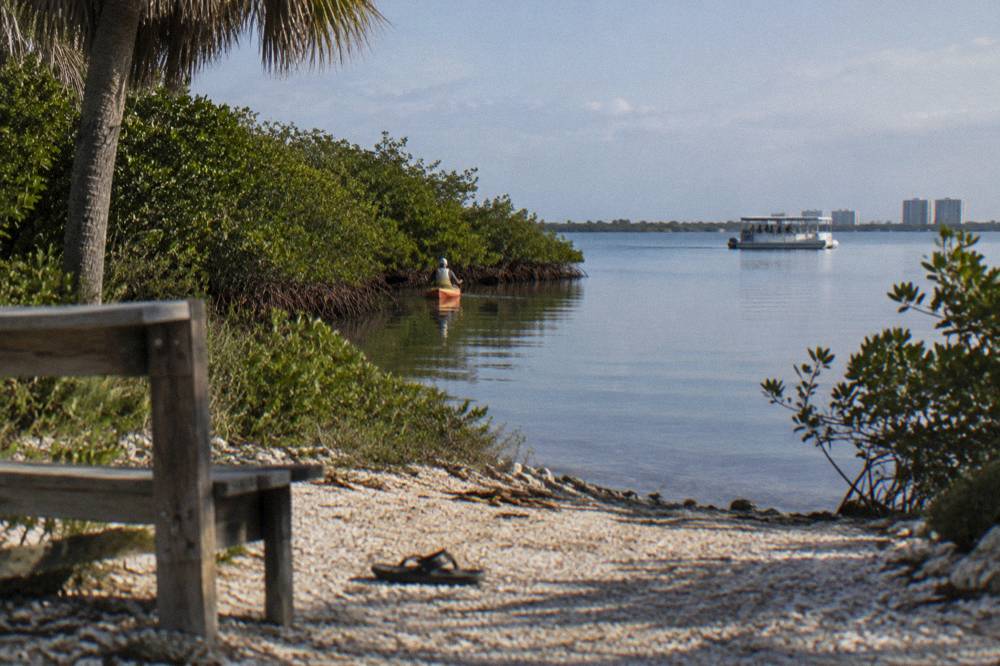
A boat tour covers more water faster, which raises the odds of finding actively feeding dolphins in the Banana River's open basin, while a kayak tour goes where boats cannot, into the Thousand Islands tunnels and the shallow mangrove edges where manatees feed and wading birds work. Neither format sees everything; they sample two different slices of the same lagoon.
The tradeoffs are concrete. The large dolphin and wildlife boats carry up to 49 passengers, run two hours from $38.99 per person, and cover several miles of the Banana River, docking 200 feet from the customer lot at 420 W Cocoa Beach Causeway. The small-group sail carries just 6 guests from $50.85 per person out of Merritt Island, trading crowd capacity for quiet approach. The kayak listings cap groups at 11 or 12, put you at water level, and cost from $50 to $64.82 per person on this roster. Speed and range favor the boat; intimacy and habitat access favor the paddle.
| Format | Typical reach | Strength | Tradeoff | Roster price range |
|---|---|---|---|---|
| Large boat (up to 49) | Open Banana River basin, several miles | Finding active dolphins fast | Less intimate, no tunnels | $38.99 to $42.80 per person |
| Small-group boat or sail (6 to 12) | Basin plus quiet channels | Close, low-wake viewing | Fewer seats, books sooner | $50.85 to $65 per person |
| Guided kayak or SUP (11 to 12) | Thousand Islands tunnels, mangrove edges | Water level, birds, manatees | Slower, weather sensitive | $50 to $64.82 per person |
| Private charter (whole boat) | Captain's route, your schedule | Flexible, group priced | Priced per group, not person | $374.50 per group |
Weather tilts the decision too. The lagoon is usually calm, but summer thunderstorms can scrub an afternoon departure, and operators, not this site, make those calls and announce them through the listing. The kayak listings supply life jackets, paddles and, on some, dry bags and photos; the boats supply toilets on board. What to bring for either is covered in what to wear on a Cocoa Beach boat or kayak tour.
Birds, Rays And The Rest Of The Lagoon Cast
Beyond the two headline mammals, Banana River tours regularly pass brown pelicans, great blue herons, snowy egrets, roseate spoonbills, ospreys, cormorants, stingrays, tarpon and mullet schools whose surface splashes often signal feeding dolphins underneath. The lagoon's bird life is the reliable half of any tour: the pelicans are always there, even on the days the dolphins are elsewhere.
Birders should sit near the bow. The spoil islands along the causeways host nesting colonies in season, and ospreys work the channel markers year round. Roseate spoonbills, the pink ones, appear on the flats at the Thousand Islands' northern edges more often than visitors expect. Rays are the sleeper show: southern stingrays and the small cownose rays glide over the grass beds, visible from a boat on clear days and startlingly close from a paddleboard.
The food chain runs through those grass beds, which is why the seagrass numbers earlier in this article are wildlife numbers, not just botany. Mullet, pinfish and mojarra grow up among the blades; dolphins, rays and tarpon eat them; manatees eat the blades themselves. When a listing says "eco tour" or "wildlife tour" rather than "dolphin tour," that wider cast is what it is selling, and the naming is honest. Reading the water, rather than chasing a single species, is what the guides on these listings are actually trained to do.
| Species group | Common members seen | Where on the water | Reliability on a tour |
|---|---|---|---|
| Wading birds | Herons, egrets, ibis, spoonbills | Mangrove edges, flats, tunnels | Very reliable |
| Seabirds | Brown pelicans, terns, cormorants | Open basin, channel markers | Very reliable |
| Raptors | Ospreys | Channel markers, spoil islands | Reliable |
| Marine mammals | Bottlenose dolphins, manatees | Open basin, seagrass, channels | Regularly reported, never guaranteed |
| Rays and fish | Stingrays, cownose rays, tarpon, mullet | Grass beds, deeper channels | Regular, conditions dependent |
Where Banana River Tours Meet: Launch Points And Access
Roster tours on this water meet at a handful of fixed points: the dock at Sunset Waterfront Bar and Grill on West Cocoa Beach Causeway, Kelly Park and Kelly Park East on the Banana River's east shore, the Tom Warriner Boulevard lot for mangrove tunnel paddles, and Cape Crossing Resort and Marina in Merritt Island. Each meeting point puts the tour in a different corner of the same lagoon system.
The causeway dock serves the big dolphin and wildlife boats, with customer parking 200 feet away. Kelly Park, by the children's playground, serves the small-group eco boat; Kelly Park East, the floating dock near the playground, serves the Banana River, Canaveral Locks and Port cruise, which adds the locks and the port's working waterfront to the wildlife route. Tom Warriner Boulevard is the kayak lot, free parking included on the tunnel listings. Ramp Road Park on the Cocoa Beach side is another public launch, reopened in June 2026 after improvements, with parking now under the city's paid program. The full map of docks, lots and what each one means for your day is in the meeting points and parking guide.
Public, free access also exists for watching without a tour: the Westgate Cocoa Beach Pier is free to walk, and Lori Wilson Park offers free parking plus a 3,155 foot boardwalk. The city enforces paid parking at beach access points daily, so read the signs at any lot you use. North of the city, the Merritt Island refuge, open sunrise to sunset with a $10 per vehicle daily pass, runs an accessible Manatee Observation Deck and the seven mile Black Point Wildlife Drive, per the refuge's official visit page; that is dry-land wildlife watching on a different scale, covered further in is Merritt Island worth visiting.
The Rules That Shape Every Banana River Dolphin Tour
Every tour on this water operates inside three layers of federal and state wildlife law: the Marine Mammal Protection Act's ban on feeding or harassing dolphins, NOAA's 50 yard viewing distance from watercraft, and Florida's Manatee Sanctuary Act prohibition on touching, feeding or pursuing manatees. Operators set their routes and approach behavior around these rules, and guests are expected to follow them too.
In practice this means a licensed tour does not chase, circle tightly or bait animals, and a guide will tell a group not to reach toward a passing manatee. Swimming with wild dolphins is illegal and no roster product offers it; the captive-pool question is handled separately in whether you can swim with dolphins in Cocoa Beach. Paddling at night, which the bioluminescence listings do, adds Florida's requirements for life jackets, a sound producing device and a white light, all of which the roster's night paddles include in their gear.
None of this limits the experience the way newcomers fear. The 50 yard rule is close enough to hear a dolphin exhale on a still evening, and a manatee surfacing beside a kayak happens without anyone breaking a rule, on the manatee's initiative. The rules are also why Dolphin Tours Cocoa Beach only lists guided, licensed products for this water: the operators carry the compliance burden so the guest carries nothing but a camera.
Timing rules matter as much as legal ones. Summer afternoons bring thunderstorms and winter mornings can be breezy; the calmer windows and season-by-season detail are laid out in the best time to see dolphins and manatees in Cocoa Beach. Booking pressure peaks around holidays and cruise turnaround days at Port Canaveral, when same-day seats on the small-group formats vanish first.
Common Questions About Banana River Wildlife
Can you see dolphins in the Banana River?
Yes, regularly. The Banana River holds resident bottlenose dolphins from the Indian River Lagoon estuarine stock, estimated at 1,032 animals, and tours report sightings year round. Sightings are very likely on a guided tour but never guaranteed, since the dolphins are wild and unrestricted.
Are there manatees in the Thousand Islands?
Yes, especially from spring through early fall when manatees disperse across the lagoon to feed on recovering seagrass. Paddlers in the mangrove channels regularly report them, and the kayak tours that run the tunnels list manatees among the species seen. Distances apply: look, never touch or feed.
What is the best tour for Banana River wildlife?
For open-water dolphins, a boat tour such as the small-group eco boat (4.8 from 100 reviews, from $63 per person) or the Canaveral Locks and Port cruise. For the mangrove tunnels and birds, the mangrove tunnel kayak tour (5.0 from 898 reviews, from $64.82 per person). Both formats sample different parts of the same lagoon.
Is kayaking the Banana River safe for beginners?
The lagoon is calm, sheltered and shallow in the paddle areas, and the guided listings include a guide, life jackets, paddles and instruction. Night paddles for bioluminescence add required safety lighting, which the tours supply. Weather calls, including thunderstorm cancellations, are made by the operator and announced through the listing.
Do Cocoa Beach tours guarantee dolphin sightings?
No. Dolphins, manatees and bioluminescence are wild and variable, and no tour on this roster guarantees any of them. Operators describe sightings as regular or very likely, which the review pools back up, but a guarantee would be illegal to offer in spirit and dishonest in practice.