Merritt Island Kayaking: Tour Launches And Wildlife Refuge Access
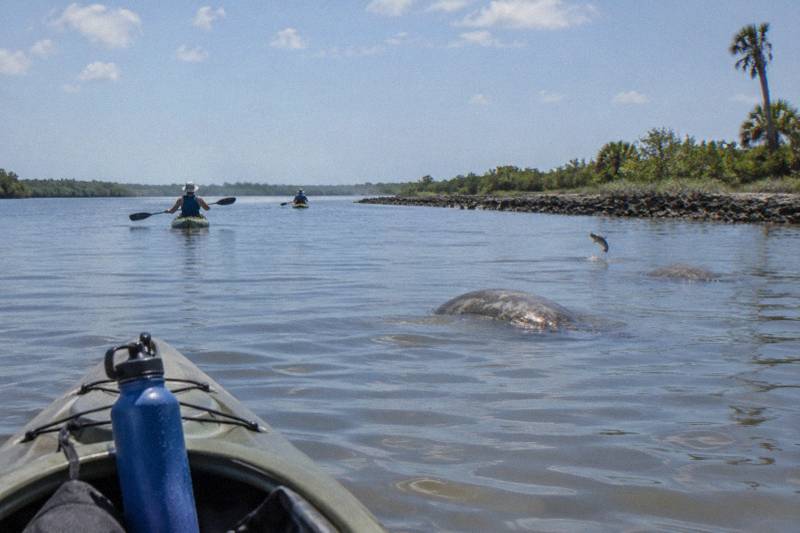
Merritt Island sits between the Banana River and the Indian River Lagoon, and its kayak launches put paddlers closer to manatees, dolphins and mangroves than almost anywhere else on the Space Coast.
Short answer
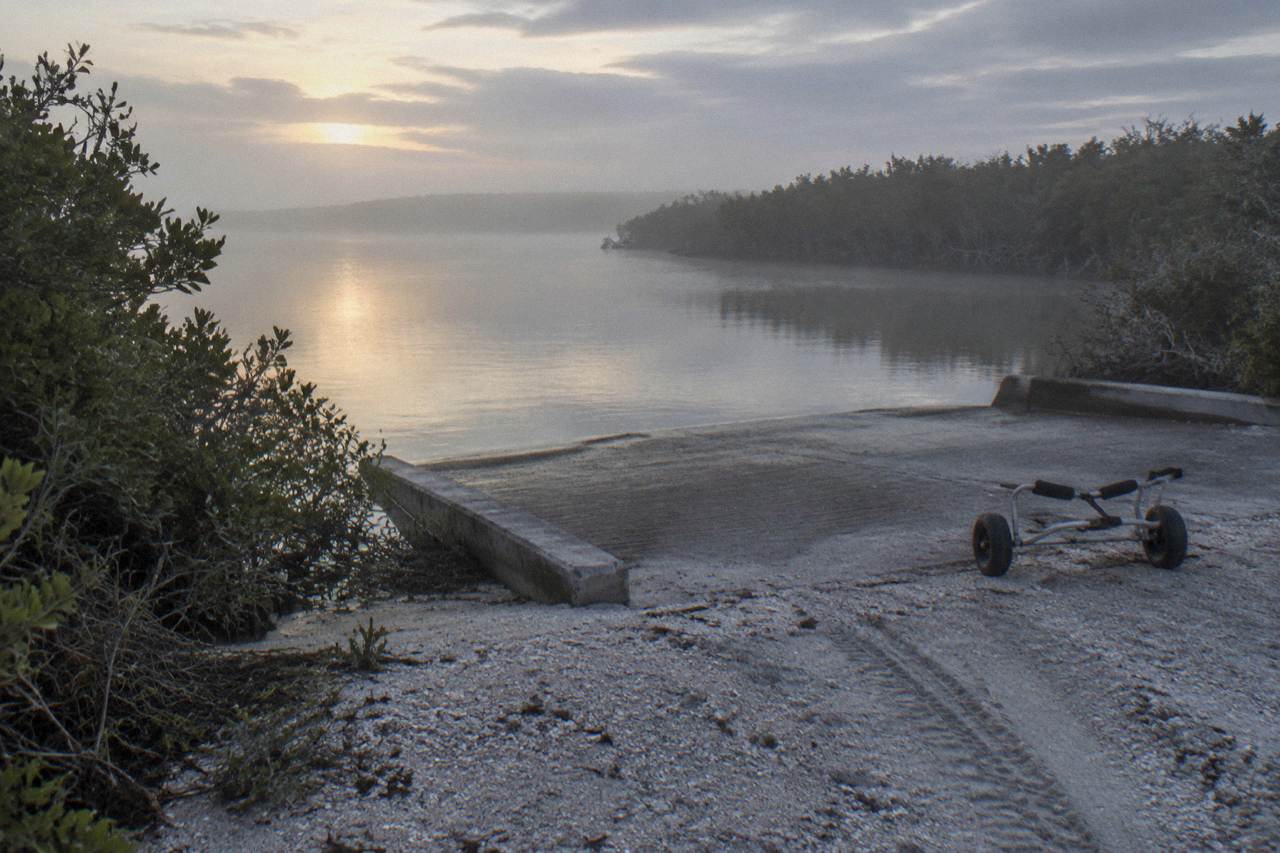
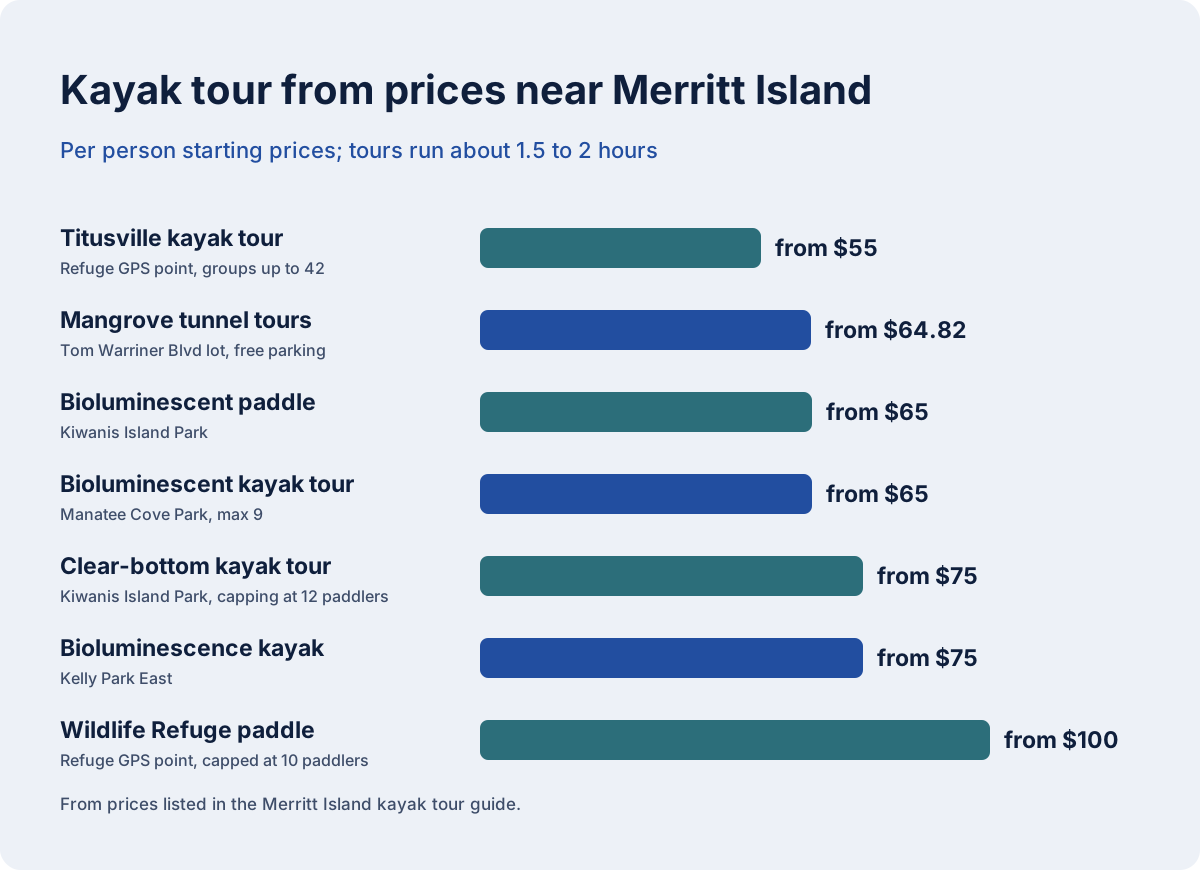
Merritt Island kayaking centers on four launch areas: Kelly Park East, Kiwanis Island Park, Manatee Cove Park and the wildlife refuge shoreline. Guided tours run from $55 to $100 per person and last 1.5 to 2 hours. The refuge itself is open sunrise to sunset year-round, with a $10 per vehicle daily pass required for drives and certain ramps.
Merritt Island is the fat strip of land between the Banana River and the Indian River Lagoon, and nearly every guided kayak tour that advertises Cocoa Beach wildlife actually paddles its shallow waters. The island holds some of the most productive manatee and dolphin habitat on the Space Coast, and its launches are scattered across a dozen miles of shoreline, from the Kelly Park East ramp on the Banana River side to Manatee Cove Park near the refuge's southern edge. This guide lays out where each tour launches, what the wildlife refuge charges and when its gates are open, and what the water actually gives you once you push off.
Where Can You Launch A Kayak Around Merritt Island?
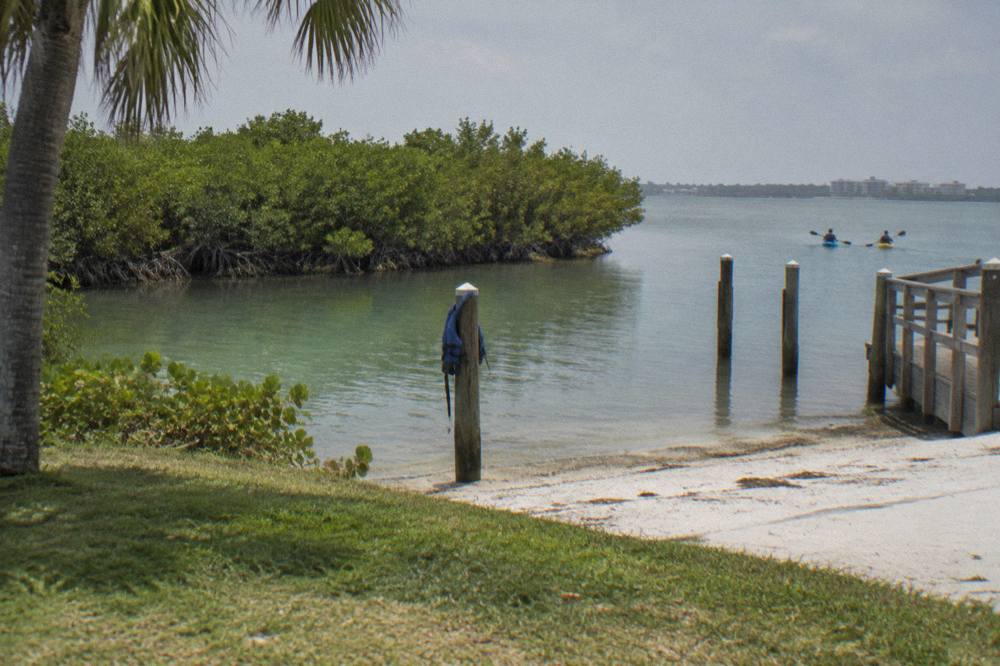
The four launches that matter for Merritt Island kayaking are Kelly Park East, Kiwanis Island Park, Manatee Cove Park and the wildlife refuge shoreline near Haulover Canal. Each is a working meeting point for at least one tour on this site's roster, each has parking on site or across the street, and each opens onto different water: the Banana River, the Sykes Creek maze, or the wider Indian River Lagoon.
Kelly Park East sits at 2550 N Banana River Dr on the island's west side, and its floating dock near the playground is the meeting point for the Banana River, Canaveral Locks and Port cruise, a 2-hour boat trip from $40 per person. The same park serves the bioluminescence kayak tours in summer, because the channel here runs deep enough for glow without much motor traffic. Kiwanis Island Park, at 951 Kiwanis Island Park Rd, is smaller and quieter: two different bioluminescence and clear-bottom listings meet at its launch, and the park sits inside a no-wake zone that keeps the water glassy at dusk. Manatee Cove Park, further north, is a small county waterfront that the 2-hour bioluminescent kayak tour uses as its base, capped at 9 paddlers per departure.
The refuge shoreline is the fourth option, and it works differently. Tours that advertise "wildlife refuge" paddles meet at a GPS point in the Merritt Island National Wildlife Refuge area or at a meeting point sent after booking in the Titusville refuge area, rather than at a named park. That is worth knowing before you drive: check your booking confirmation for the exact pin, because cell coverage on refuge roads is patchy and the wrong gate can cost you half an hour.
| Launch | Water it opens onto | Tours that meet there | Parking situation |
|---|---|---|---|
| Kelly Park East | Banana River, Sykes Creek | Banana River boat cruise, bioluminescence kayak (from $75) | Lot on site, dock near playground |
| Kiwanis Island Park | Sykes Creek no-wake zone | Clear-bottom kayak tour (from $75), bioluminescent paddle (from $65) | Small park lot |
| Manatee Cove Park | Indian River Lagoon | Bioluminescent kayak tour (from $65, max 9) | Waterfront lot |
| Tom Warriner Blvd lot | Banana River, Cocoa Beach border | Mangrove tunnel tours (from $64.82) | Free parking, keep left |
| Refuge GPS point / Titusville | Refuge canals and lagoon | Wildlife Refuge paddle (from $100), Titusville kayak tour (from $55) | Sent after booking |
Note that Tom Warriner Boulevard sits technically in Cocoa Beach, but its launch lot serves the same Banana River mangrove maze that wraps around the island's southern end, so it belongs in any honest Merritt Island kayaking map. For the full picture of meeting points and what parking costs at the Causeway lots, see the guide to dolphin tour meeting points and parking.
Which Kayak Tours Launch Near The Refuge?
Five roster tours paddle refuge-adjacent water, priced from $55 to $100 per person, all about 1.5 to 2 hours, and all rated 4.9 from review pools between 73 and 231 guests. The Wildlife Refuge paddle from $100 is the smallest group at 10 paddlers; the Titusville refuge tour from $55 runs groups up to 42 with a professional guide, kayak, paddle and PFD included.
The distinction that matters is not price but where the water goes. The 1.5-hour Wildlife Refuge Manatee, Dolphin and Mangrove tour meets at a GPS point inside the refuge area and carries kayaks, lifejackets, paddles and dry bags in the price. Its 10-paddler cap is the tightest on the roster, and its route threads mangrove channels where manatees gather in warm months. The 2-hour Manatee and Dolphin Kayak Tour from Titusville covers similar habitat from the northern refuge boundary, with a meeting point sent after booking and the same gear list; its group ceiling of 42 makes it the sociable, budget-friendly option. The Indian River clear-bottom kayak tour from $75 adds a windowed hull, which changes the experience more than you might expect over grass beds and stingray flats.
For readers weighing a longer write-up of the whole paddle scene, including the Cocoa Beach launches, the Cocoa Beach kayak tours guide breaks down every listing on the roster by price and group size.
Between those three, the choice is mostly about intimacy versus headcount. A 10-person refuge group moves quietly and stops often; a larger Titusville departure spreads guides across more boats but keeps the per-person cost down. The clear-bottom option splits the difference, capping at 12 paddlers with a hull that turns the water beneath you into part of the show. All three listings show free cancellation.
What Does The Wildlife Refuge Paddle Actually Include?
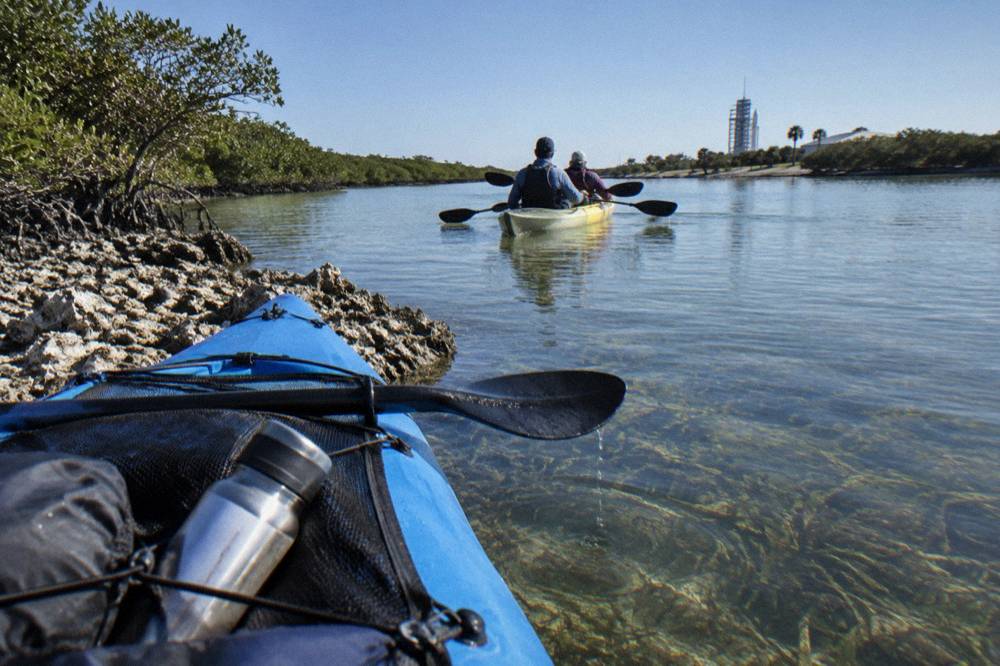
The Wildlife Refuge Manatee, Dolphin and Mangrove tour runs 1.5 hours from $100 per person, capped at 10 paddlers, with kayak, lifejacket, paddle and dry bags listed as included and bottled water listed as excluded. It meets at a GPS point (28 43 51.1 N, 80 45 41.4 W) in the Merritt Island National Wildlife Refuge area, and free cancellation applies on the listing.
That gear list is more generous than it looks. Dry bags matter on refuge paddles because the channels open onto open lagoon water without warning, and a phone or towel that stays dry at the Kiwanis Island launch can get soaked 20 minutes into a refuge route when wind picks up. The tour also supplies the craft itself, so nobody is hauling a rental kayak across the causeway or negotiating a separate outfitter. Water is on you: bring a bottle, because refuge shoreline has no concessions and the nearest stores are a drive back down the island.
The route itself targets three things in order: manatees in the warmer months, dolphins whenever they surface, and the mangrove canopy that frames both. No tour on this roster guarantees sightings, and the listing language reflects that honestly. What the GPS meeting point buys you is water that sees far less paddle traffic than the Cocoa Beach launches, which tends to mean wildlife behaves more naturally around kayaks. Sightings are regularly reported on this route, and the refuge's own wildlife-watching resources describe the same pattern from shore: manatees frequent refuge waters when the water is warm, reliably in spring and summer.
The refuge paddle is this site's pick for a first Merritt Island kayaking trip, and you can Check availability alongside the internal wildlife refuge paddle tour page for dates and times.
What Wildlife Will You See From A Kayak Near Merritt Island?
Expect manatees, bottlenose dolphins, wading birds and the fish and ray life over the seagrass beds, in that order of likelihood. Resident bottlenose dolphins are regularly sighted in the Banana River and Thousand Islands area on tours, and the Indian River Lagoon estuarine system stock is estimated at 1,032 animals. Manatees gather most reliably in warm months and near warm-water refugia in winter.
The dolphin number deserves context. That 1,032 estimate, with a 95% confidence interval of 969 to 1,098, covers the whole Indian River Lagoon estuarine system: the Banana River, Mosquito Lagoon and the Indian River together. It is a resident stock, meaning these dolphins live in the lagoon year-round rather than passing through, which is why a kayak tour anywhere on the island can market dolphin viewing with a straight face. The same NOAA stock assessment records past unusual mortality events in the system, most recently linked to prey and environmental shifts, a reminder that the lagoon's ecology is recovering rather than settled.
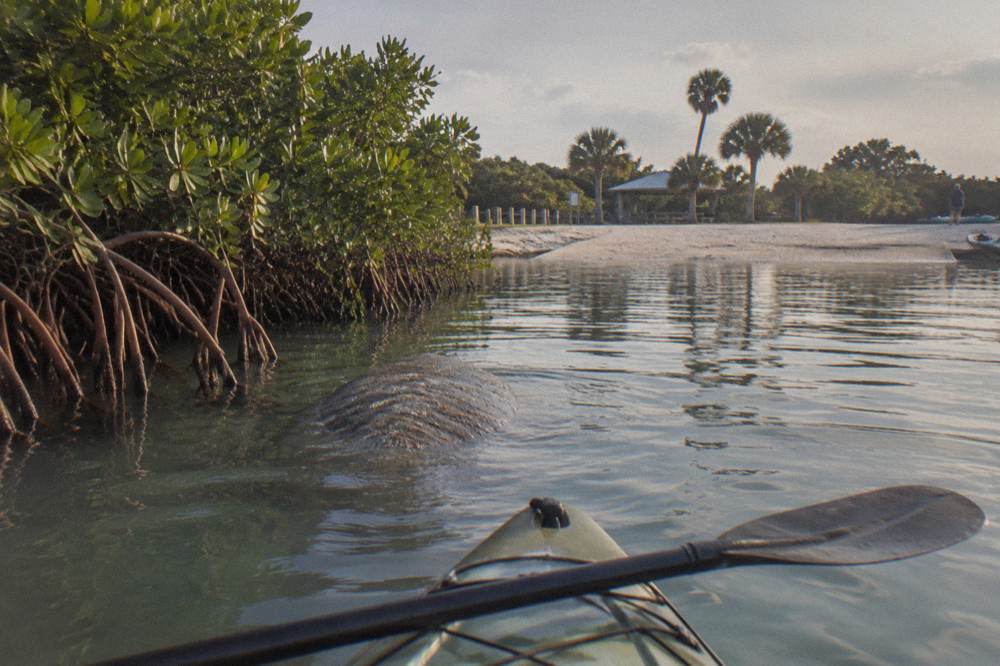
Manatees are the island's other headline, and their story has genuinely improved. Aerial mapping showed seagrass coverage in the lagoon grew from 9,924 hectares in 2023 to 17,042 hectares in 2025, according to the water management district's updated data, and the Atlantic coast manatee unusual mortality event that ran from late 2020 into 2022 was officially declared over by FWC in March 2025. Manatee numbers have improved alongside that seagrass recovery in parts of the lagoon. In June 2026 a mating aggregation drew a crowd in the lagoon near Dixon Boulevard and Indian River Drive, which is typical warm-season behavior.
Rules apply the moment any of this wildlife appears. Under the Marine Mammal Protection Act it is illegal to feed or harass wild dolphins, and NOAA's marine life viewing guidelines ask paddlers to stay at least 50 yards back, about half a football field. For manatees, the Florida Manatee Sanctuary Act makes it unlawful to annoy, molest, harass or disturb them, with state penalties up to a $500 fine and 60 days in jail, and federal penalties running far higher. Look, photograph, drift; never touch, feed, chase or pursue. A guided tour handles this distance discipline for you, which is one quiet argument for booking one rather than paddling the refuge alone.
When Is The Best Time To Paddle Merritt Island Waters?
For manatees and dolphins, warm months win: manatees are most abundant and most active from spring through early fall, while dolphin sightings hold steady year-round because the stock is resident. For the bioluminescence night paddles that many Merritt Island visitors add, the dinoflagellate season runs roughly late May to early October, peaking July and August, with comb jellies taking over the cooler months.
The seasonal logic is water temperature. Manatees are tropical animals, and when lagoon water drops toward the low 70s in winter, they congregate at warm-water refugia rather than dispersing through the grass beds a kayak floats over. Cocoa Beach water averages about 70 to 72 degrees in January and February against 82 to 84 degrees from June through September, so a July paddle crosses water that manatees are actually using. Dolphin behavior barely shifts: these are the same animals in December as in July, hunting the same flats.
| Month window | Water trend | Manatee likelihood | Bioluminescence |
|---|---|---|---|
| March to May | 72 climbing to 79 | Good, spring peak at refuge waters | Late May season start |
| June to August | 81 to 82 | Very good, mating herds possible | Peak dinoflagellate glow |
| September to October | 84 easing to 81 | Good | Season fades, fewer crowds |
| November to February | 77 down to 70 | Lower, fish gather near warm flows | Comb jellies, softer glow |
Moon phase only matters for the night paddles. New and dark moon periods give the best contrast regardless of organism, because any moonlight competes directly with the glow operators are steering you toward. The transition weeks in late October and November are the least predictable of the year, when the dinoflagellate season is ending and the comb jelly season has not fully arrived. If glow is the whole point of your trip, aim for July or August and a dark moon; the guide to Cocoa Beach bioluminescence season covers the timing in depth.
Daytime paddles have their own rhythm. Mornings carry the calmest wind on the lagoon, and manatees feed actively early. Afternoon departures trade glassy water for warmer air in winter months. Whatever you pick, know that thunderstorms end trips fast in summer, and the operator, not the forecast app, makes the call on rescheduling.
Do You Need A Refuge Pass Or Permit To Paddle?
Guided kayak tours handle their own launch logistics, so you generally pay nothing beyond the tour price. If you paddle or drive into Merritt Island National Wildlife Refuge on your own, the roads, trails and boat ramps are open year-round sunrise to sunset, and a $10 per vehicle daily pass is required for Black Point Wildlife Drive, Bio Lab Road and certain boat ramps, buyable at the Visitor Center, self-pay stations or online.
The distinction is simple but worth stating plainly. A tour that meets at a refuge GPS point has already built its access into the listing price; you show up at the pin and paddle. Independent paddlers who trailer their own kayaks into the refuge hit the fee structure directly, and so does anyone driving the wildlife drive after a morning on the water. The refuge's Visitor Center, open 8:30 a.m. to 4:00 p.m. Tuesday through Saturday and closed Sundays, Mondays and major holidays, sells passes and doubles as the best orientation stop on the island. The official refuge visit page carries current hours and fee details.
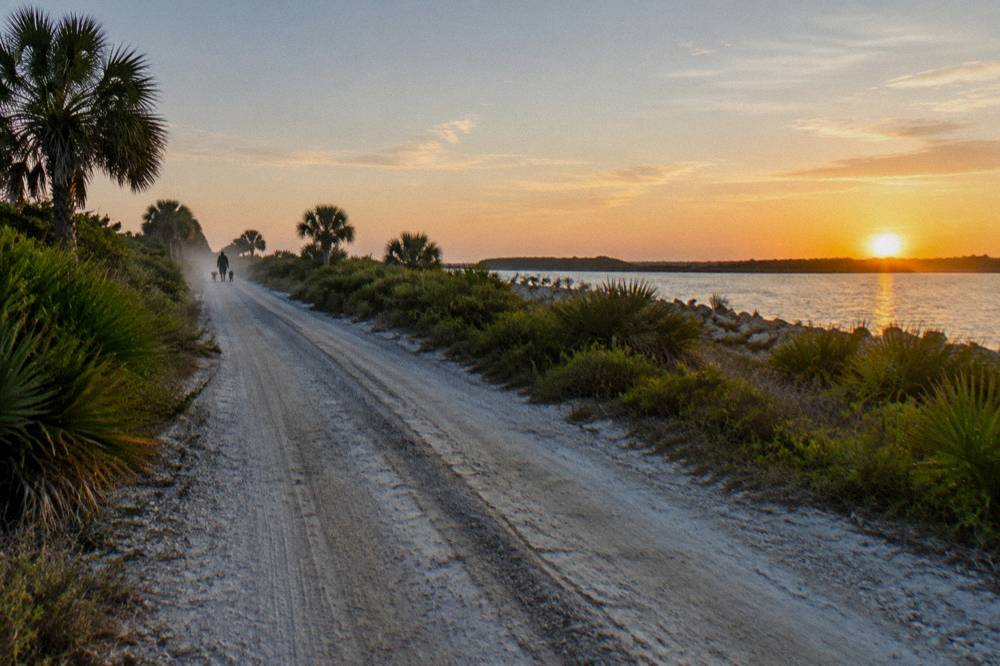
Two refuge rules shape the water itself. Haulover Canal is designated a year-round manatee refuge zone where watercraft may not exceed slow speed, a federal regulation that keeps the canal's dense manatee traffic safer. And the refuge operates an accessible Manatee Observation Deck for visitors who want the wildlife without the paddle, a real option for mixed groups where one member would rather stay ashore. Black Point Wildlife Drive, a 7-mile one-way auto tour, is the refuge's most popular wildlife viewing area and pairs naturally with a morning kayak trip.
Is the island worth the drive beyond the paddling? The honest answer is yes for wildlife, and the blog post is Merritt Island worth visiting works through the rest of what the island offers day trippers.
What About Night Paddles And Bioluminescence Launches?
Three roster tours run bioluminescence paddles from Merritt Island launches: the 2-hour tour from $65 at Manatee Cove Park capped at 9 paddlers, the 1.75-hour tour from $65 at Kiwanis Island capped at 12, and the 2-hour Indian River lagoon tour from $65 at Manatee Cove with safety light, whistle and life jacket included. All show free cancellation, and none guarantees a glow, because plankton density varies night to night.
The safety gear on that Indian River listing is not decoration. Florida treats kayaks and paddleboards as vessels, and FWC regulations require a Coast Guard-approved wearable life jacket per person, worn by children under 6, plus a sound-producing device and lighting when operating at night. A night paddle in a lagoon with motor traffic is exactly the situation those rules were written for, and the best listings hand you the whistle and safety light rather than expecting you to bring one.
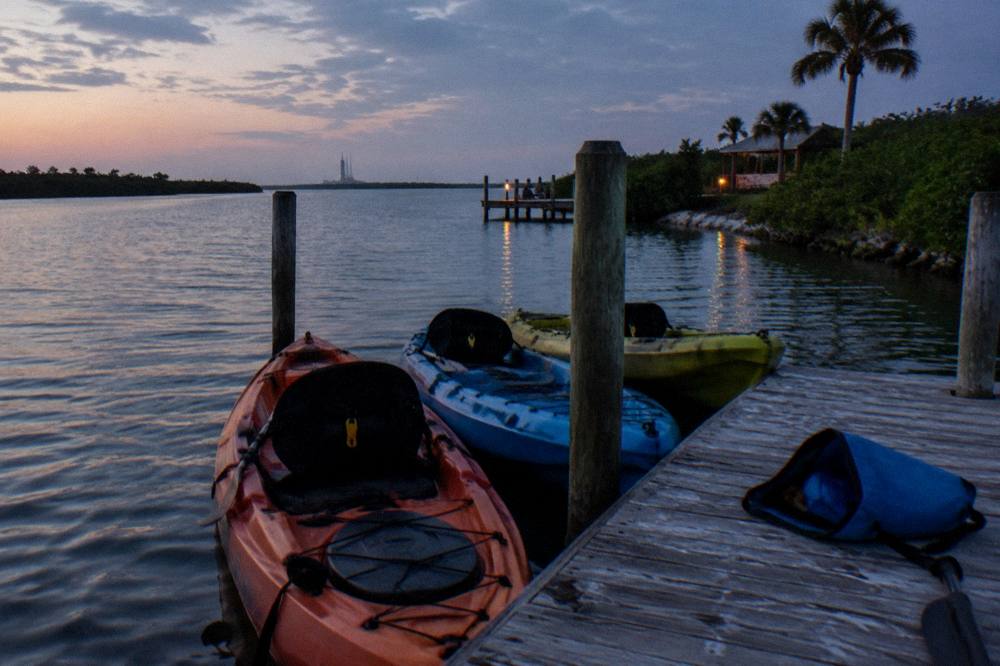
What produces the glow changes through the year. In warm months it is mostly dinoflagellates, single-celled organisms that flash bright blue-green when disturbed by a paddle stroke, a fish or a hand in the water. In cooler months the show shifts to comb jellies, non-stinging animals that pulse a softer, lantern-like light. Tours run through both windows, but the sparkler-intensity dinoflagellate season is the one people travel for, and it fades by early to mid October. For a fuller treatment of timing, safety and whether the experience justifies the price, read is bioluminescent kayaking worth it.
The Kiwanis Island launch has one quirk worth flagging: one listing notes an alternate launch can be used if bio levels drop, which is an honest admission that the plankton moves. Operators watch their own water and reroute accordingly, so treat the meeting point in your confirmation as the final word.
How Do You Choose Between The Merritt Island Launches?
Pick by group size and water style, not by price alone. The refuge-area paddle at $100 buys a 10-person cap and mangrove channels; the Titusville tour at $55 buys the biggest group and a lower price; the clear-bottom tour at $75 buys the windowed hull; and the bioluminescence options at $65 buy the night. Every one of them is a 1.5 to 2 hour commitment that fits a half-day Space Coast itinerary.
Here is the decision in table form, using roster figures only:
| Tour | Price from | Duration | Group max | Best for |
|---|---|---|---|---|
| Wildlife Refuge paddle | $100 | 1.5 hours | 10 | Small groups, mangrove channels |
| Titusville refuge kayak | $55 | 2 hours | 42 | Budget, gear included |
| Clear-bottom kayak | $75 | 1.5 hours | 12 | Seeing the flats beneath you |
| Bioluminescent kayak, Manatee Cove | $65 | 2 hours | 9 | Peak glow nights |
| Bioluminescent paddle, Kiwanis | $65 | 1.75 hours | 12 | Shortest night option |
Two practical notes close the comparison. First, ratings pools differ in size: 4.9 from 229 reviews and 4.9 from 73 reviews are both strong, but the larger pool has been tested by more strangers. Second, the 2.5-hour eco boat activity from $42.80 exists if someone in your party cannot or will not sit in a kayak; it is a boat, not a paddle, and it is the one roster listing in that category with no free cancellation, a detail worth knowing before you book it for a tight schedule. For the wider boat-versus-kayak tradeoff, the Cocoa Beach boat tours compared guide lays it out side by side.
What Should You Bring And Know Before You Paddle?
Bring water, sunscreen applied before arrival, bug spray for evening paddles, and clothes that can get wet; several listings explicitly exclude bottled water and gratuities from the price. Wear your life jacket, keep 50 yards from dolphins, give manatees even more room, and let the operator make every weather call, since refuge and lagoon conditions change faster than forecasts.
The exclusions are consistent across the roster and worth repeating as a packing list rather than a surprise. Bottled water appears as an exclusion on the refuge and clear-bottom listings; gratuities appear on several bioluminescence tours; one sunset mangrove tour asks that sunscreen be applied before you arrive, which protects the lagoon's surface chemistry as much as your seat. None of this is hidden, but it reads differently at a dock at 8 p.m. than it does in a booking flow.
Weather discipline matters more here than on most vacation paddles. The Atlantic hurricane season runs June 1 to November 30, and summer thunderstorms build over the lagoon most afternoons. Operators announce delays, reroutes and cancellations themselves, and a night paddle rescheduled to a darker, calmer window is a better outcome than a stubborn departure into lightning on the horizon. Slow-speed zones in refuge waters and the manatee rules above apply to your paddle regardless of who is guiding it.
One last thing: this article is part of Dolphin Tours Cocoa Beach, a site that tracks all 20 bookable tours on the Space Coast lagoon system, so if a paddle from the Cocoa Beach side of the water fits your plans better, the same comparisons exist for those launches.
That covers the launches, the fees, the seasons and the rules. The three tours below are the ones this site points Merritt Island kayaking questions toward, and every listing shows its current times and prices on the live booking page.
Common Questions About Merritt Island Kayaking
Do you need a pass to kayak in Merritt Island National Wildlife Refuge?
Guided tours handle launch access in the tour price, so you pay nothing extra on a booked paddle. Independent paddlers using refuge boat ramps, and drivers on Black Point Wildlife Drive or Bio Lab Road, need a $10 per vehicle daily pass, available at the Visitor Center, self-pay stations or online.
Where do Merritt Island kayak tours launch from?
Kelly Park East, Kiwanis Island Park and Manatee Cove Park are the named launches. Refuge-area tours meet at a GPS point or a meeting point sent after booking, so always check your confirmation before driving.
How much does a Merritt Island kayak tour cost?
Refuge-area paddle tours on this site's roster run from $55 to $100 per person for 1.5 to 2 hours. The $100 Wildlife Refuge paddle caps at 10 paddlers; the $55 Titusville tour runs up to 42 with kayak, paddle and PFD included.
When is the best time to kayak Merritt Island for manatees?
Spring through early fall, when lagoon water is warm and manatees disperse across the seagrass beds. Winter concentrates manatees at warm-water refugia instead. Dolphin sightings hold year-round because the lagoon stock is resident.
Can you see bioluminescence kayaking at Merritt Island?
Yes, from roughly late May to early October the dinoflagellate season produces bright blue-green sparks, peaking July and August, with comb jellies providing a softer glow in cooler months. Glow is never guaranteed; plankton density varies, and operators sometimes shift launches when levels drop.
Is it safe to kayak the Indian River Lagoon at Merritt Island?
Guided tours supply life jackets, and FWC requires a wearable Coast Guard-approved PFD per paddler, a sound-producing device and night lighting. Stay 50 yards from dolphins, never touch or feed manatees, and let the operator make weather calls in summer thunderstorm season.