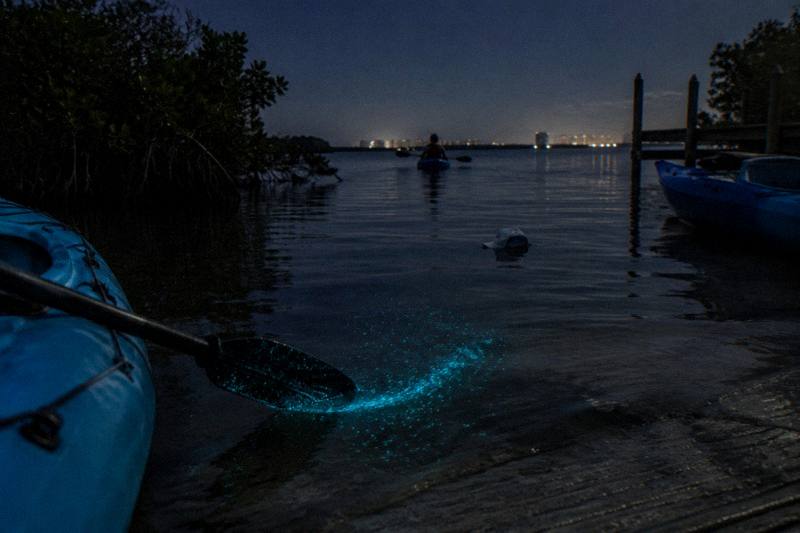
Bioluminescence Kayak Tours In Cocoa Beach: Every Night Paddle Compared
The Indian River Lagoon system around Cocoa Beach is a sheltered estuary where dolphins, manatees and glowing dinoflagellates share the water through glowing water. Here is how the bookable night tours compare on price, launch site, group size and duration.
Short answer
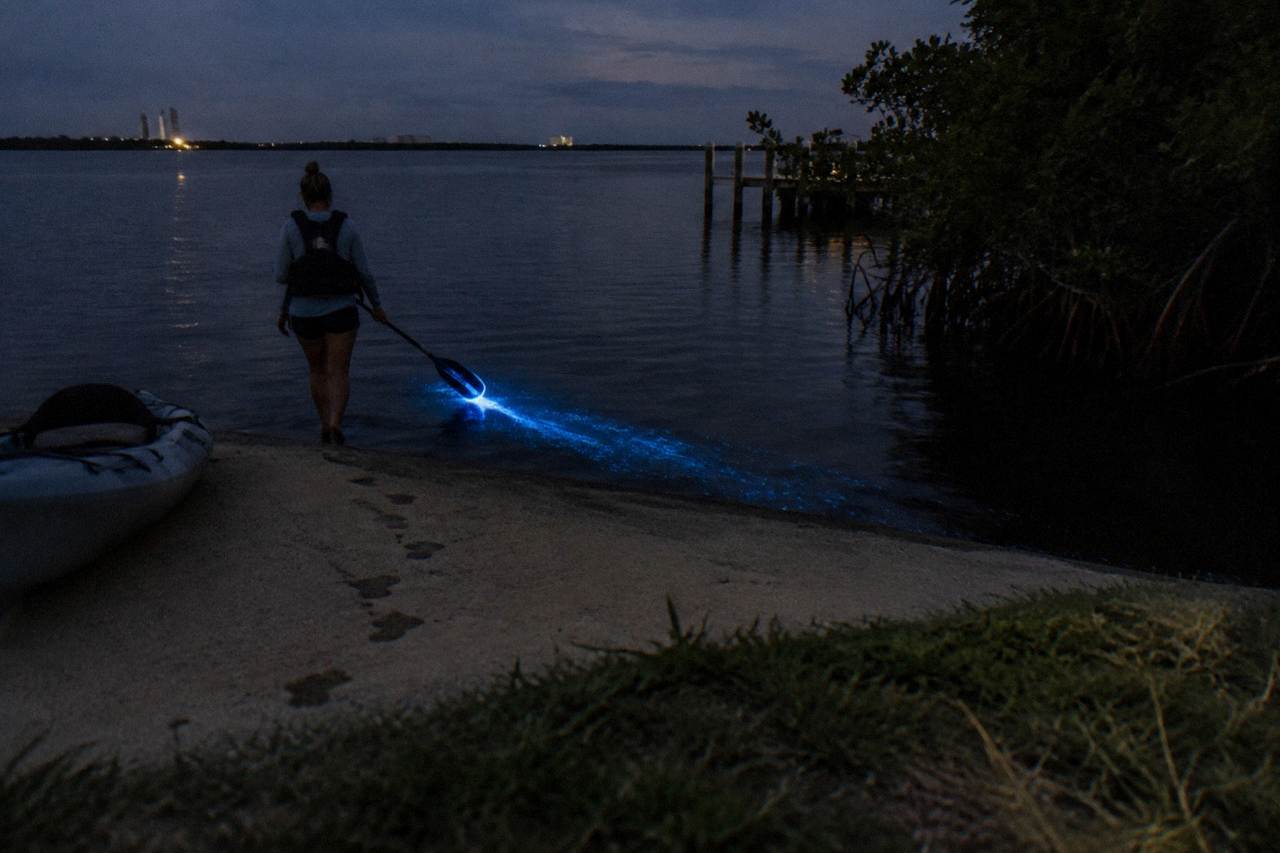
Bioluminescence kayak tours around Cocoa Beach run from $51.36 to $75 per person for 1.5 to 2 hours on the water. The roster's night paddles launch from Kelly Park East, Kiwanis Island Park and Manatee Cove Park on Merritt Island, and the strongest glow typically falls in the dinoflagellate season from late May to early October, brightest around dark-moon nights.
The water off Cocoa Beach does something most travelers never expect: on the right night, every paddle stroke sets off a trail of blue-green sparks. The Indian River Lagoon and Banana River, the shallow estuary system that sits behind the barrier island from Cocoa Beach up through Merritt Island, host warm-season blooms of dinoflagellates, microscopic organisms that flash when the water around them is disturbed. Kayakers are the ideal disturbance. A paddle, a dripping hand, a fish darting under the hull, each one triggers the light. Paddling a dark lagoon at night also makes you wonder what else is out there, so it helps to read up on where alligators around Cocoa Beach actually live before you launch.
This guide compares the bookable bioluminescence kayak tours that operate on these waters. There are four night paddles on the current roster: the large-group tour from Kelly Park East, the kayak-and-paddleboard trip from Kiwanis Island Park, the small nine-guest tour from Manatee Cove Park, and the 1.5-hour Brady Yaks tour whose meeting point varies by option. We compared the listings on price, duration, group size, launch site and reviews, and folded in the seasonal science that decides whether the water glows at all. If you want the short version of when to go, see the Cocoa Beach bioluminescence season guide; if you are still deciding whether the trip justifies the drive, the is bioluminescent kayaking worth it post walks through that question directly.
What Actually Makes The Water Glow?
The glow comes from two different organisms, and they run on opposite schedules. Dinoflagellates, a microscopic plankton whose warm-season blooms peak in July and August, flash bright blue-green sparks when the water is disturbed: paddle strokes, fish, a hand trailed over the side. Comb jellies, which dominate from roughly November into February, give a softer, slower pulse. Operators on the lagoon run tours through both windows, so the same launch site can deliver two very different nights.
The dinoflagellate behind the famous sparkler effect in this lagoon is Pyrodinium bahamense. It is a warm-water species, which is why the bright season roughly tracks the Florida summer: reliable from June through September, peaking July and August, fading by early to mid October. Comb jellies are not algae at all but ctenophores, soft translucent animals that do not sting and that glow faintly along their rows of tiny beating cilia when disturbed. They tolerate, and prefer, cooler water, so their season runs roughly November or December into February or March, often peaking around December and January.
The transition windows in late October into November, and again in March, are the least predictable, sometimes holding both organisms, sometimes neither in density. That is worth knowing before you book, because the experience differs more between seasons than between operators. A July dark-moon paddle with a dense dinoflagellate bloom is a fireworks show; a January paddle with scattered comb jellies is closer to floating among slow lanterns.
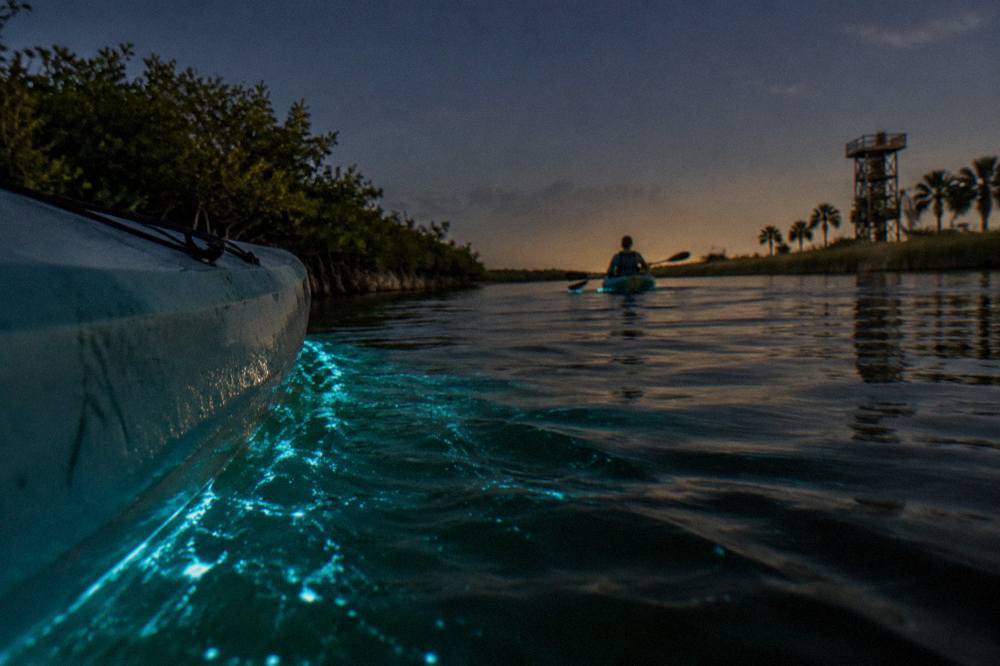
Here is how the two glow seasons stack up against each other, and against the awkward gap between them:
| Glow type | Organism | Best months | Character of the light |
|---|---|---|---|
| Bright sparkler glow | Dinoflagellates (Pyrodinium bahamense) | Late May to early October, peak July and August | Fast blue-green flashes and trails triggered by movement |
| Soft lantern glow | Comb jellies (ctenophores) | November to March, peak December and January | Slow, gentle pulses along the animal's body |
| Transition mix | Either, or neither | Late October to November, and March | Unpredictable, varies night to night |
Two honest caveats apply to every tour on this page. First, no operator guarantees the glow: bioluminescence is a wild, variable phenomenon driven by plankton density, water temperature and recent weather, and a tour can run on a thin night. Second, operators may move launch sites when conditions demand it, and the Florida-bioluminescent listing from Kiwanis Island says outright that an alternate launch can be used if bio levels drop. Both points matter more to your night than the brand of kayak.
The Four Bioluminescence Kayak Tours Compared
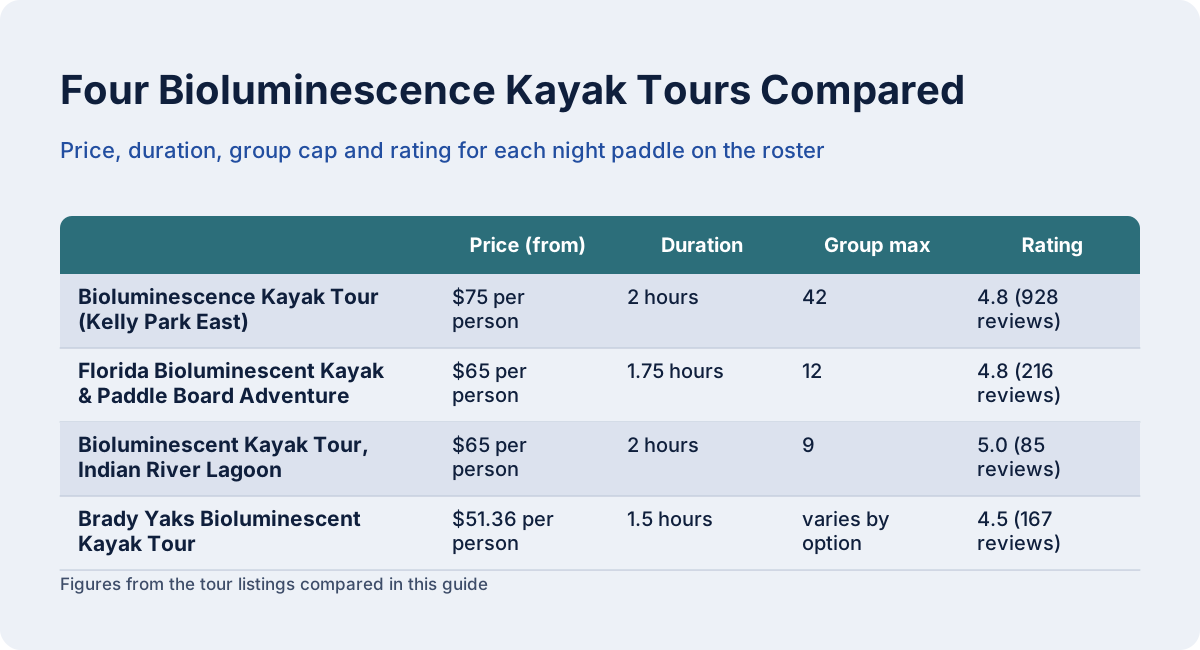
The roster holds four night paddles, priced from $51.36 to $75 per person, running 1.5 to 2 hours. The featured tour from Kelly Park East carries up to 42 guests at $75; the Kiwanis Island trip costs $65 and caps at 12; the Manatee Cove Park tour also costs $65 but caps at just 9 guests; the Brady Yaks tour is the cheapest at $51.36. All four carry free cancellation on their listings.
Here is the side-by-side from the live listings. Ratings and review counts are exactly as printed on each listing.
| Tour | Price (from) | Duration | Group max | Launch | Rating | Reviews |
|---|---|---|---|---|---|---|
| Bioluminescence Kayak Tour (Kelly Park East) | $75 per person | 2 hours | 42 | Kelly Park East, Merritt Island | 4.8 | 928 |
| Florida Bioluminescent Kayak & Paddle Board Adventure | $65 per person | 1.75 hours | 12 | Kiwanis Island Park | 4.8 | 216 |
| Bioluminescent Kayak Tour, Indian River Lagoon | $65 per person | 2 hours | 9 | Manatee Cove Park | 5.0 | 85 |
| Brady Yaks Bioluminescent Kayak Tour | $51.36 per person | 1.5 hours | varies by option | varies by option, Merritt Island | 4.5 | 167 |
The price spread is narrower than it looks. Twenty-four dollars separates the cheapest and the most expensive ticket, and every tour in the table includes the kayak, paddle and life jacket in the base price. What actually differs is the shape of the night: how many boats are on the water, how long you stay out, and how far the launch sits from Cocoa Beach itself. If you'd rather see the same water in daylight, the clear kayak and paddleboard tour comparison covers the launches and boat choices from a daytime angle.
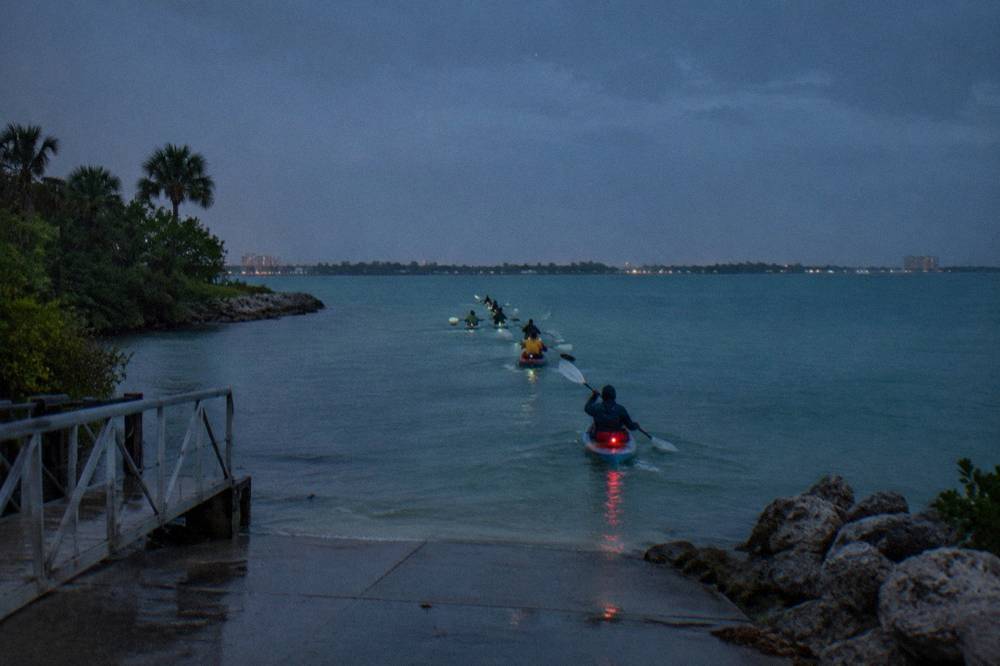
The featured tour is the 2-hour paddle from Kelly Park East, rated 4.8 from 928 reviews and priced from $75 per person. It carries up to 42 guests, which makes it the most social, and sometimes the most crowded, of the four. Its listing includes a professional guide, kayak, paddle and PFD, with gratuities excluded. Kelly Park East sits on the Banana River side of Merritt Island, roughly a 15-minute drive from central Cocoa Beach, and it is also the dock used by the Banana River locks cruise described in the Cocoa Beach boat tours compared guide. You can check availability on the operator's live listing before committing to a date.
The Kelly Park East Tour: The Big-Night Paddle
This is the tour for travelers who want the full two hours on the water and the largest review pool to judge it by: 4.8 across 928 reviews, from $75 per person, up to 42 guests per departure. It meets at Kelly Park East on Merritt Island, includes guide, kayak, paddle and life jacket, and offers free cancellation. The trade-off is simple: with 42 possible guests, you share the glow with more boats than on any other option.
Group size is the real decision here, and it cuts both ways. A large flotilla means more paddlers stirring the water, which on a good night means more visible light across a wider area, and a guide who can keep the group oriented when the sky is genuinely dark. It also means the photo you imagined of one lone kayak in a glowing lagoon is harder to frame. Families and first-time paddlers tend to do well at this scale; there is safety in numbers and the two-hour window is unhurried.
The 928-review pool is worth a pause. Across that many guests, a 4.8 average is a strong signal that the operator delivers consistently, including on nights when the bloom is thinner. Reviews at that volume always contain some thin-glow nights and some weather scrims, and the rating holding above 4.8 anyway tells you the operation itself is reliable. Smaller pools, like the 85 reviews on the Manatee Cove tour, are excellent but statistically lighter.
The Kiwanis Island Kayak And Paddleboard Tour
The Florida Bioluminescent Kayak and Paddle Board Adventure from Kiwanis Island Park costs from $65 per person, runs 1.75 hours, and caps the group at 12, which makes it the mid-sized, mid-priced option. Its rating is 4.8 from 216 reviews, the listing includes photos of your excursion, and it offers free cancellation with gratuities not included in the booking price.
The distinguishing feature is choice of craft. This is the one roster night paddle where you can take a paddleboard instead of a kayak, and standing on a board puts your eyes closer to the water, where the glow trails read best. Paddleboarders also trigger the bloom with every stroke of the long paddle, sweeping a wider band of light than a kayak blade. The listing notes photos of the excursion are included, a genuine convenience on a night when your own camera will struggle in the dark.
The 1.75-hour duration is a deliberate compromise: shorter than the two full hours at Kelly Park East and Manatee Cove, longer than the Brady Yaks trip at 1.5 hours. For most paddlers it is plenty; the coldest part of a night tour is usually the last stretch, and trimming it suits families with kids. Note the honest operational caveat printed on the listing: an alternate launch site can be used if bioluminescence levels drop at Kiwanis Island, so your meeting point can shift. That is not a defect, it is the operator chasing better water, but it means you should read your confirmation message carefully the day of the tour.
The listing also carries a typo worth forgiving: photos are described as "inlcuded." The tours themselves are professionally run, and the 4.8 from 216 reviews reflects that. If you are weighing this against daytime paddling on the same waters, the Cocoa Beach kayak tours guide covers the daylight roster, including the mangrove tunnels these same operators run in the morning.
The Manatee Cove Park Tour: The Small-Group Pick
At a maximum of nine guests, the Bioluminescent Kayak Tour from Manatee Cove Park is the most intimate night paddle on the roster. It runs a full two hours, costs from $65 per person, and carries a 5.0 rating from 85 reviews. The listing includes kayak, life jacket, whistle and safety light, and asks paddlers to bring bug spray for a night tour. Free cancellation applies.
Nine boats is a different sport from forty-two. The guide can keep the group tight, answer questions individually, and find quiet patches of water where the only disturbance is your own paddle. For photographers, proposals, or anyone who finds large groups loud, this is the listing to book. The trade-off is availability: a nine-seat tour fills fast on dark-moon weekends in July and August, and the small review pool, 85 guests, means you are trusting a shorter track record even though that record is spotless at 5.0.
The safety kit on this listing is worth flagging because it maps directly onto Florida's night-paddle rules. The state's paddle-craft regulations treat kayaks and paddleboards as vessels: a Coast Guard-approved wearable life jacket per person, a sound-producing device, and a white light ready to display between sunset and sunrise. The Manatee Cove listing includes the whistle and safety light, which tells you the operator builds the legal minimum into the base price rather than leaving it to guests.
Manatee Cove Park sits on Merritt Island, a short drive north of the Kiwanis Island launch. For paddlers curious about the wider refuge watershed north of these launches, including the wildlife drives and the refuge's accessible manatee viewing deck, the Merritt Island kayak tours and refuge launches guide maps the full system.
The Brady Yaks Tour: The Short And Cheap Option
The Brady Yaks bioluminescence kayak tour, run by Brady Yaks Tours and Rentals, is the value entry: from $51.36 per person for 1.5 hours, rated 4.5 from 167 reviews, with free cancellation. Its meeting point varies by the option you book, so the exact launch is confirmed only after booking. The lower rating reflects more mixed reviews than the three tours above.
Budget travelers and travelers with a packed itinerary are the natural audience. The 1.5 hours on the water is enough time for the glow to do its work, the price undercuts the next-cheapest tour by more than ten dollars, and the operator runs enough volume, 167 reviews, that departures are usually available when others are full. The 4.5 rating is the lowest of the four but still solidly positive; across that review count, the gap between 4.5 and 4.8 reads as more variance in guide quality and glow luck than a structural problem.
The variable meeting point deserves a plan. Because the launch depends on which option you booked, and conditions can shift within Merritt Island's maze of lagoon-side parks, confirm the exact address before you leave your hotel. Driving from Cocoa Beach, everything on this roster's launch list, Kelly Park East, Kiwanis Island Park, Manatee Cove Park, sits within about 15 to 25 minutes of the beachside hotels, but a wrong address at night costs you daylight you do not have.
When To Book: Dark Moon, Season And Day Of Week
Book the dark-moon window inside dinoflagellate season, late May through early October with the peak in July and August. Moonlight is the enemy of bioluminescence viewing: a bright moon washes out the glow the way city lights wash out stars, so operators load their calendars around new-moon weeks. Within that window, weekday departures are quieter and easier to book than the dark-moon weekends.
The timing logic is pure contrast. The organisms flash in response to disturbance regardless of the moon, but your eye can only separate that faint blue-green light from the background when the background is black. On nights within a few days of the new moon, or when the moon has not yet risen or has already set during your tour slot, the water reads dramatically brighter. If your dates are fixed and you land near a full moon, do not cancel: comb jellies in winter are actually easier to pick out near the surface on a moonlit night, and operators time departure slots to moonset when they can.
Season matters more than anything else on this page, which is why the calendar question gets its own treatment in what month is bioluminescence in Florida. The quick rule: summer for sparks, winter for lanterns, late October and November for a coin flip. A traveler who books a July dark-moon night with any of these four operators is buying a genuinely reliable natural phenomenon; a traveler who books blind in November is gambling on the transition.
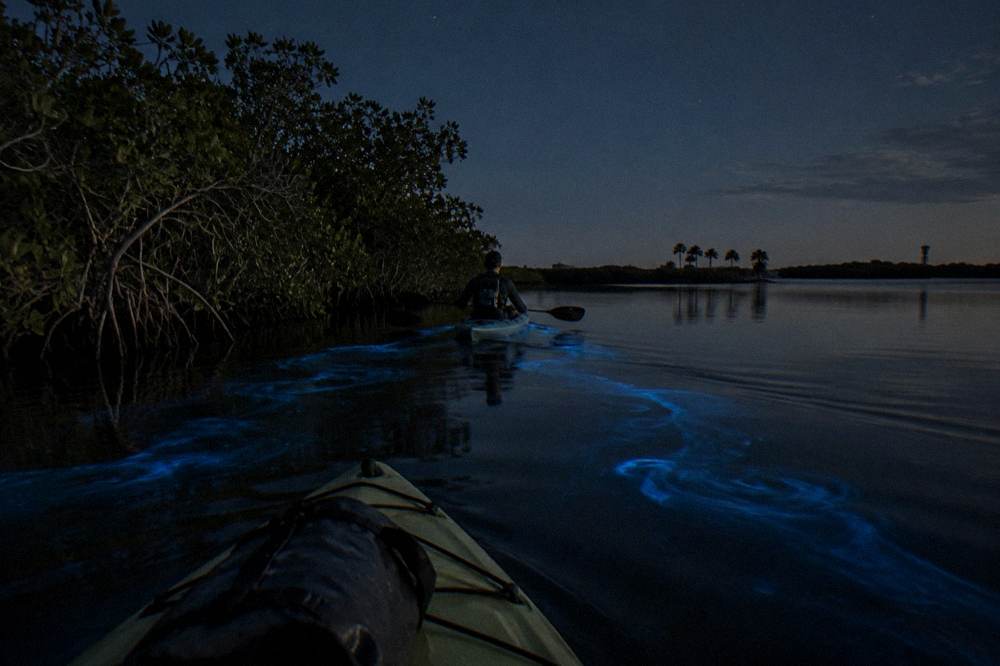
Here is the seasonal planning picture in one view:
| Period | Glow outlook | Booking difficulty | Notes |
|---|---|---|---|
| Late May to June | Dinoflagellates building | Moderate | Quieter than peak, good value nights |
| July to August | Peak dinoflagellate glow | Hardest, especially dark-moon weekends | Book the small-group tours weeks ahead |
| September to early October | Fading but still reliable | Easier | Warmer water, thinner crowds |
| November to March | Comb jellies, softer glow | Easy | Winter nights run colder, dress in layers |
Advance booking deserves a direct answer too: yes, for dark-moon summer nights. The small-group tours, especially the nine-guest Manatee Cove paddle, can fill weeks ahead in peak season, and operators run their fullest schedules exactly when the glow is best. The rest of the year, a few days ahead is usually enough. Every listing in this comparison carries free cancellation, so the low-risk move is to book the best astronomical night you can and adjust if your itinerary shifts.
What To Wear And Bring On A Night Paddle
Wear quick-dry clothing, water shoes or sandals that can get wet, and bring a towel and a change of clothes in the car; apply bug spray before arrival and bring sunscreen only for late-sunset departures. Water on the lagoon stays warm from May through October, but a light layer helps on windy winter comb-jelly paddles. Operators supply the kayak, paddle, life jacket and, on the Manatee Cove listing, whistle and safety light.
The footwear point is the one that catches people. You will step into the water at the launch, often ankle to knee deep, on a ramp that can be slick, and bare feet or flip-flops are how ankles get twisted in the dark. Closed water shoes or secure sandals beat both. The sunset-mangrove listing on this site's roster asks paddlers to apply sunscreen prior to arrival, and the same logic applies to bug spray on night tours: the same warm, still water that grows the plankton grows the mosquitoes, and spraying at the launch means spraying the twenty people downwind of you.
Dry bags appear on several of these listings as included gear, which matters if you carry a phone for photos. A phone in a pocket on a night paddle is a phone at risk; a phone in a dry bag tethered to the deck is a phone that survives. For the full packing rundown, including what changes between boat tours and kayak tours, see what to wear on a Cocoa Beach boat or kayak tour.
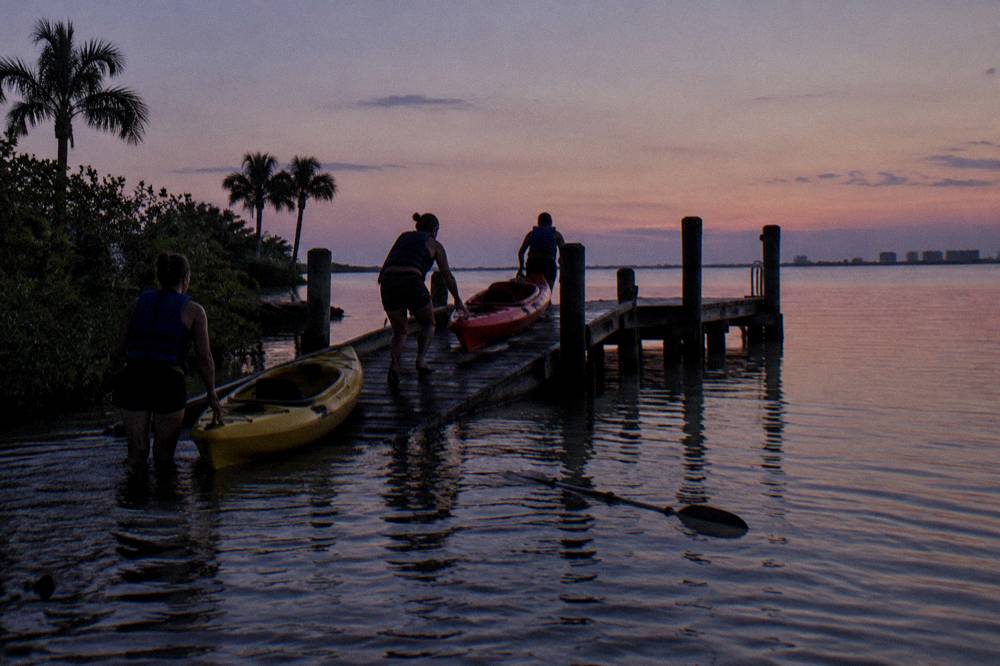
A compact packing checklist for the four tours on this page:
| Item | Why it matters | Supplied by the tour? |
|---|---|---|
| Water shoes or secure sandals | Slick ramps, ankle-deep launch in the dark | No, bring your own |
| Life jacket (PFD) | Required by Florida law, one per person | Yes, on every listing |
| Whistle and white light | Required night-paddle equipment | Yes on Manatee Cove; check others |
| Bug spray | Lagoon evenings, applied before arrival | No, bring your own |
| Dry bag | Keeps phone and keys safe on the water | Yes on several listings |
| Towel and change of clothes | You will get splashed from the waist down | No, leave in the car |
Safety, Rules And Who Cancels When Weather Turns
Bioluminescence paddling on the lagoon is a guided, shallow-water activity with a good safety record, but it is a legal night vessel operation: life jacket per person, whistle, white light at the ready, children under six must wear their jacket. Tours cancel or reschedule for thunderstorms and unsafe wind, and the operator makes that call and announces it. All four tours here carry free cancellation, so a weather scrub should cost you nothing.
The legal frame is worth knowing because it explains the gear lists. Florida fish and wildlife rules classify kayaks and paddleboards as vessels subject to the same baseline equipment rules as small boats, which is why a guide handing you a whistle and clipping a light to your deck line is procedure, not fuss. The National Park Service paddling page for Canaveral National Seashore covers the same requirements for the northern lagoon waters, where some ramps run 24 hours and others close at sunset.
Weather on the Space Coast follows the classic Florida summer rhythm: hot afternoons, thunderstorms near dusk, clearer skies after dark. Hurricane season runs June 1 to November 30, and a tropical system anywhere in the eastern Gulf or Bahamas can mean a windy, scrubbed week even without a local landfall. When a departure is called off, the operator announces it, typically by the message thread tied to your booking, and free cancellation converts the loss into a rebook. Never assume a stormy afternoon kills your night; lagoon conditions often settle after sunset, and the operator is watching the same radar you are.
One wildlife rule to internalize before you launch: you will very likely share the lagoon with dolphins and manatees, and both are protected. Federal guidelines ask boaters and paddlers to stay at least 50 yards from dolphins, and the state manatee viewing rules prohibit touching, feeding or pursuing manatees. Paddle quietly, let them pass, and let the plankton be the highlight. The full ethics rundown is in do Cocoa Beach dolphin tours guarantee sightings, which explains why no honest operator promises an animal.
Booking Tips And Common Rookie Mistakes
Book the featured Kelly Park East tour if you want the biggest, most social two-hour paddle with the deepest review record; book Manatee Cove for intimacy; book Kiwanis Island to paddle a standup board; book Brady Yaks to save money or fill a tight schedule. The mistakes that ruin nights are fixable: booking a full-moon date, arriving without water shoes, skipping the confirmation message that names the launch, and expecting a show every single night.
The single most consequential decision is the date, not the tour. All four operators paddle the same watershed and often the same patches of water; a great night on the cheapest tour beats a mediocre night on the most expensive one. Pick your dark-moon window first, then fit the tour to your group size and budget. The three-question picker on the Dolphin Tours Cocoa Beach homepage walks this choice in under a minute if you are torn.
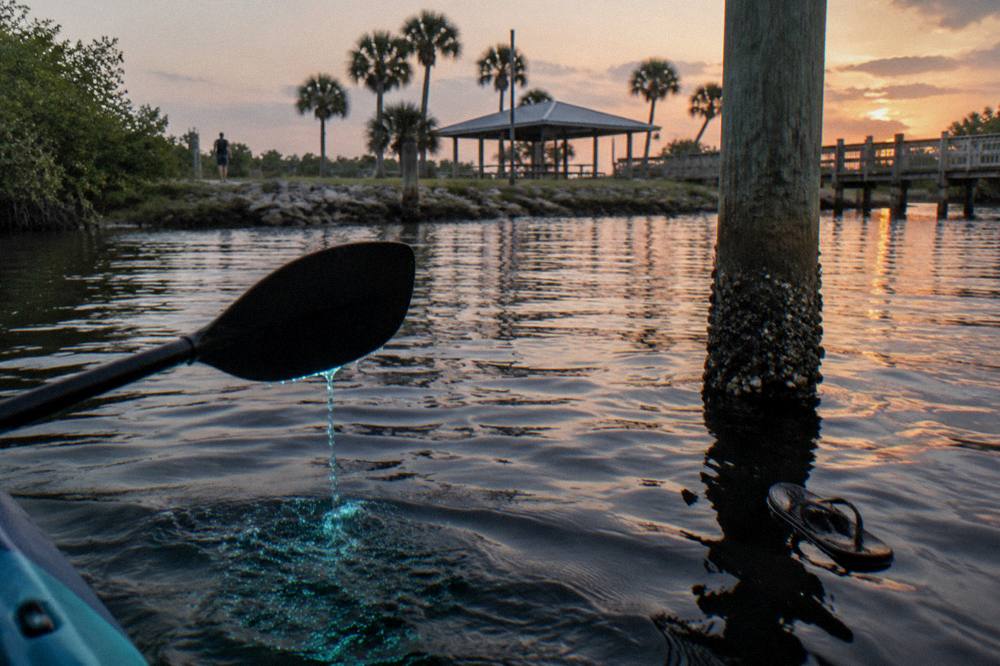
Read your confirmation the day you book and again the morning of the tour. Launch confirmation, arrival window, parking notes and any alternate-site notice arrive there, and the Brady Yaks and Kiwanis Island listings in particular can shift meeting points. Arrive early enough to park, sign in and get fitted with a life jacket in daylight or headlamp light, not in a rush at departure time. And set expectations honestly with your group: the glow is wild, variable and unforgettable when it is dense, and every listing on this page says so in its own way. Travelers who arrive expecting magic-or-nothing sometimes miss the quieter, greener shimmer of a thin night, which is still a very rare thing to paddle through.
Common Questions About Bioluminescence Kayak Tours In Cocoa Beach
How much do bioluminescence kayak tours in Cocoa Beach cost?
The four roster night paddles run from $51.36 to $75 per person. The Kelly Park East tour starts at $75 for two hours, the Kiwanis Island and Manatee Cove tours each start at $65, and the 1.5-hour Brady Yaks tour starts at $51.36. Kayak, paddle and life jacket are included on every listing.
What is the best month for bioluminescence in Cocoa Beach?
July and August, when dinoflagellate blooms peak in the warmest water. The season runs roughly late May to early October; comb jellies take over from about November into February with a softer glow. Late October and November are transition months and the least predictable.
Is the glow guaranteed on these tours?
No. Bioluminescence is a wild phenomenon driven by plankton density, water temperature and weather, and no operator guarantees it. Reviews show great nights and thin nights on the same tour. Operators may also move launch sites when bio levels drop, as the Kiwanis Island listing states openly.
Do I need to book a bioluminescence tour in advance?
For dark-moon nights in July and August, yes, especially the nine-guest Manatee Cove tour, which can fill weeks ahead. All four listings carry free cancellation, so booking early costs nothing if plans change. In the off-season a few days ahead is usually enough.
Which launch site is closest to Cocoa Beach?
All four launch from Merritt Island parks, roughly a 15 to 25 minute drive from central Cocoa Beach: Kelly Park East, Kiwanis Island Park and Manatee Cove Park, with the Brady Yaks meeting point varying by option. Confirm the exact address in your booking confirmation before you drive.
Is bioluminescence kayaking safe for beginners and kids?
Yes, with the usual conditions: the water is shallow and calm, guides brief every group, and life jackets are provided and required, with children under six required to wear them by Florida law. Bring water shoes, apply bug spray before arrival, and dress to get splashed from the waist down.